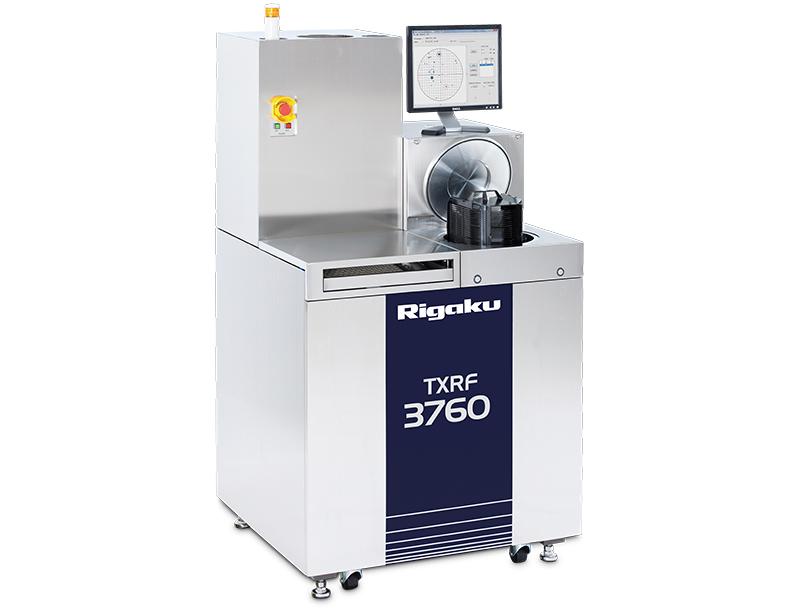
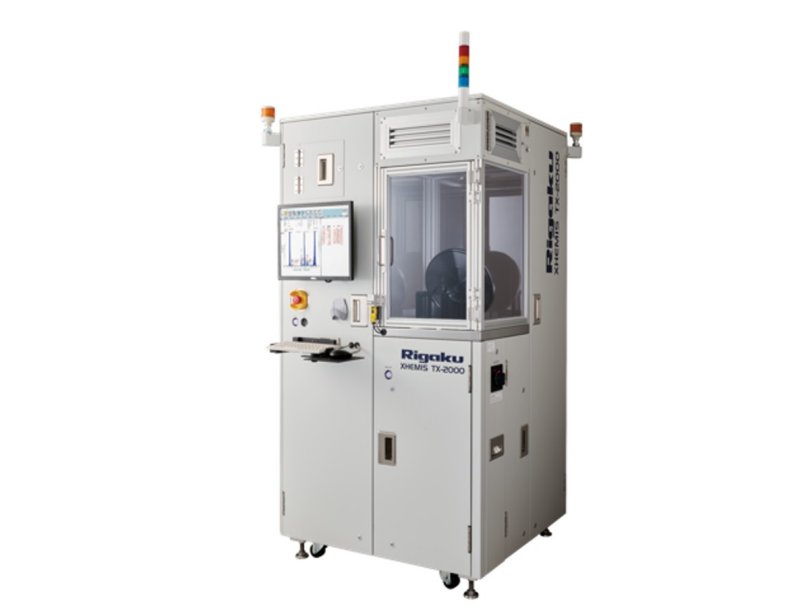
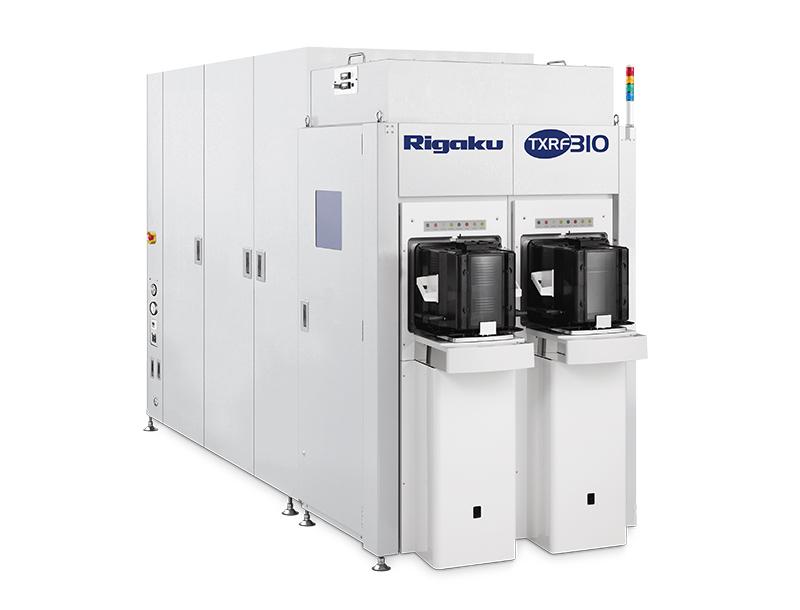
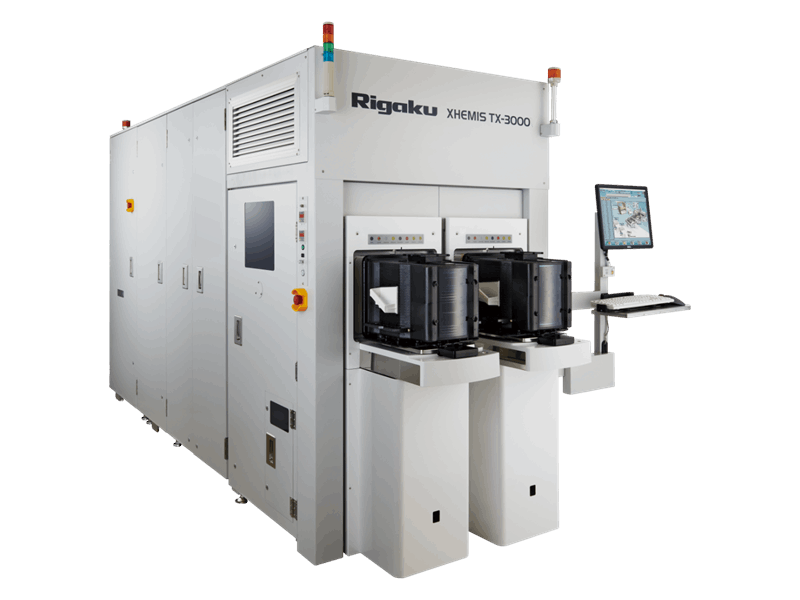
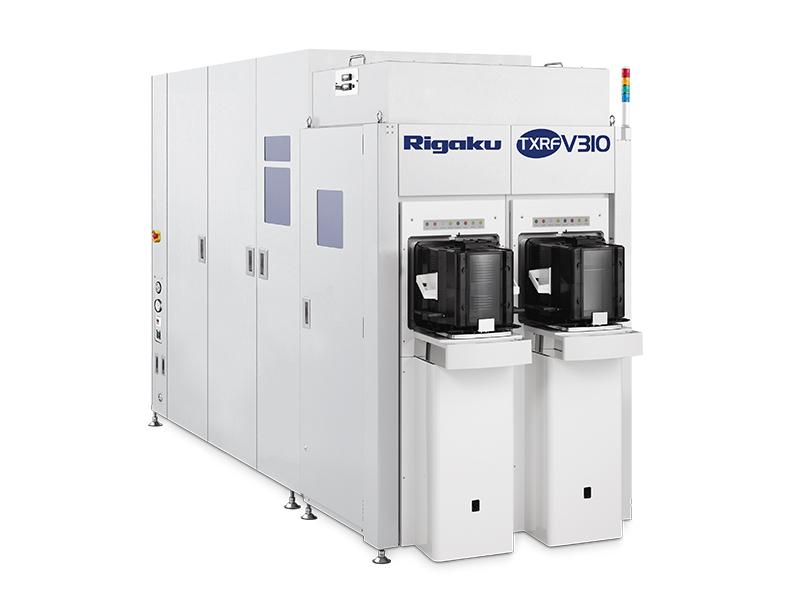
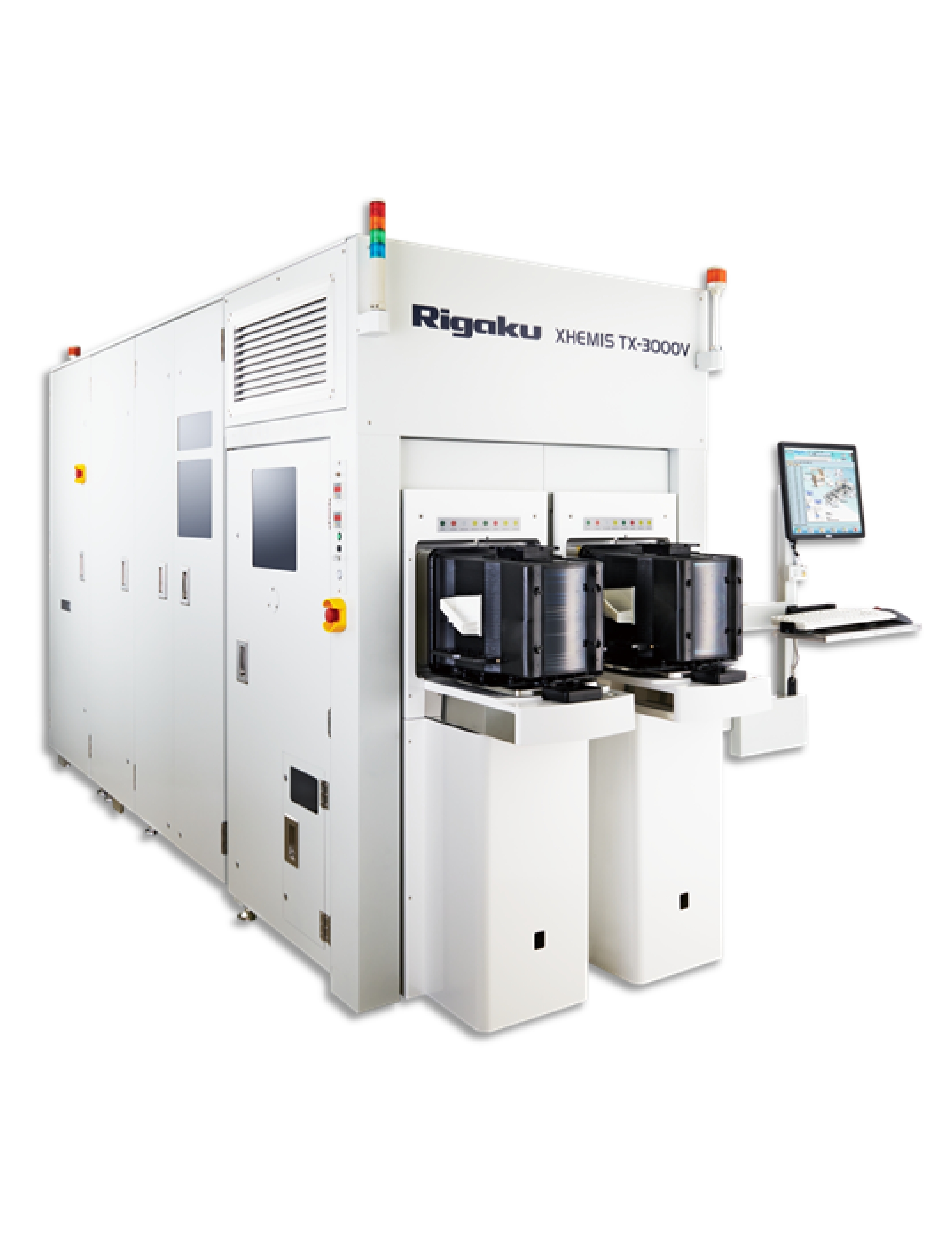
Total-reflection X-ray fluorescence (TXRF) spectrometers are widely used to measure surface contamination in the semiconductor fabrication process. The TXRF technique allows non-destructive analysis for most elements (Na~U) in the periodic table. TXRF spectroscopy is possible due to a property of X-rays as they irradiate a wafer surface. Each material has a unique critical angle, above which X-rays penetrate the surface deeply and below which total reflection occurs. In the total reflection condition, fluorescence X-rays only occur from contamination on the surface, and the substrate material will not add background noise to the measurement. The penetration depth of the incident X-rays under the conditions of total reflection is theoretically around 5 nm, and thus TXRF is classified as a surface analysis technique.