
Geology and Minerals
Phase, elemental and chemical analysis
In studying planetary processes and makeup of the Earth, geologists routinely analyze the composition and molecular structure of rock and mineral samples. Long having been central tools in geological research, X-ray analytical techniques have become more powerful with small spot excitation, mapping, and standardless quantitative analysis.
X-ray fluorescence (XRF) is the key technique for characterizing the element composition of geological materials.
The latest generation of wavelength dispersive XRF (WDXRF) instrumentation employs a small analyzing area and an XY-stage to automatically make multiple measurements of a sample to produce a chemical composition map.
Rapid elemental analyses for sodium through uranium can be accomplished through the use of cost-effective, high-performance energy dispersive X-ray fluorescence (EDXRF) instrumentation without destruction, digestion, or alteration of the sample.
X-ray diffraction (XRD) is employed to quantitatively measure phase composition. Rietveld analysis of X-ray diffraction data is now recognized as the most powerful method available for quantitative crystalline phase analysis. Rigaku technology and expertise provide a number of unique solutions for these determinations.
Application notes
Explore the example analyses to see which analytical technique is right for you.
-
WDXRF1122 - Silicate Rock Analysis by Fusion Bead Method on ZSX Primus III NEXT
-
WDXRF1118 - Quality and Process Control Analysis of Natural and Processed Iron Ores by the Pressed Powder Method
-
WDXRF1111 - FeO Analysis in Iron Ore Sinters Using the XRD Channel on multi-channel XRF Spectrometer Simultix 15
-
WDXRF1100 - Fused Bead Analysis for Wide Concentration Ranges of Various Oxide Materials using OXIDE-FB-PAK
-
WDXRF1095 - Multiple Element Determination of Nickel Sulfide Ores by the Pressed Powder Method on Simultix 15
-
WDXRF1094 - Quality and Process Control of Natural and Processed Iron Ores by the Pressed Powder Method on Simultix 15
-
WDXRF1092 - Fixed Angle Measurement using the Semi-Quantitative Analysis Function SQX of ZSX Guidance Software
-
WDXRF1090 - Semi-quantitative Analysis of Recycled Solid Fuel with Benchtop WDXRF Supermini200
-
WDXRF1089 - Analysis of Hazardous Heavy Elements in Soil and Sediment using ZSX Primus IV
-
WDXRF1084 - Mapping and Small Spot Analysis with a General-Purpose XRF Spectrometer
-
WDXRF1071 - Semi-quantitative FP Analysis of Geological Samples
-
WDXRF1068 - Silicate Rock Analysis by Fusion Method
-
WDXRF1067 - Fast and Accurate Determination of the Composition of Natural and Processed Iron Ores by the Fusion Method on Simultix 15
-
WDXRF1066 - Determination of Chemical Composition of Nickel Laterite Ore by Fusion Method
-
WDXRF1061 - Polymetallic Sulfide Ore Analysis with Supermini200
-
WDXRF1059 - Semi-quantitative Analysis of Glass Raw Materials
-
WDXRF1058 - Quantitative Analysis of Dolomite and Limestone by Pressed powder Method with Supermini200
-
WDXRF1052 - Accurate Determination for Elements in Laterite Ores by Pressed Powder Method
-
WDXRF1048 - Fused Bead Analysis for Wide Concentration Ranges of Various Oxide Materials on Benchtop WDXRF
-
WDXRF1047 - Highly Accurate Determination of Total Iron in Natural and Processed Iron Ores using Pressed Powder Method
-
WDXRF1041 - Copper Concentrate by Pressed Powder Method
-
WDXRF1036 - Semiquant Analysis by the SQX Scatter FP Method
-
WDXRF1027 - Cu Concentrate with Advanced Correction for Fused Beads
-
WDXRF1019 - Silicate Rock Analysis by Fusion Method
-
WDXRF1002 - Analysis of Iron Ores by Oressed Powder Method
-
TA5011 - The Glass Transition and Softening for Glass Material
-
TA5006 - The Difference of Aging for Materials by Thermal Analysis
-
RACCT9020 - Three sandstone porosity comparison by X-ray CT
-
RACCT9019 - Sandstone pore network analysis by X-ray CT
-
RACCT9018 - Sandstone Grain Size Analysis by X-ray CT
-
RACCT9017 - Sand Oil and Brine Segmentation by X-ray CT
-
RACCT9016 - Rock Crack Analysis by X-ray CT
-
RACCT9015 - Granite Phase Fraction Analysis by X-ray CT
-
RACCT9014 - Carbonate porosity analysis by X-ray CT - Segmentation comparison
-
RACCT9013 - Ammonite Fossil Scan by X-ray CT
-
EDXRF3134 - NEX CG II - Analysis of Rare Earth Elements in Clay
-
EDXRF1769 - NEX QC+ QuantEZ—Mud Logging
-
EDXRF1587 - NEX QC+—MgO & P₂O₅ in Phosphate Rock
-
EDXRF1187 - NEX QC—Ti & Fe in Kaolin Clay
-
EDXRF1177 - NEX QC—Iron Oxide in Silica Sand
-
B-XRD1172 - Phase Identification and Quantitative Analysis of Rare Earth Ore by X-ray Diffraction
-
B-XRD1127 - Background Reduction for Iron Oxide with CuKα X-rays using XRF Mode
-
B-XRD1125 - Quantification of the Taste of Salt by DD (Direct Derivation) Method
-
B-XRD1111 - Quantitative Analysis of 3-component Sample by DD method
-
B-XRD1103 - Phase Identification of a Coarse-grained Trace Component in a Mineral Powder using 2D XRD
-
B-XRD1101 - High-T analysis - MiniFlex with HyPix-400 MF / BTS 500
-
B-XRD1002 - Quantification of a 4-component Sample using RIR method
-
B-XRD1001 - Quantitative Analysis of a 4-component Sample
-
B-TA1091 - Analysis of Soils by STA Differences Depending on Sampling Location
-
B-TA1080 - Semi-Quantitative Evaluation of Serpentine Content in Serpentinite by Sample Controlled Thermogravimetry (SCTG)
-
B-TA1077 - Evaluation of Thermal Decomposition Behavior of Limestone - Quantitative Analysis of Decarbonation by TG-DSC
Related webinars
-
Determining the Rare Earth Elements in Geological Minerals Accurately Using X-ray FluorescenceMarch 19, 2025
-
The WDXRF Analysis of Industrial Minerals and Geological MaterialsOctober 16, 2024
-
Designing CT Image Analysis for Your Research – What to QuantifyJuly 19, 2023We invited Prof. Chandra Reedy from the University of Delaware and asked her questions about how she chose what to quantify using the CT images to extract meaningful and trustworthy information about ancient ceramics.
-
Digital Rock Physics – When and How to Use ItMay 17, 2023We invited Dr. Arne Jacob, the Application Engineer specialized in DRP from Math2Market, and asked him questions to learn how you can use DRP and apply the results to decision-making processes involved in oil and gas reservoir development and production.
-
Digital Rock Analysis - 3. Digital Rock SimulationsSeptember 14, 2022When the CT image of a rock sample has sufficient resolution and is segmented well, we can simulate the flow characteristics of the rock, obtain permeabilities, and visualize the percolation path, flow field velocity, etc. In this episode, we will look into how we can run these simulations.
-
Digital Rock Analysis - 2. Segmentation and Property AnalysesAugust 17, 2022In this episode, we will review image segmentation and calculate the basic properties of rock samples.
-
Digital Rock Analysis - 1. Data CollectionJuly 13, 2022In this episode, we will go into the lab and compare different data collection settings. Then, we will review how to collect high-quality CT images of a drill core that can be used for digital rock analysis.
-
Geology ApplicationsJuly 15, 2020A number of X-ray CT application examples of geological samples are discussed.
Recommended products
Not seeing what you are looking for? Try Product Finder.
MiniFlex
Sixth-generation general purpose benchtop XRD system for phase ID and phase quantification
Learn moreSupermini200
Benchtop tube below sequential WDXRF spectrometer analyzes O through U in solids, liquids and powders
Learn moreSmartLab
Advanced, state-of-the-art, high-resolution XRD system powered by Guidance expert system software
Learn moreZSX Primus IV𝒾
High-power, tube-below, sequential WDXRF spectrometer with new ZSX Guidance expert system software
Learn moreNEX CG II Series
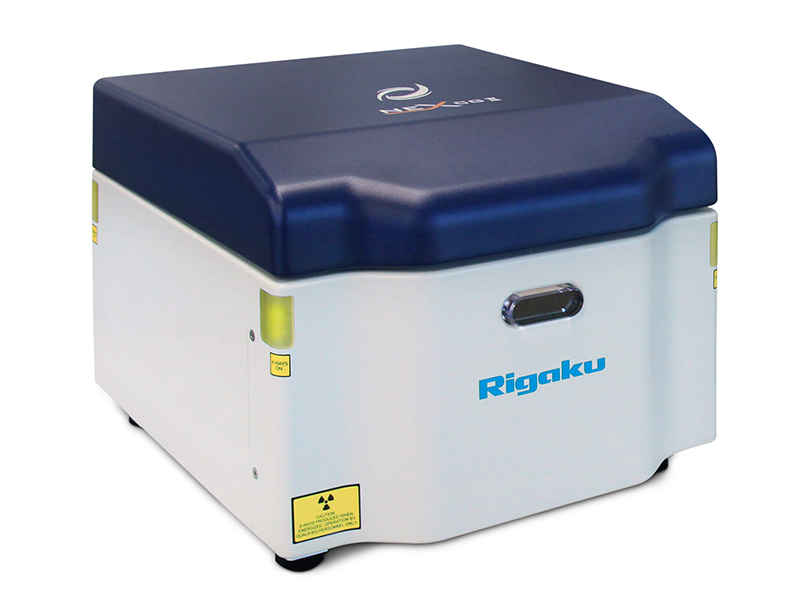
High-performance indirect excitation EDXRF for complex applications with trace elements and variable base matrices
Learn moreSmartLab SE
Highly versatile multipurpose X-ray diffractometer with built-in intelligent guidance
Learn moreZSX Primus IV
High-power, tube-above, sequential WDXRF spectrometer with ZSX Guidance expert system software
Learn more

Contact Us
Whether you're interested in getting a quote, want a demo, need technical support, or simply have a question, we're here to help.

Subscribe to the Bridge newsletter
Stay up to date with materials analysis news and upcoming conferences, webinars and podcasts, as well as learning new analytical techniques and applications.