
What Is Wavelength Dispersive X-ray Fluorescence?
The WDXRF X-ray technique employs a high-power X-ray source to excite the characteristic (fluorescence) X-rays from the elements in a specimen.
A sample is irradiated with X-rays causing emission of fluorescent X-rays from the material. The fluorescent X-rays are then diffracted with a crystal and observed with a detector.
The defining aspect of a WDXRF spectrometer is the use of a crystal to achieve energy resolution. The wavelength (energy) of fluorescent X-ray is specific to an element and the X-ray intensity correlates with the element concentration. This allows qualitative and quantitative analysis. Higher energy resolution can minimize or eliminate peak overlap issues.
A sequential spectrometer measures elements of interest one at a time with the automatic adjustment of crystals and X-ray optics. Sequential spectrometers offer analytical flexibility in process R&D and low-volume, high-product-mix manufacturing environments where measurement throughput is not of primary concern.
A simultaneous spectrometer is configured with multiple, dedicated channels to maximize measurement throughput in high-volume manufacturing environments where the elements of interest are not likely to change frequently.
The Rh/Pd target X-ray tube on the instrument irradiates the sample. The emitted fluorescent X-rays from the sample are then diffracted by a crystal (LiF200, PET, RX26, Ge) to select X-rays by wavelength. The intensity of the diffracted X-rays is then measured with a detector. P-10 gas is used for the flow proportional counter (F-PC) to detect X-rays with longer wavelengths (lighter elements). The scintillation detector is used for heavy elements.
The instrument is equipped with a vacuum pump since measurements of solid samples are performed in vacuum atmosphere. Liquid samples are measured in helium.
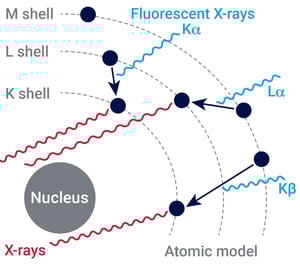
- Primary X-ray photon strikes an inner shell electron.
- An inner shell electron is ejected as a photo electron.
- An electron shifts from outer shell.
- A fluorescent X-ray photon is produced.
Point: Various types of fluorescent X-rays are generated from one atom.
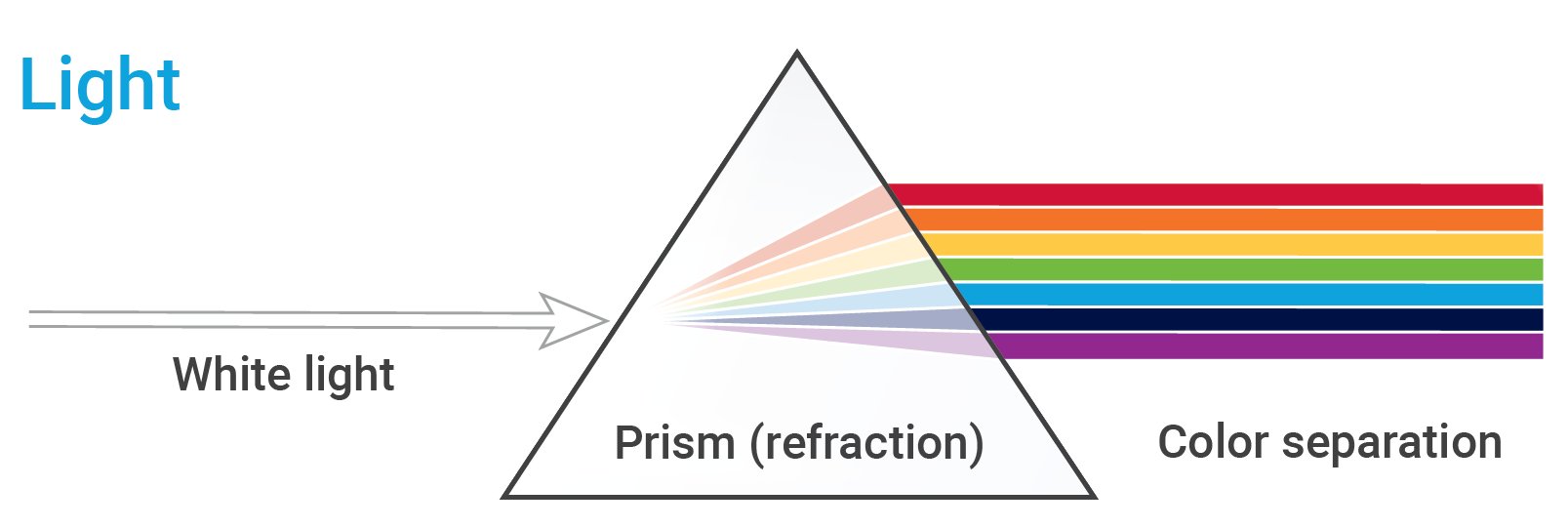
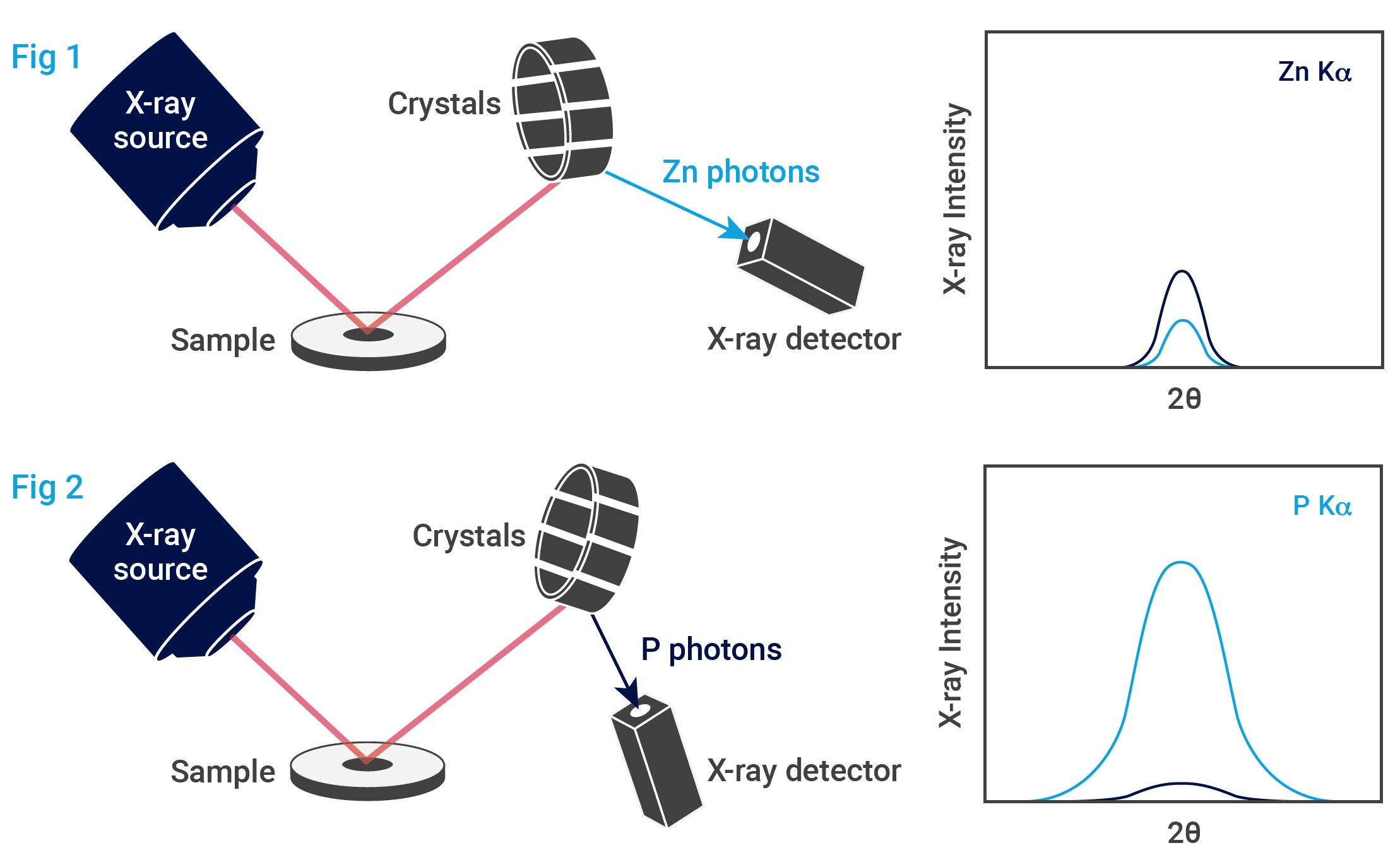
WDXRF spectrometry is a method used to separate and measure the characteristic fluorescent X-rays emitted from a sample. The technique employs an analyzing crystal to spatially spread the X-ray light, much like a prism spreads visible light into its component colors.
The wavelength of the impinging X-ray and the crystal’s lattice spacings are related by Bragg’s law and produce constructive interference when they satisfy the Bragg equation. The X-rays emitted by the sample are collimated by parallel metal blades (collimator) and irradiate an automatically selected analyzing crystal at a precise angle. X-ray light diffracted by the analyzing crystal is spatially spread out, so that characteristic photons may be collected by a detector positioned at a precise angle to record a X-ray intensity of a specific element.
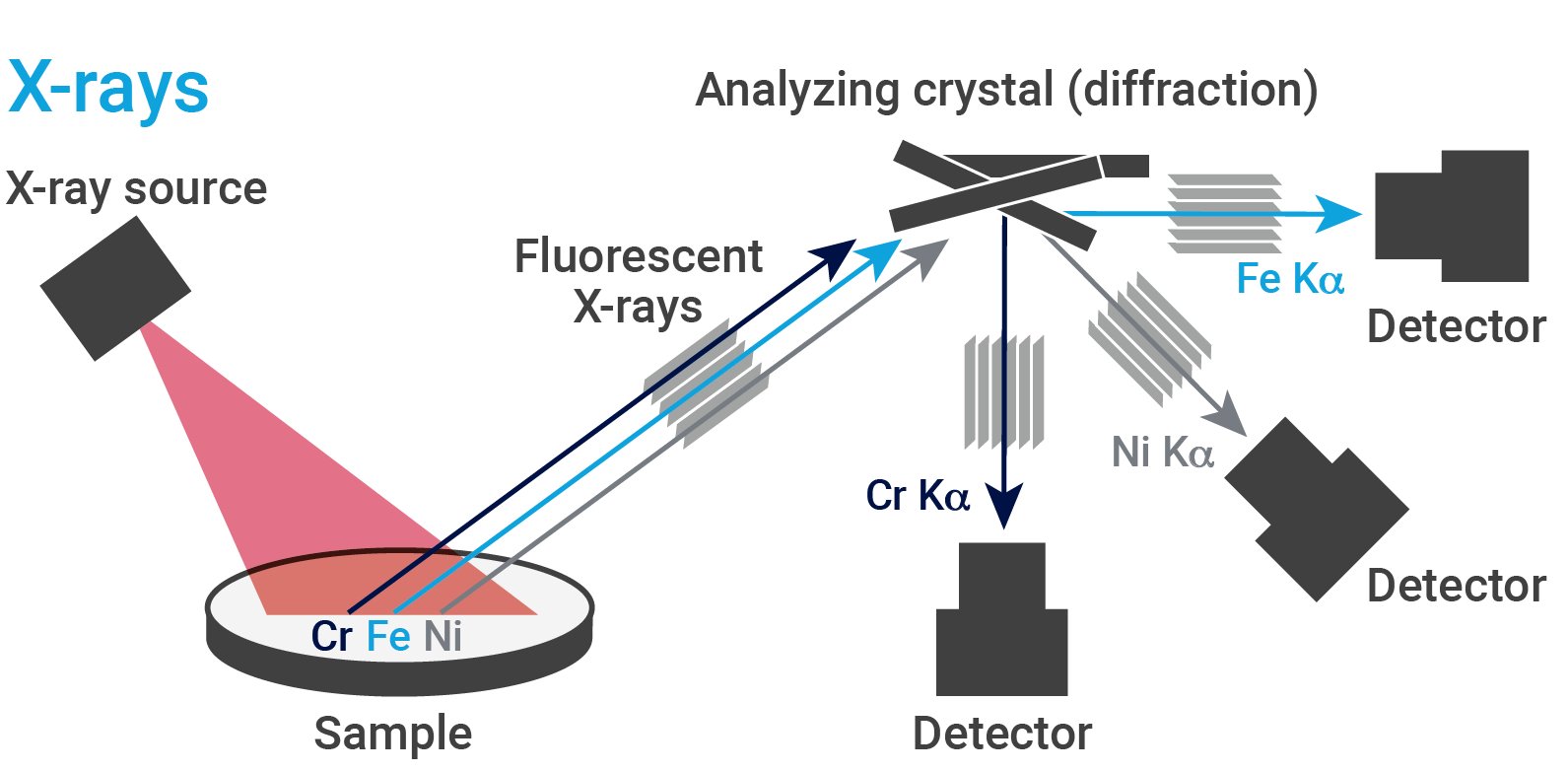
Point: X-rays with various wavelengths are dispersed by diffraction phenomenon with analyzing crystal.
In WDXRF, the sample, analyzing crystal and detector are all mounted on a variable angle drive optical mechanism called a goniometer. As illustrated (Fig 1 & Fig 2), the goniometer precisely varies the angles so that the detector can record X-ray fluorescence from any element of interest. The entire X-ray optical mechanism is contained within a vacuum chamber to eliminate absorption of soft radiation (low-energy photons) by the air.
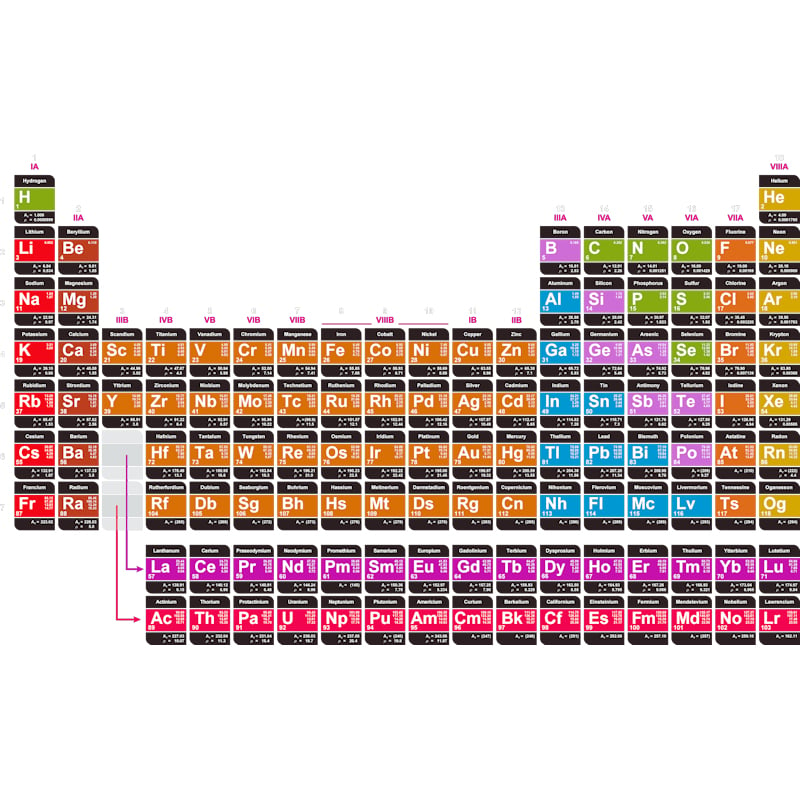
The ZSX Primus series of spectrometers contain up to ten analyzing crystals, that can be automatically selected depending on the wavelength being analyzed, enabling elements from almost the entire periodic table to be analyzed.

Contact Us
Whether you're interested in getting a quote, want a demo, need technical support, or simply have a question, we're here to help.