
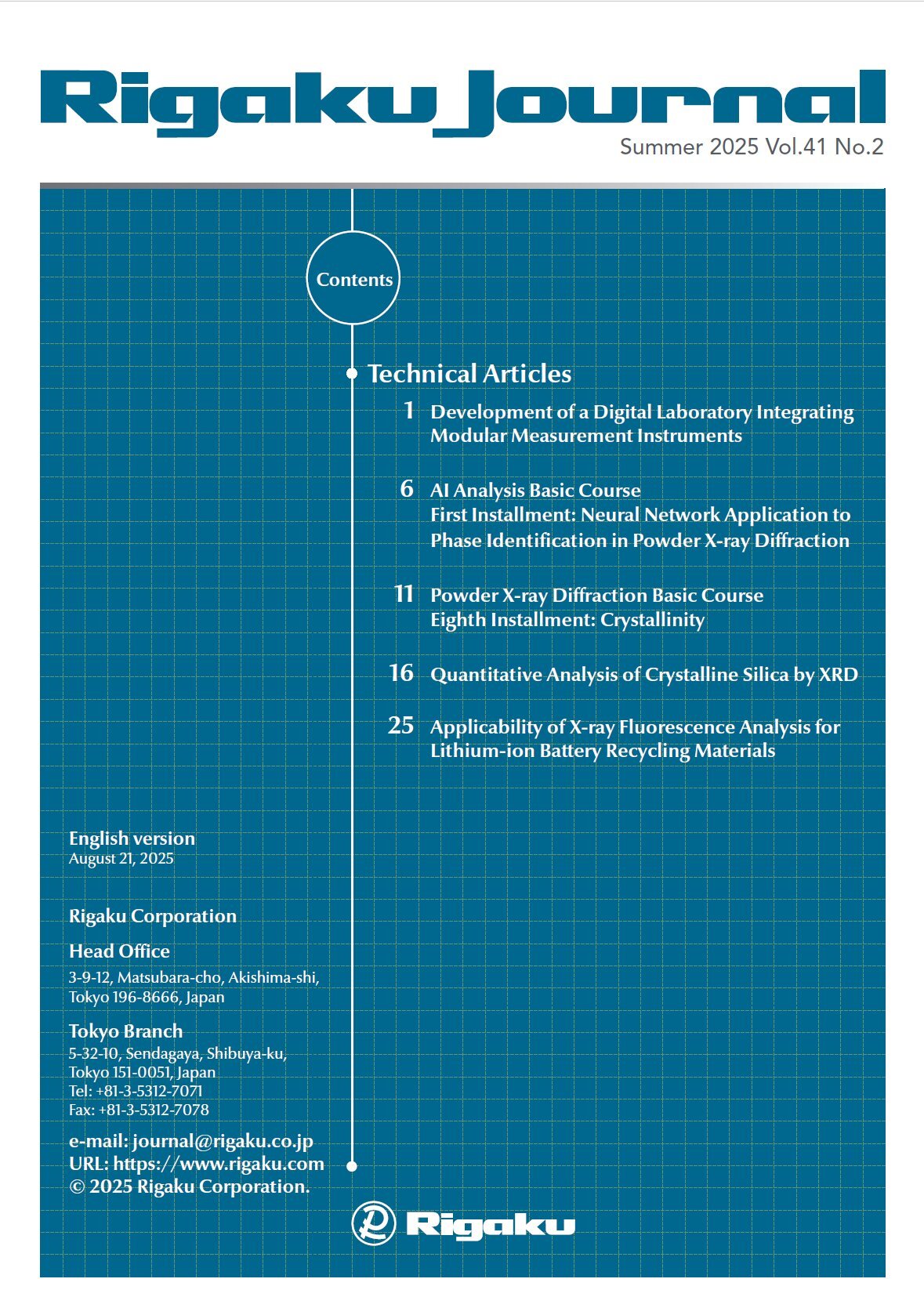
Applicability of X-ray Fluorescence Analysis for Lithium-ion Battery Recycling Materials

Yiqun Wang and Hikari Takahara

Summer 2025 Volume 41, No. 2 , 25-31

The recycling of rare metals (Li, Ni, Co) from used lithium-ion batteries (LIBs) is important and the demand for compositional analysis of LIB recycling materials is increasing. Currently, ICP atomic emission spectrometry (ICPAES) is widely used for the analysis of LIB recycling materials, but since it requires the use of acid and advanced processing techniques, a simpler analytical method is needed. In this report, the composition of black powder (BP) and black mass (BM), which are LIB recycling materials, was analyzed by X-ray fluorescence analysis (XRF) and the agreement with ICP-AES analysis values was confirmed. BP samples showed good agreement with ICP-AES analysis results using the balance estimation model with the scattering fundamental parameter (FP) method. For heterogeneous BM samples, oxidation treatment and fusion bead sample preparation were carried out to improve the analysis results.
Highlights

  • X-ray fluorescence (XRF) can provide quantitative analysis of lithium-ion battery recycling materials that closely matches ICP-AES when appropriate calculation models and sample preparation are used.
  • A scattering fundamental parameter (FP) balance estimation model significantly improves quantitative analysis of black powder by accounting for unmeasured light elements such as lithium and carbon.
  • Oxidation treatment followed by fusion bead preparation greatly improves the accuracy of XRF analysis for heterogeneous black mass samples containing metal fragments and mixed battery components.

Summary

As lithium-ion battery recycling expands, rapid and reliable elemental analysis of recycling intermediates becomes increasingly important for process control and recovery of valuable metals. Conventional ICP-AES provides accurate compositional analysis but requires acid digestion, complex sample preparation, and chemical waste handling. Wavelength-dispersive XRF offers a faster, simpler alternative if challenges associated with heterogeneous battery recycling materials can be overcome.

Two common recycling intermediates present different analytical challenges. Black powder, produced primarily from manufacturing scrap, contains large amounts of carbon and lithium that cannot be directly measured by XRF. Black mass, recovered from spent batteries, is substantially more heterogeneous because it contains metallic fragments from current collectors, battery housings, and other components.

For black powder, standardless FP analysis using a scattering-based balance estimation model produced nickel and cobalt concentrations that closely agreed with ICP-AES across a broad concentration range. This approach outperformed a conventional carbon balance model because it more effectively accounted for unmeasured light elements, reducing quantitative errors to approximately 10% or less.

For black mass, direct powder analysis showed larger errors due to sample heterogeneity. An oxidation treatment followed by fusion bead preparation homogenized the material, producing substantially better agreement with ICP-AES for major elements including nickel, cobalt, aluminum, and copper. The improved sample preparation minimized errors caused by metallic fragments and alloy phases.

Beyond major constituents, XRF successfully identified numerous minor and trace elements important to recycling operations, including aluminum, iron, copper, fluorine, phosphorus, silicon, chromium, zinc, molybdenum, tin, tungsten, zirconium, and lanthanum. High spectral resolution enabled separation of overlapping elemental peaks, allowing detection of trace impurities that can influence refining efficiency, product quality, and process safety.

These results demonstrate that XRF can serve as an effective compositional analysis technique for lithium-ion battery recycling materials when analytical models and sample preparation are matched to the characteristics of the material being analyzed.

Frequently asked questions

Related products

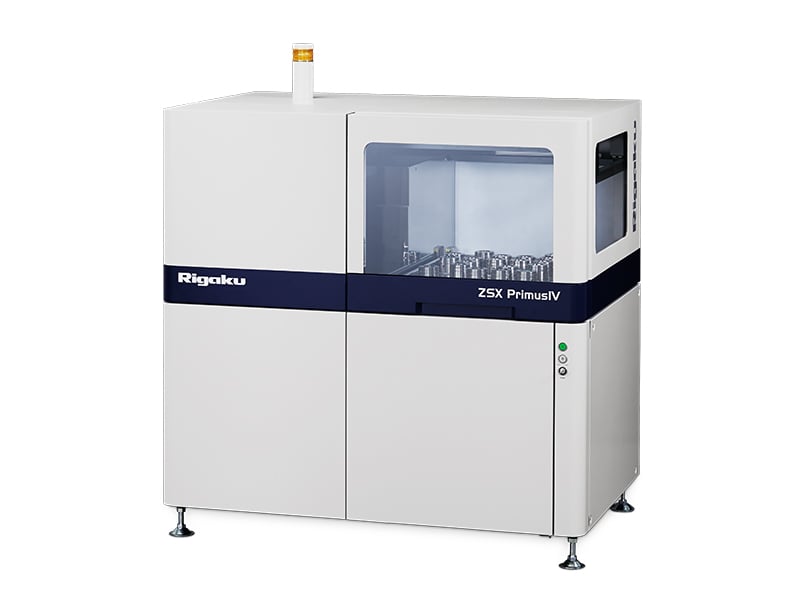
ZSX Primus IV

High-power, tube-above, sequential WDXRF spectrometer with ZSX Guidance expert system software

Learn more
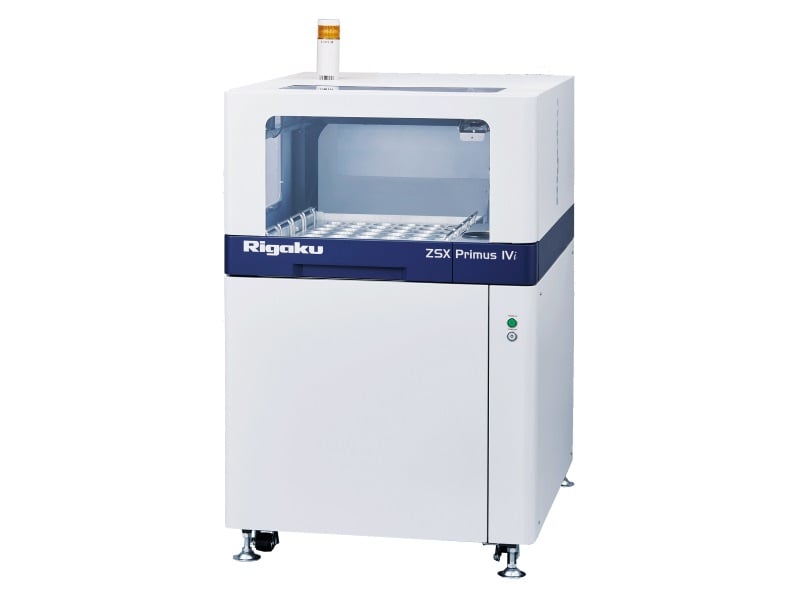
ZSX Primus IV𝒾

High-power, tube-below, sequential WDXRF spectrometer with new ZSX Guidance expert system software

Learn more
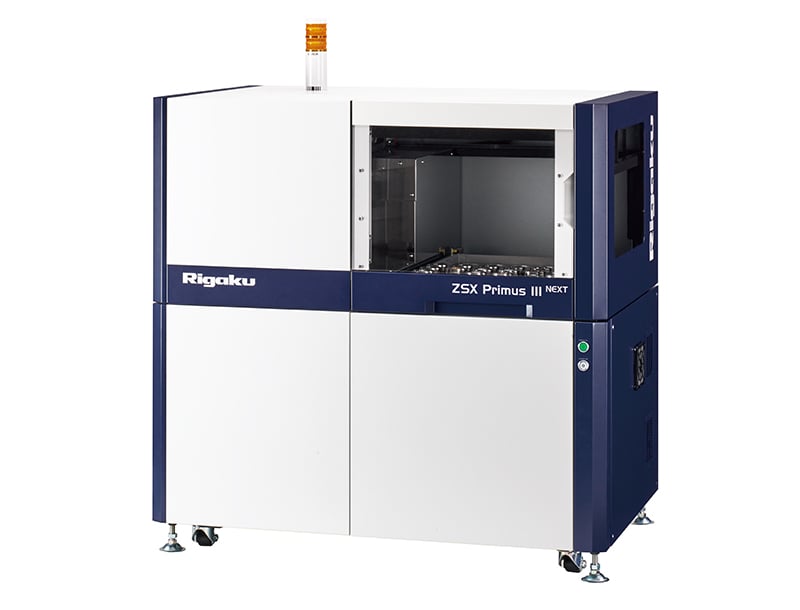
ZSX Primus III NEXT

Affordable, high-end, tube-above Industrial WDXRF for the analysis of solid samples

Learn more

Subscribe to the Bridge newsletter

Stay up to date with materials analysis news and upcoming conferences, webinars and podcasts, as well as learning new analytical techniques and applications.
Contact Us

Whether you're interested in getting a quote, want a demo, need technical support, or simply have a question, we're here to help.