
Water Analysis by X-ray Fluorescence Spectrometry using UltraCarry

Shohei Uemura and Takao Moriyama

Summer 2020, Volume 36, No. 2 , 25-30

X-ray fluorescence (XRF) analysis has a wide range of applications because it allows quick and non-destructive qualitative and quantitative analysis of contained elements with simple sample preprocessing and has excellent measurement reproducibility. It is used in the industrial fields of steel, non-ferrous metals, mining, petroleum, ceramics, cement, and for R & D and quality control of electronic materials such as multilayer capacitors and piezoelectric elements.

In the environmental analysis field, XRF analysis is mainly used for hazardous element analysis, and is applied to screening analysis of restricted substances according to the RoHS directive and contaminated soil. XRF analysis is environmentally friendly because it does not produce waste liquid unlike ICP and ICP-MS analysis, both official methods for water analysis. Therefore, the application of XRF analysis to water quality management of industrial wastewater, agricultural water, springs, rivers, lakes is expected to increase.
 

Highlights

  • UltraCarry enables XRF analysis of aqueous samples with detection limits in the tens of ppb range, extending XRF into applications traditionally requiring more sensitive analytical techniques.
  • A specialized hydrophilic adsorption layer combined with a thin polymer film concentrates analytes while minimizing X-ray scattering, significantly improving signal-to-background ratios.
  • Quantitative and standardless analyses of drinking water demonstrate that trace mineral elements can be measured accurately with simple sample preparation and excellent agreement with expected concentrations.

Summary

X-ray fluorescence (XRF) is widely valued for rapid, non-destructive elemental analysis with minimal sample preparation, but conventional liquid analysis methods have generally lacked the sensitivity needed for trace water analysis. A high-sensitivity droplet filter known as UltraCarry addresses this limitation by concentrating dissolved elements onto a specialized adsorptive paper supported by a thin polymer film. This design allows a larger liquid volume to be deposited and dried while reducing scattered X-rays from the substrate, substantially lowering the background signal and improving detection limits.

The resulting increase in peak-to-background ratio enables detection of many elements at concentrations in the tens of parts per billion. Two versions of the filter support different analytical priorities: one optimized for hazardous heavy elements and another designed to provide improved sensitivity across a broader range of light elements. Sample preparation remains straightforward, requiring only deposition of a measured liquid volume followed by controlled drying before vacuum measurement.

Quantitative calibration for major mineral constituents including sodium, magnesium, silicon, phosphorus, sulfur, chlorine, potassium, calcium, chromium, manganese, iron, and strontium demonstrates excellent linearity and low detection limits. Measurements of commercially available mineral waters show strong agreement between measured elemental concentrations and labeled mineral content, confirming the method's analytical accuracy.

Standardless fundamental parameter analysis using Scan Quant X (SQX) also provides results comparable to calibration-based quantitative analysis, making it suitable for rapid screening of unknown water samples. Because the technique is non-contact, produces no liquid waste, and minimizes risks of instrument contamination, it offers a practical alternative for environmental monitoring, industrial wastewater analysis, drinking water characterization, and other applications requiring sensitive elemental analysis of aqueous samples.

Frequently asked questions

Recommended products

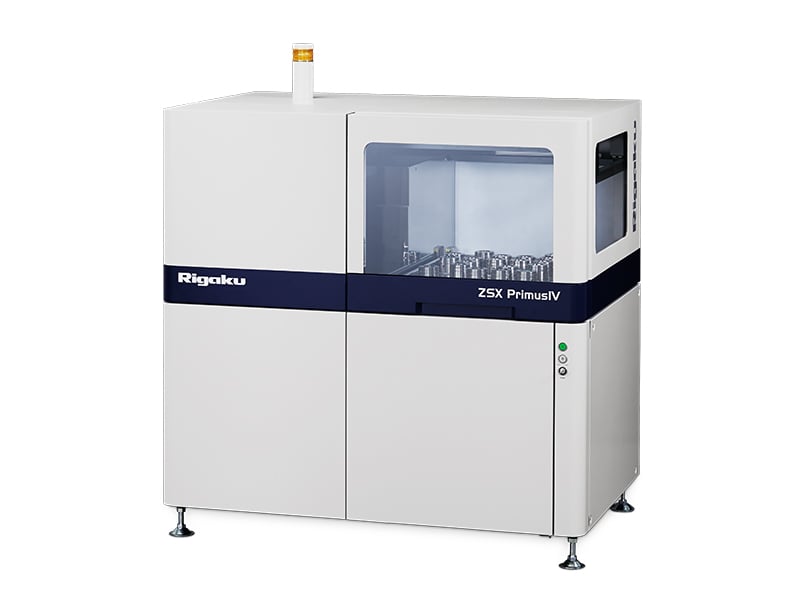
ZSX Primus IV

High-power, tube-above, sequential WDXRF spectrometer with ZSX Guidance expert system software

Learn more
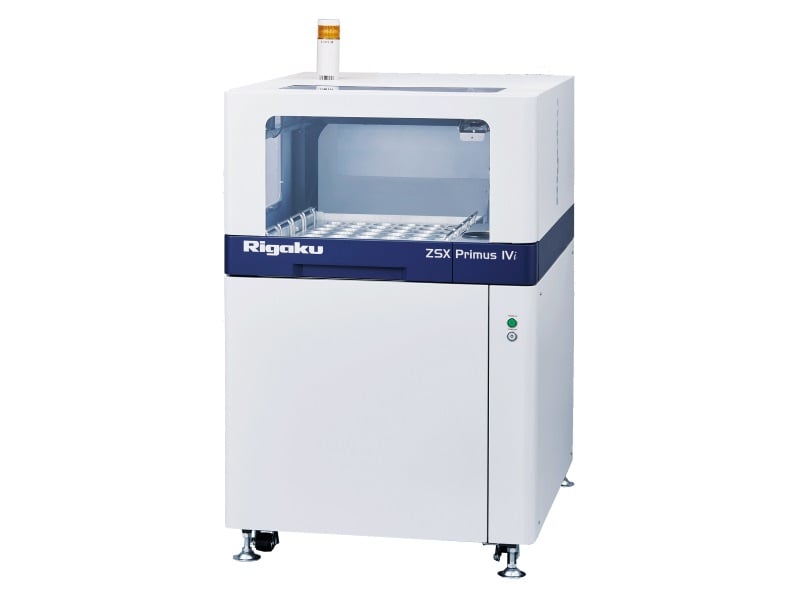
ZSX Primus IV𝒾

High-power, tube-below, sequential WDXRF spectrometer with new ZSX Guidance expert system software

Learn more
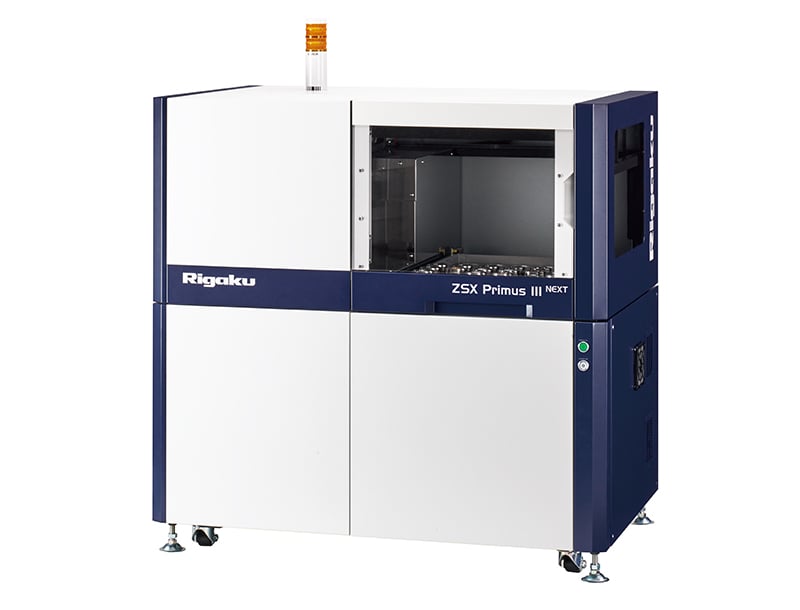
ZSX Primus III NEXT

Affordable, high-end, tube-above Industrial WDXRF for the analysis of solid samples

Learn more

Subscribe to the Bridge newsletter

Stay up to date with materials analysis news and upcoming conferences, webinars and podcasts, as well as learning new analytical techniques and applications.
Contact Us

Whether you're interested in getting a quote, want a demo, need technical support, or simply have a question, we're here to help.