
Compton scattering internal standard correction extended by FP method and applied to metal element analysis of ore and concentrate samples

Hisashi Homma

Winter 2025 Volume 41, No. 1 , 12-18

The Compton scattering internal standard correction technique, which is a matrix correction method conventionally used for geological powder sample analysis, has been improved by integration of a matrix correction term. The matrix correction coefficients are theoretically calculated by the fundamental parameter (FP) method. The improved method accurately extends the applicable range of calibrations to high concentrations.

The improved correction method can be applied to mining samples, such as iron ores, copper ore / concentrate and nickel oxide and sulfide ores analyzed by the pressed pellet method.

The theoretical alpha coefficients obtained by the FP calculation are smaller than conventional theoretical alphas without internal standards. This means the method can reduce the influence of analytical errors from coexisting components. The method has applications in the analysis of powdered ore samples in mining.
Highlights

  • Extending Compton scattering internal standard correction with fundamental parameter (FP) matrix corrections enables accurate WDXRF calibration for high-concentration elements in ores and concentrates while retaining the simplicity of pressed pellet analysis.
  • Theoretical alpha coefficients calculated by the FP method are approximately an order of magnitude smaller than conventional alpha coefficients, reducing the influence of coexisting elements, particle size, and mineralogical effects.
  • The approach improves calibration accuracy across iron ores, copper ores and concentrates, and nickel oxide and sulfide ores without requiring fused bead preparation, making it well suited for high-throughput mining laboratories.

Summary

Compton scattering has long been used as an internal standard in wavelength-dispersive X-ray fluorescence (WDXRF) to compensate for matrix effects in geological materials. While the conventional approach is highly effective for trace and minor elements, its accuracy decreases when measuring major constituents because absorption effects from coexisting elements become increasingly significant. Integrating theoretical matrix correction coefficients calculated using the fundamental parameter (FP) method overcomes this limitation and extends the technique to high-concentration analytes.

The improved correction method combines the Compton scattering intensity ratio with FP-derived theoretical alpha coefficients, allowing accurate correction of matrix effects without relying on large empirical calibration datasets. Because the theoretical alpha coefficients are substantially smaller than those used in conventional matrix corrections, analytical results are less sensitive to uncertainties associated with coexisting elements, particle size variation, and mineralogical differences commonly encountered in pressed powder samples.

The method was validated on a wide range of mining materials, including iron ores, copper ores and concentrates, nickel oxide ores, and nickel sulfide ores. Significant improvements were demonstrated for major elements such as total iron in iron ores and copper in concentrates, while maintaining excellent performance for numerous minor and trace elements. Equivalent performance was achieved using both sequential and simultaneous WDXRF instruments.

For mining operations processing hundreds or thousands of samples each day, the approach offers a practical alternative to fused bead preparation. It preserves the speed and low operating cost of pressed pellet analysis while providing substantially improved analytical accuracy across diverse ore types and concentration ranges.

Frequently asked questions

Recommended products

ZSX Primus IV

High-power, tube-above, sequential WDXRF spectrometer with ZSX Guidance expert system software

Learn more
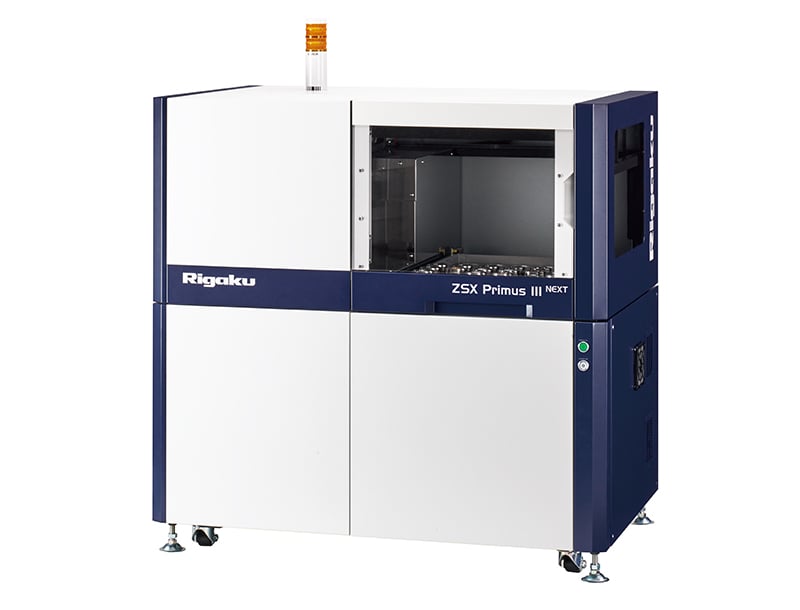
ZSX Primus III NEXT

Affordable, high-end, tube-above Industrial WDXRF for the analysis of solid samples

Learn more
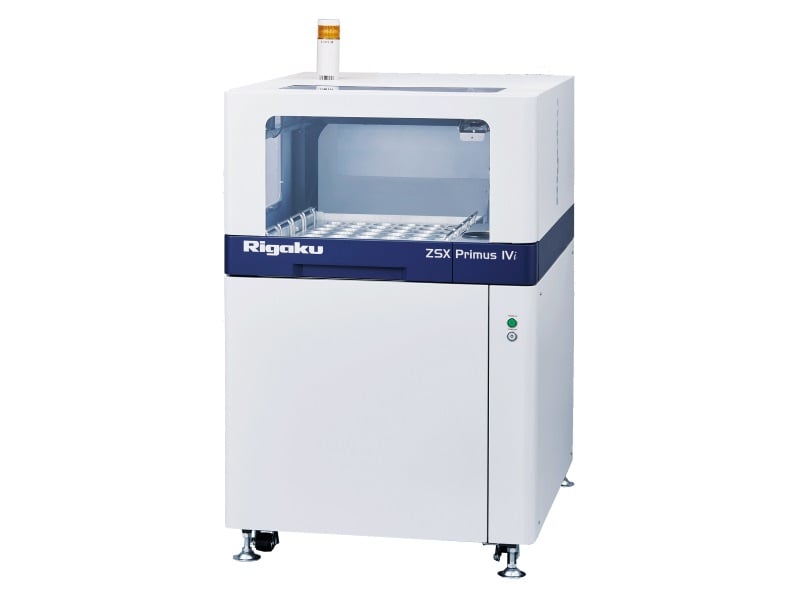
ZSX Primus IV𝒾

High-power, tube-below, sequential WDXRF spectrometer with new ZSX Guidance expert system software

Learn more
Simultix 15

High-throughput, tube-above, multi-channel simultaneous WDXRF spectrometer analyzes Be through U

Learn more
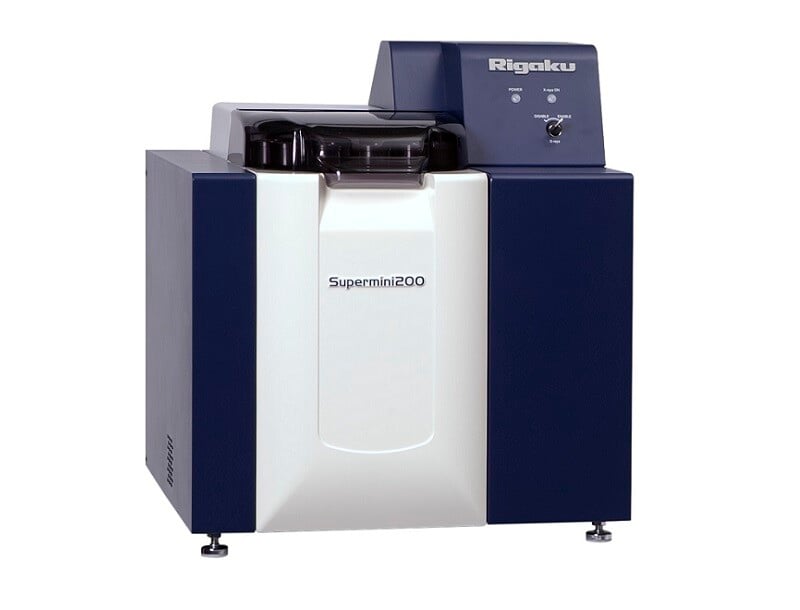
Supermini200

Benchtop tube below sequential WDXRF spectrometer analyzes O through U in solids, liquids and powders

Learn more

Subscribe to the Bridge newsletter

Stay up to date with materials analysis news and upcoming conferences, webinars and podcasts, as well as learning new analytical techniques and applications.
Contact Us

Whether you're interested in getting a quote, want a demo, need technical support, or simply have a question, we're here to help.