
Powder X-ray Diffraction Basic Course - Second installment: Selection of equipment configuration to obtain high-quality data

Masashi Omori

Winter 2021 Volume 37, No. 1 , 12-19

It is necessary to obtain high-quality data for highly accurate analysis. The characteristics of high-quality data may be high intensity, high resolution, high P/B (peak-to-background ratio), and high S/N (signal-to-noise ratio). Deciding which features are important depends on the purpose of analysis. Therefore, we need to consider measurement conditions after determining the purpose of analysis. Some combinations of sample types and optical systems prevent the desired results from being obtained. Therefore, it is necessary to select the optical systems according to the kinds of samples.

The equipment configurations required to obtain high-quality data will be explained here and in the following articles in this powder X-ray diffraction basic course.  The measurement conditions we will be discussing include selection of the equipment, sample preparation, and scan conditions. Selection of the equipment will be covered in this article, and sample preparation and scan conditions will be discussed in the third article.

The following sections in this article explore the factors involved in selecting the proper equipment configurations to obtain high-quality data: 2. Selection of X-ray source, 3. Selection of optical systems, 4. & 5. Setting incident and receiving optical systems, and 6. Detector configuration. These sections are arranged in order from the X-ray source to the receiving optical system.
 

Highlights

  • High-quality powder XRD data is not just about intensity; the right setup depends on whether the priority is intensity, resolution, peak-to-background ratio, or signal-to-noise ratio.
  • A rotating anode source can greatly shorten measurement time; in the Si example, it produced about 4.6 times the intensity of a sealed tube.
  • X-ray source selection matters at a basic physical level: target metal controls wavelength, and that choice has to match both the sample composition and the analytical goal to avoid problems such as fluorescence.
  • Optical geometry has major tradeoffs: Bragg-Brentano is strong for easy high intensity and resolution on flat samples, while parallel beam and transmission-based methods are better for rough, oriented, or film-like samples.
  • Slits, mirrors, filters, monochromators, and detector energy modes are not minor accessories; they directly control background, peak shape, intensity, and whether small or closely spaced peaks can be detected reliably.

Summary

This paper explains how to choose an XRD instrument configuration that gives good-quality powder diffraction data. In practice, “good-quality” can mean different things depending on the job: stronger peaks, sharper peaks, lower background, or cleaner signal. The setup should be chosen after deciding what kind of analysis is needed.

The first major choice is the X-ray source. A stronger source, such as a rotating anode, can produce much higher intensity than a sealed tube, which helps reduce scan time. The target metal also matters because it determines X-ray wavelength. Copper is common for general materials, but other targets such as Co, Fe, Mo, or Ag may be better depending on the sample and purpose, especially when fluorescence could interfere with the data.

The next choice is the optical system. Reflection geometry is typically used for powders in holders and bulk samples. Transmission geometry is better for highly oriented powders and film-like samples. Within those geometries, Bragg-Brentano, parallel beam, and focusing beam setups each offer different balances of intensity, resolution, flexibility, and background performance.

A big theme in the paper is that slit settings and beam-conditioning components strongly affect results. Narrower slits often improve resolution and reduce unwanted effects, but they also reduce intensity and can increase measurement time. Filters, monochromators, and mirrors help suppress unwanted radiation such as Kβ lines or fluorescence, which improves background and peak clarity.

The detector also needs to be configured properly. Using an energy mode that suppresses fluorescence can dramatically improve peak-to-background ratio for some samples, though it also reduces diffracted intensity. Overall, the paper shows that high-quality XRD data comes from matching source, optics, slits, and detector settings to the sample and analytical goal rather than relying on one default setup.

Frequently asked questions

Related products

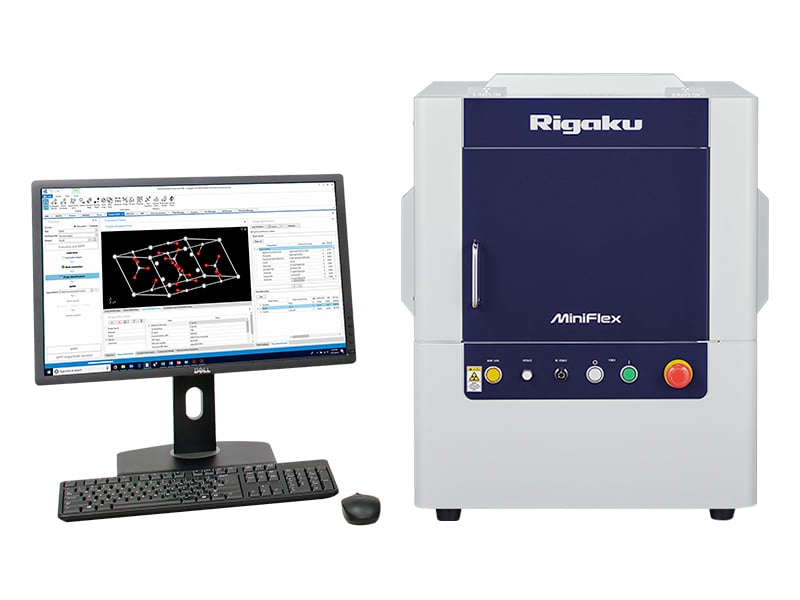
MiniFlex

Sixth-generation general purpose benchtop XRD system for phase ID and phase quantification

Learn more
SmartLab

Advanced, state-of-the-art, high-resolution XRD system powered by Guidance expert system software

Learn more


SmartLab Studio II

Windows-based software suite for Rigaku's X-ray diffractometers

Learn more

Subscribe to the Bridge newsletter

Stay up to date with materials analysis news and upcoming conferences, webinars and podcasts, as well as learning new analytical techniques and applications.
Contact Us

Whether you're interested in getting a quote, want a demo, need technical support, or simply have a question, we're here to help.