XRD for Batteries
Crystalline structure analysis is essential for understanding battery materials—from electrode powder development to finished-cell performance and failure analysis. X-ray diffraction (XRD) provides non-destructive phase identification, phase quantification, lattice parameter analysis, crystallite size and strain evaluation, and operando measurements that reveal how cathode, anode, electrolyte, and solid-state battery materials change during charge and discharge. Rigaku XRD solutions support battery researchers and manufacturers with flexible tools for R&D, process development, and quality control.
Advancing battery performance through XRD analysis
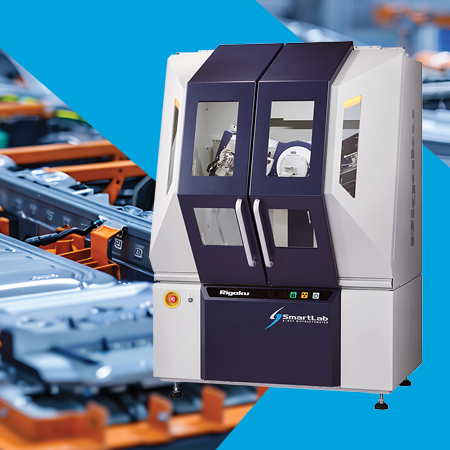
XRD is widely used across battery research, production, and failure analysis to connect crystal structure with performance, safety, lifetime, and manufacturability. Rigaku systems support routine powder diffraction, advanced in situ and operando measurements, and analysis of assembled cells using purpose-built battery stages for coin cells, pouch/laminate cells, and self-assembled cells.
- Battery material powder analysis: Identify and quantify crystalline phases in cathode, anode, solid electrolyte, and precursor powders; monitor impurity phases; evaluate crystallinity, lattice parameters, crystallite size, and strain.
- Electrode and cell development: Study structural changes in active materials during cycling, including phase transitions, lattice expansion/contraction, degradation pathways, and state-of-charge dependent behavior.
- Operando and in situ battery analysis: Use specialized battery stages to observe structural evolution during charge/discharge without disassembling the cell.
- Solid-state battery research: Characterize crystalline and amorphous components in solid electrolytes and electrode/electrolyte interfaces to support materials selection, stability studies, and performance optimization.
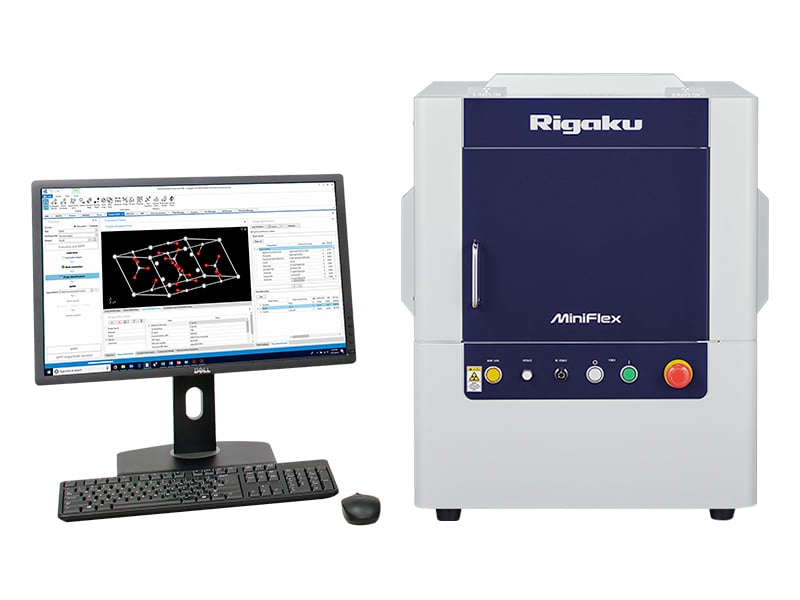
- Quality control and production support: Use compact XRD systems such as MiniFlex or production-oriented systems such as MiniFlex XpC for fast, repeatable phase analysis of incoming materials, intermediates, and finished electrode materials.
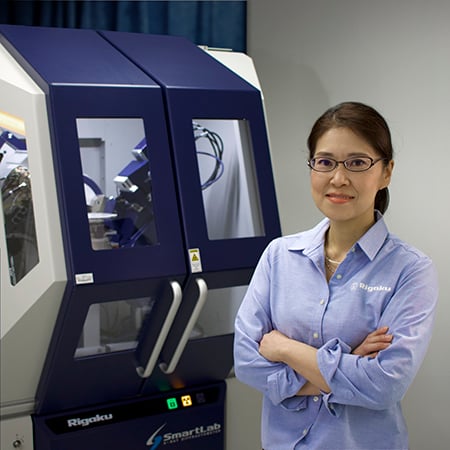
For higher-end battery R&D, SmartLab and SmartLab SE provide multipurpose XRD capabilities for powder diffraction, thin film diffraction, SAXS, non-ambient measurements, and operando studies. For routine battery material characterization and QC, MiniFlex offers benchtop powder XRD capabilities including phase identification, phase quantification, crystallinity, crystallite size/strain, lattice parameter refinement, and Rietveld refinement. For manufacturing environments, MiniFlex XpC is designed for fast, accurate quality control measurements with automation-friendly sample handling.
Application notes
-
BATT1018 - XRD Measurement with Temperature Control and Charge/Discharge Using Laminated Cells
-
BATT1017 - XRD Measurement during Charge/Discharge Using All-Solid-State Batteries
-
BATT1016 - XRD Measurement During Charge/Discharge Using Laminated Cell Batteries
-
BATT1015 - Local Structure Analysis of Li₃PS₄ Solid-State Electrolyte
-
BATT1014 - Measurement of Li₇P₃S₁₁ Solid-State Electrolyte Using Airtight Sample Holder
-
BATT1013 - Crystallite Diameter and Particle Diameter Calculation for Silicon Negative Electrode Material
-
BATT1012 - Inference of Valence and Li Ion Diffusion Path Using the BVS Method
-
BATT1011 - Measurement of Cathode Material NCM Using XSPA-400 ER High-Energy Resolution Detector
-
BATT1010 - Investigation of Phase Transition Behavior upon Cathode Material NCM Firing
-
BATT1003 - Management of Graphitization Degree for Graphite Anode Material
-
BATT1002 - Lattice Constant and Crystallite Diameter Management for NCM Cathode Material
-
BATT1001 - Qualitative Analysis of Impurities (Sulfate) in Mixed Nickel-Cobalt Sulfide
-
BATT0002 - Battery Material Characterization
-
BATT0001 - Battery Material Development
-
B-XRD2020 - Phase ID and Orientation Analysis for Thin Film SOFC Material using 2DD
-
B-XRD1155 - Detection of trace components in battery cathode materials using a seamless pixel array detector
-
B-XRD1150 - Evaluation of Graphitization Degree of Lithium-ion Battery Carbon Anode Material by X-ray Diffractometry
-
B-XRD1148 - Composition ratio classification of ternary cathode material by cluster analysis
-
B-XRD1124 - Operando Transmission XRD Measurement of All-solid-state Lithium-ion Battery using Ag Source
-
B-XRD1123 - Simultaneous Operando XRD Measurement for Positive and Negative Electrode Materials
-
B-XRD1116 - Operando Measurement of Laminated Lithium-ion Battery using 2DD
-
B-XRD1106 - Charge/discharge Process of Li-ion Battery Positive Electrode
-
B-XRD1080 - Rietveld Analysis of Battery Material using a Mo Source
-
B-XRD1078 - Evaluation of Crystallite Size and Pore Size distribution of Fuel Cell Materials
-
B-XRD1026 - Observation of Crystallization Behavior of Ionic Liquids by XRD-DSC
-
B-XRD1018 - Crystallite Size Distribution of Zinc Oxide Nanoparticles
-
B-XRD1011 - Temperature Dependence of a Lattice Constant
-
B-XRD1009 - Charging-discharging of Cathode Materials in Li-ion Batteries
Recommended products
MiniFlex
Sixth-generation general purpose benchtop XRD system for phase ID and phase quantification
Learn moreMiniFlex XpC
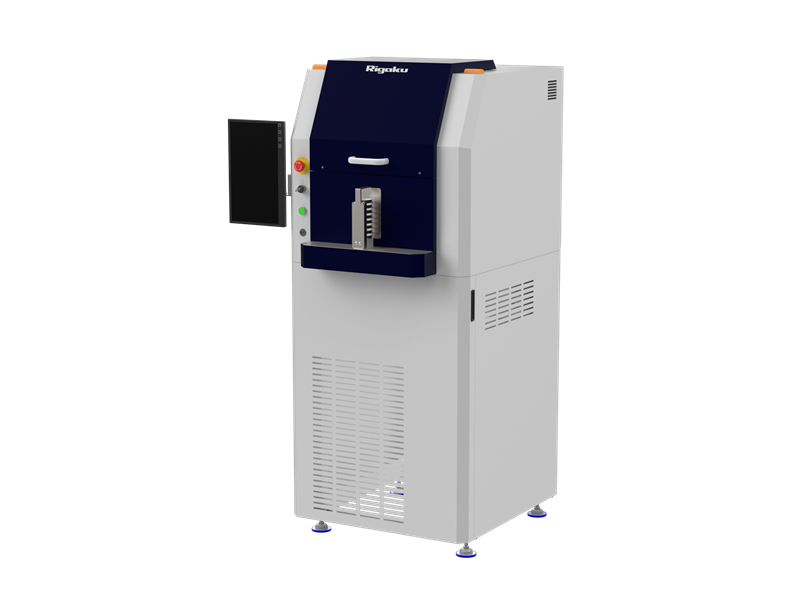
Compact X-ray diffractometer for quality control of materials that is easy to use and is ideal for routine work
Learn moreSmartLab
Advanced, state-of-the-art, high-resolution XRD system powered by Guidance expert system software
Learn moreSmartLab SE
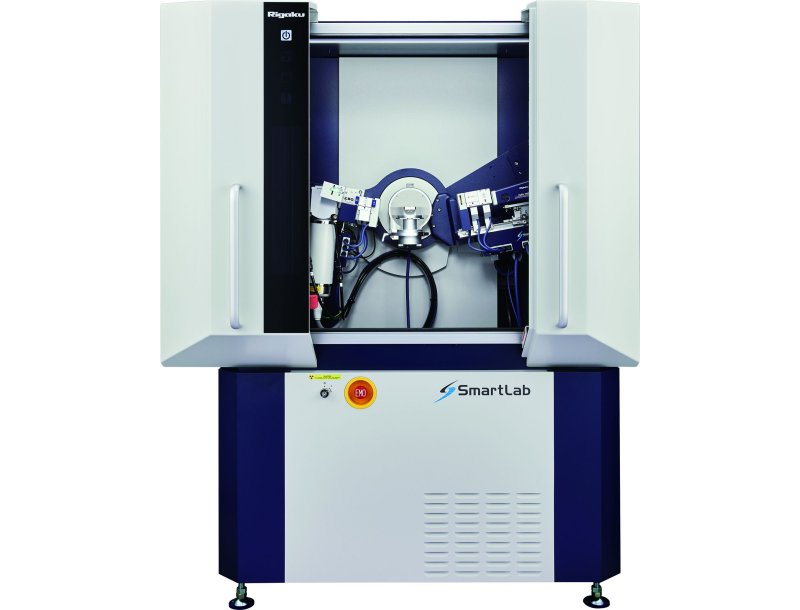
Highly versatile multipurpose X-ray diffractometer with built-in intelligent guidance
Learn more

Contact Us
Whether you're interested in getting a quote, want a demo, need technical support, or simply have a question, we're here to help.