Application Note POLYMER012
Introduction
ABS plastic parts used for automobile exteriors are plated with multiple layers of plating. Proper evaluation of the film thickness of each layer is important to control the quality of product appearance and performance. Methods based on destructive inspection or cross-sectional polishing are labor-intensive and unsuitable for rapid in-process feedback. Using XRF, film thickness on the order of nm to μm can be quantified nondestructively and in a short time, contributing to quality stabilization in the process and reducing the outflow of defects.
Residual stress
| Analysis: | Parts and end products |
| Use: | Process control, failure analysis, quality assurance |
| Analyzed materials: | ABS (Acrylonitrile Butadiene Styrene) resin plating |
| Analysis method: | Standardless FP method |
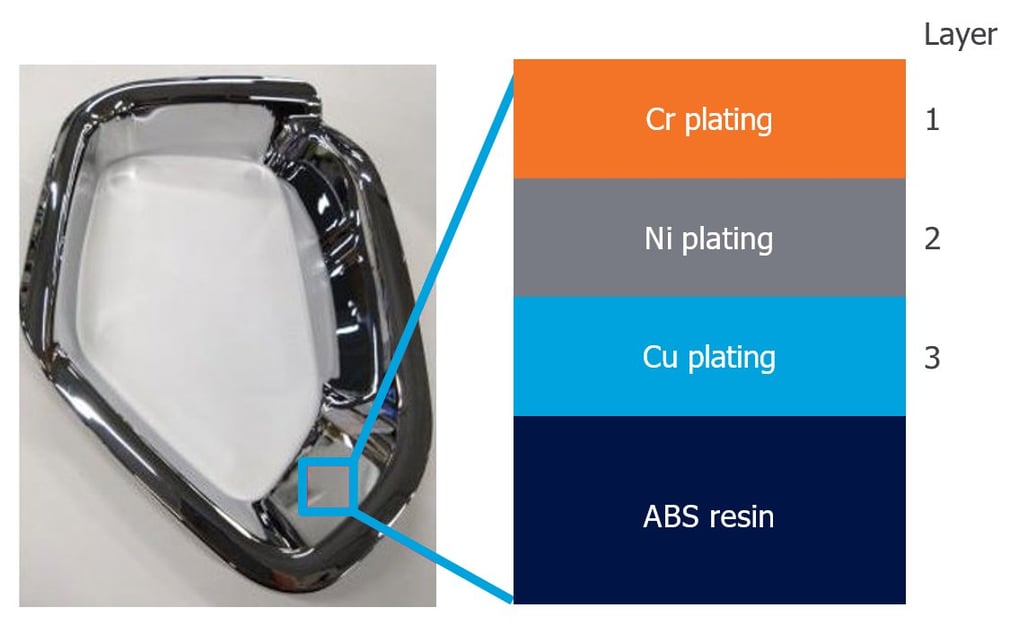
Figure 1: Sample and its layer structure
Table 1: Accuracy confirmation results by repeated measurements
| Analysis value (nm) | Standard deviation (nm) | C.V. (%) | |
| Layer 1 | 609 | 0.8 | 0.13 |
| Layer 2 | 320 | 0.2 | 0.067 |
| Layer 3 | 8305 | 9.8 | 0.12 |
Conclusion
Film thickness analysis using XRF was performed on parts plated with Cu, Ni, and Cr on ABS resin in that order. Two minutes of measurement time per sample is short, and the film thickness of each layer can be simultaneously determined nondestructively. Repeated measurement provides high reproducibility with a C.V. of approximately 0.1%, making it suitable for in-process quantitative control and variation evaluation.