
Quantitative Analysis of Crystalline Silica by XRD

Kaho Hamada, Miki Kasari, and Keigo Nagao

Summer 2025 Volume 41, No. 2 , 16-24

Regulations on crystalline silica have been becoming increasingly strict worldwide and, in Japan, it has been designated as a material subject to risk assessment. Therefore, it is essential to confirm the applicability of the regulatory cut-off value (0.1%) and to appropriately control the amount of crystalline silica in, for example, glass, ceramics, or bricks based on this threshold. As a result, the demand for quantitative analysis is increasing. However, current regulations do not specify an analytical method for determining silica content in powders.

In this technical note, we propose the use of a calibration curve method employing an X-ray diffractometer for the quantification of crystalline silica. We also compare different diffractometers and slit optics configurations, and consider the optimal approach for accurate quantification.

The limits of detection for three crystalline silica samples were all below 0.1%, the regulatory cut-off value. The quantitative results obtained using both a 0–100% calibration curve (based on a standard sample) and a 0–1% calibration curve (based on a matrix-matching method) showed good agreement with the prepared concentrations, demonstrating the effectiveness of the calibration curve method.
Highlights

  • XRD calibration curve methods can reliably quantify quartz, cristobalite, and tridymite at or below the 0.1% crystalline silica regulatory threshold.
  • Both full-range (0–100%) and matrix-matched (0–1%) calibration approaches provide accurate quantitative results when matrix absorption effects are properly addressed.
  • High-performance divergent beam (DB) optics offer the best detection sensitivity, while benchtop XRD systems are also capable of detecting trace crystalline silica concentrations.

Summary

X-ray diffraction provides a practical, non-destructive approach for quantifying trace crystalline silica in materials such as glass, ceramics, bricks, and mineral powders where regulatory compliance requires reliable determination of concentrations around 0.1 wt.%. A calibration curve method based on peak integration enables accurate measurement while distinguishing among the three common crystalline silica polymorphs: quartz, cristobalite, and tridymite.

Two quantitative strategies are effective. A simple 0–100% calibration curve requires only pure crystalline silica and matrix standards, but quantitative results should be corrected using a spike recovery ratio (SRR) to compensate for differences in X-ray absorption between the analyte and matrix. Alternatively, a 0–1% matrix-matched calibration curve eliminates the need for absorption correction when an appropriate silica-free matrix is available.

Performance was evaluated using multiple XRD configurations, including SmartLab SE systems with Bragg-Brentano (BB) and divergent beam (DB) optics, as well as a MiniFlex benchtop diffractometer. All systems successfully detected crystalline silica near the regulatory threshold, with DB optics providing the highest sensitivity because incident-beam monochromatization reduces background and fluorescence. Detection limits for quartz and cristobalite were well below 0.1%, while tridymite required somewhat greater sensitivity due to weaker peak characteristics.

The study also demonstrates that longer counting times can further improve detection limits and that the calibration curve method produces quantitative values in close agreement with prepared concentrations, making it a robust solution for routine crystalline silica analysis.

Frequently asked questions

Recommended products

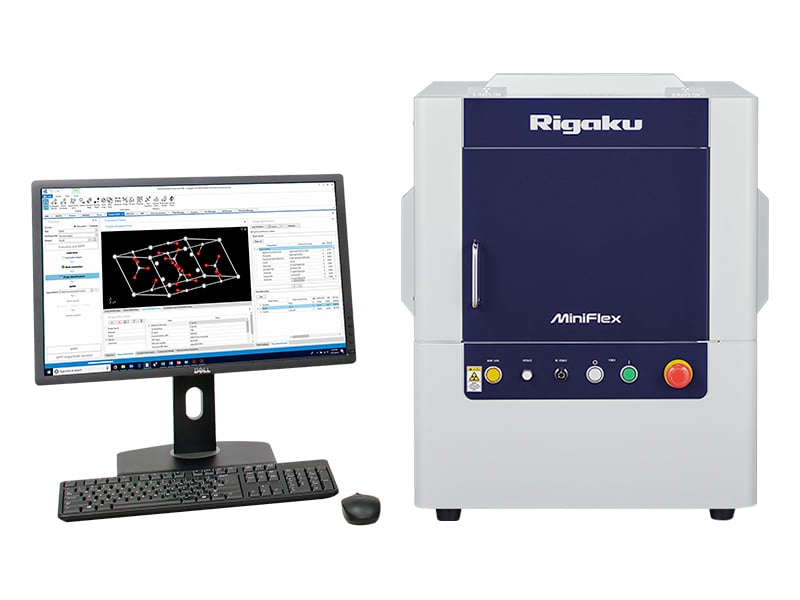
MiniFlex

Sixth-generation general purpose benchtop XRD system for phase ID and phase quantification

Learn more
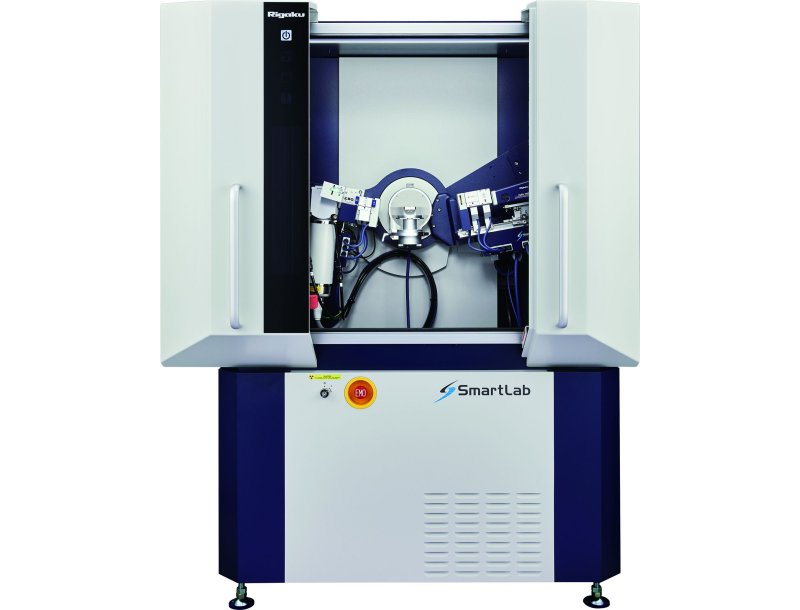
SmartLab SE

Highly versatile multipurpose X-ray diffractometer with built-in intelligent guidance

Learn more
SmartLab

Advanced, state-of-the-art, high-resolution XRD system powered by Guidance expert system software

Learn more


SmartLab Studio II

Windows-based software suite for Rigaku's X-ray diffractometers

Learn more

Subscribe to the Bridge newsletter

Stay up to date with materials analysis news and upcoming conferences, webinars and podcasts, as well as learning new analytical techniques and applications.
Contact Us

Whether you're interested in getting a quote, want a demo, need technical support, or simply have a question, we're here to help.