
Structure Analysis of Nano-size Crystals by the XtaLAB Synergy-ED: An Integrated Platform for 3D ED/MicroED

Sho Ito and Akihito Yamano

Winter 2023 Volume 39, No. 1 , 06-09

3D ED/microED has been attracting much attention because it enables structure analysis of crystals smaller than 1 μm. In this article, examples of crystal structure analysis and some applications of MicroED/3D ED will be presented.

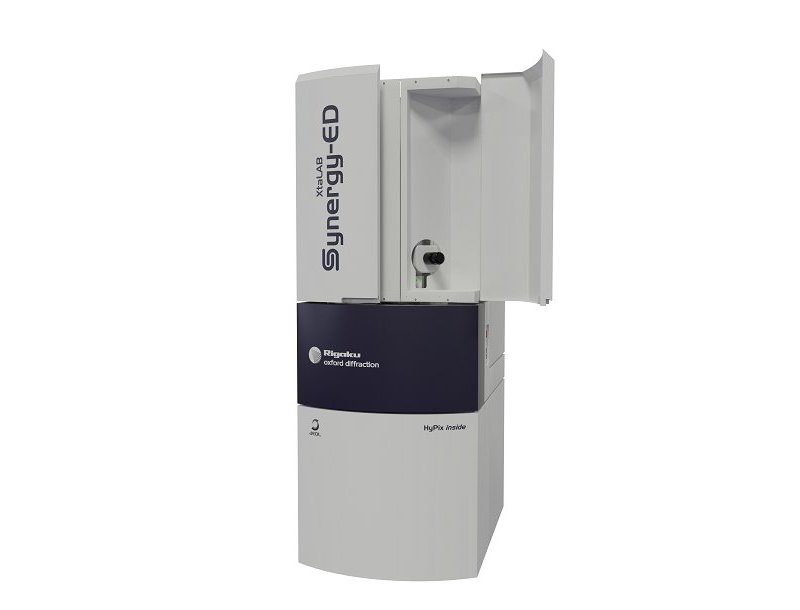
Despite increasing demand for 3D ED/MicroED, measurement and analysis with this analytical technique has not been straightforward. Until recently, electron diffraction experiments were performed mainly as a function of general-purpose transmission electron microscopes. The hurdles were higher than those for X-ray structural analysis because it required an expert in electron microscopy to determine the optimal setting of the equipment for diffraction experiments. To address this situation, Rigaku and JEOL jointly developed an electron diffraction platform dedicated to 3D ED/ MicroED. The system is called XtaLAB Synergy-ED. With the Synergy-ED, anyone can easily perform electron diffraction experiments.
Highlights

  • 3D ED/MicroED enables routine crystal structure determination of submicron crystals that are too small for conventional single-crystal X-ray diffraction.
  • Dedicated electron diffraction platforms can rapidly determine structures directly from real-world samples, including pharmaceutical tablets, without recrystallization.
  • Automated workflows support polymorph identification, quantitative phase analysis, and absolute structure determination, making electron diffraction a powerful complement to X-ray crystallography.

Summary

Three-dimensional electron diffraction (3D ED/MicroED) has become an important structural analysis technique for crystals smaller than approximately 1 μm, extending crystallographic studies to samples that are difficult or impossible to analyze with conventional X-ray diffraction. Because electrons interact with matter much more strongly than X-rays, extremely small crystals can produce measurable diffraction patterns while advances in detector technology have significantly reduced beam damage, enabling routine analysis of sensitive organic and biological materials.

A dedicated electron diffraction platform integrates data collection, processing, and structure solution into a streamlined workflow that reduces the expertise traditionally required for electron diffraction experiments. The system demonstrates that electron diffraction is not only valuable for nanocrystals but can also outperform X-ray diffraction for certain poorly diffracting samples by producing higher-quality structural data.

Pharmaceutical analysis is one of the most compelling applications. Microcrystals embedded within tablets can be analyzed directly after simple sample preparation, eliminating the need for recrystallization and preserving the crystal form present in the finished product. This approach enables rapid identification of active pharmaceutical ingredients, excipients, and other crystalline phases while significantly accelerating structural characterization during drug development.

The technique also enables automated quantitative analysis of crystalline polymorphs by measuring large numbers of individual microcrystals in sequence. Beyond determining the relative abundance of each polymorph, it simultaneously provides complete structural information for each crystal, offering insights that are difficult to obtain from bulk diffraction methods alone.

Another important capability is the determination of absolute structure using dynamical refinement based on multiple scattering effects. Unlike conventional X-ray methods that rely on anomalous dispersion, this approach can accurately determine the handedness of compounds composed primarily of light elements, often with dramatically shorter measurement times. Rather than replacing X-ray crystallography, 3D ED/MicroED serves as a complementary technique, allowing researchers to select the most appropriate method based on crystal size, sample availability, and analytical objectives.

Frequently asked questions

Recommended products

XtaLAB Synergy-ED

A new and fully integrated electron diffractometer for measuring submicron crystals, utilizing a seamless workflow from data collection to structure determination of crystal structures.

Learn more
CrysAlisᴾᴿᴼ

User-inspired data collection and data processing software for small molecule and protein crystallography.

Learn more

Crystallography times editor

Subscribe to the Crystallography Times newsletter

Stay up to date with single crystal analysis news and upcoming events, learn about researchers in the field, new techniques and products, and explore helpful tips.

Contact Us

Whether you're interested in getting a quote, want a demo, need technical support, or simply have a question, we're here to help.