

Development of a Digital Laboratory Integrating Modular Measurement Instruments
Akira Aiba, Kazunori Nishio, and Taro Hitosugi
Summer 2025 Volume 41, No. 2 , 01-05
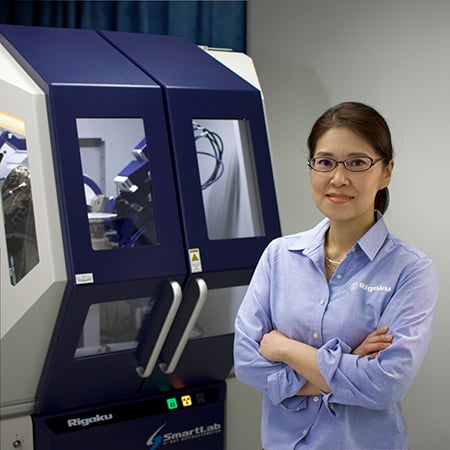
Recent advancements in digital technologies and machine-learning algorithms have contributed significantly to the development of digital laboratories. These systems autonomously investigate materials by integrating automated experimental setups. In this study, we developed a digital laboratory that connects a sputter deposition system, an X-ray diffraction (XRD) instrument (Rigaku SmartLab), and other measurement instruments. The key features of our system include (1) modularization of each experimental instrument to enable flexible adaptation to various experiments and (2) centralized cloud storage of measurement data in a unified format, allowing for data-driven materials science using machine learning. This article also presents a case study of autonomous experimentation to maximize the X-ray diffraction peak intensity ratio of LiCoO₂ thin films.

Highlights
- A modular digital laboratory integrates XRD, sputtering, spectroscopy, microscopy, and other analytical instruments into a fully autonomous materials research platform.
- Standardized data collection using the MaiML format enables machine learning workflows across instruments from different manufacturers while preserving traceability and interoperability.
- Closed-loop Bayesian optimization successfully identified deposition conditions that maximize LiCoO₂ thin-film crystallinity through automated XRD analysis without human intervention.
Summary
Modern digital laboratories combine robotics, standardized instrumentation, cloud computing, and machine learning to automate the complete materials development cycle. A modular architecture allows synthesis systems, X-ray diffraction, SEM, Raman spectroscopy, UV-Vis spectroscopy, and electrical conductivity measurements to operate as coordinated components connected through standardized communication protocols and robotic sample handling.
A key enabler is the use of the Measurement Analysis Instrument Markup Language (MaiML), which stores measurement results, metadata, preprocessing steps, and analysis results in a unified, machine-readable format. Standardized data collection improves reproducibility, simplifies interoperability between instruments, and provides structured datasets suitable for machine learning applications.
The XRD workflow is fully automated, including data preprocessing, baseline correction, peak detection, peak classification, and crystallographic peak assignment. Rather than using Rietveld refinement, which is generally unsuitable for highly oriented thin films, the analysis employs automated signal-processing methods to identify relevant diffraction peaks and calculate figures of merit directly from the diffraction data.
Machine learning closes the experimental loop by using Bayesian optimization to propose new synthesis conditions after each measurement cycle. In a demonstration involving RF-sputtered LiCoO₂ thin films, substrate temperature was iteratively optimized using the XRD intensity ratio of the (003) and (006) reflections as the objective function. Continuous autonomous operation allowed experiments to proceed around the clock, rapidly converging on deposition conditions that produced highly ordered films while eliminating the delays associated with manual sample handling and experiment scheduling.
The modular design also provides a foundation for future expansion, including additional synthesis and characterization techniques, higher-dimensional optimization involving multiple process variables, enhanced scheduling algorithms, digital twin integration, and remote access to autonomous experimentation.
Frequently asked questions
-
A digital laboratory extends beyond simple automation by creating a closed-loop system in which synthesis, measurement, data analysis, and experimental planning continuously inform one another. Machine learning algorithms analyze incoming experimental results and automatically determine the next experimental conditions, allowing the system to optimize materials with minimal human intervention. Standardized data formats and modular instrumentation also make it easier to integrate additional analytical techniques and reuse experimental data.
-
Machine learning depends on consistent, structured datasets that include both measurement results and experimental metadata. A standardized format captures diffraction data together with synthesis conditions, preprocessing steps, instrument settings, and analysis results in a consistent structure. This improves reproducibility, simplifies data sharing between instruments and laboratories, and enables AI models to learn meaningful relationships between processing conditions and material properties.
-
Highly textured thin films often cannot be analyzed effectively using conventional Rietveld refinement because the diffraction intensities do not represent a random powder distribution. Instead, automated analysis uses signal-processing techniques to remove background, detect diffraction peaks, distinguish film peaks from substrate and artifact peaks, and assign crystallographic reflections using reference databases. This approach produces quantitative metrics suitable for automated optimization without requiring manual interpretation.
-
Bayesian optimization is well suited for experiments where each measurement requires significant time and resources. Rather than exhaustively exploring every possible processing condition, it uses previous experimental results to predict where improvements are most likely and selects the next experiment accordingly. This minimizes the number of experiments needed to identify optimal synthesis conditions while efficiently balancing exploration of new parameter regions with refinement around promising results.
-
XRD provides direct structural feedback that can be converted into objective optimization metrics. Characteristics such as peak intensity ratios, peak positions, crystallinity, phase purity, preferred orientation, and lattice parameters can all serve as quantitative targets for machine learning algorithms. Because the analysis is automated, structural characterization becomes an integral part of continuous autonomous decision-making rather than a separate manual evaluation step.
-
A modular architecture allows synthesis systems and characterization instruments to be added, removed, or replaced without redesigning the entire platform. Standardized sample holders, communication protocols, and data formats enable interoperability between different instruments and manufacturers. This flexibility allows the laboratory to evolve as new analytical techniques become available while preserving compatibility with existing automation and machine learning workflows.
-
Future systems can optimize multiple synthesis parameters simultaneously, including temperature, pressure, gas composition, deposition power, and processing time. By combining richer process data with advanced optimization algorithms, improved scheduling, digital twin simulations, and additional characterization techniques, autonomous laboratories can explore much larger experimental spaces and accelerate the discovery of complex materials across thin films, bulk materials, ceramics, polymers, and other material classes.
Recommended products
Subscribe to the Bridge newsletter
Stay up to date with materials analysis news and upcoming conferences, webinars and podcasts, as well as learning new analytical techniques and applications.
Contact Us
Whether you're interested in getting a quote, want a demo, need technical support, or simply have a question, we're here to help.