Application Note B-XRD2039
Introduction
Thin films formed two-dimensionally on a substrate surface exhibit thermal expansion behavior that differs from that of bulk materials and powders. While they can deform relatively freely in the out-of-plane (layer stacking) direction, their in-plane deformation is constrained by the substrate. Under such conditions, thermal expansion and contraction induced by temperature changes during film deposition occur anisotropically, and stress is generated. The stress accumulated within the film can affect the stability of the layered structure and may lead to degradation of electronic device performance. Therefore, accurate understanding of thermal expansion behavior under in-plane constraint by the substrate is important for the proper evaluation and control of film stress. In this example, we focus on changes in lattice plane spacing (d-value) caused by heating/cooling of a thin-film sample and present the results of evaluating thermal expansion behavior in both the out-of-plane and in-plane directions.
Measurements and results
Out-of-plane and in-plane XRD measurements were performed on a nickel silicide (NiSi) thin film (25 nm thick) deposited on a silicon (Si) substrate while heating the sample using the Anton Paar DHS 1100 domed hot stage.
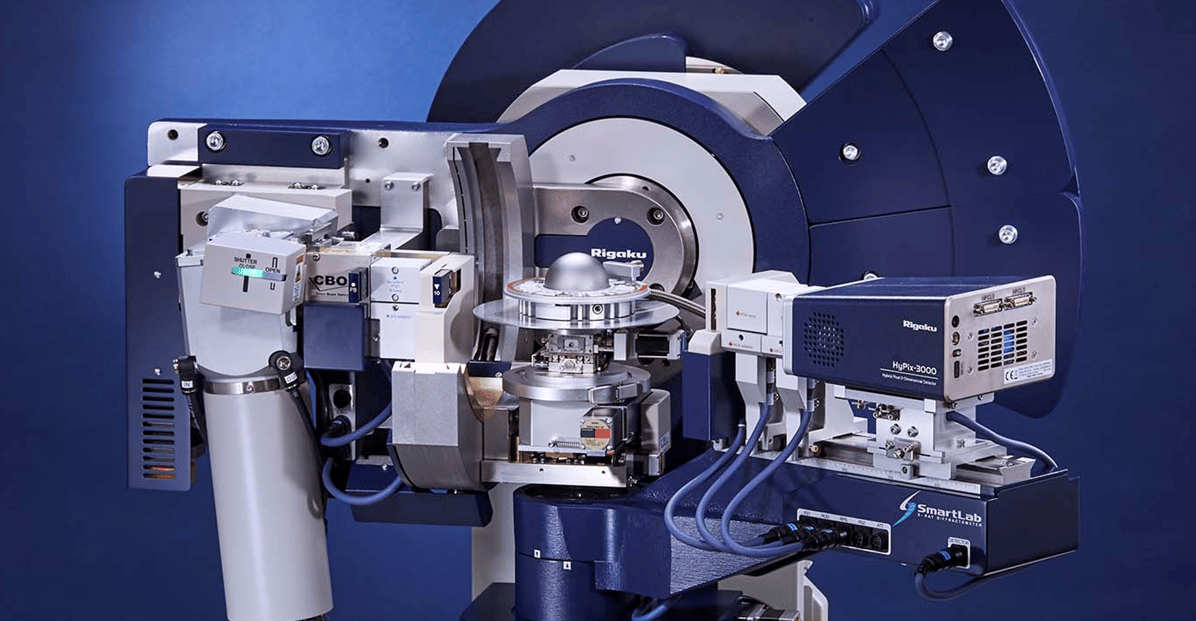 Fig. 1: An X-ray diffractometer equipped with DHS 1100.
Fig. 2 shows the X-ray diffraction profiles measured at room temperature before heating (left) and schematics of the out-of-plane and in-plane XRD measurement geometries (right). The NiSi film in this sample is polycrystalline and exhibits an oriented structure known as axiotaxy, in which the fiber texture axis is aligned along a specific crystallographic direction of the substrate. As a result, the diffraction peaks observed in the out-of-plane and in-plane measurements exhibited different relative intensity ratios. In addition, the 2θ angle of the 112 reflection (marked with * in Fig. 2), which was observed in both measurement geometries, was lower in the in-plane measurement than in the out-of-plane measurement. This indicates that the d-value in the in-plane direction is larger than that in the out-of-plane direction, suggesting the presence of in-plane tensile stress in the NiSi film.
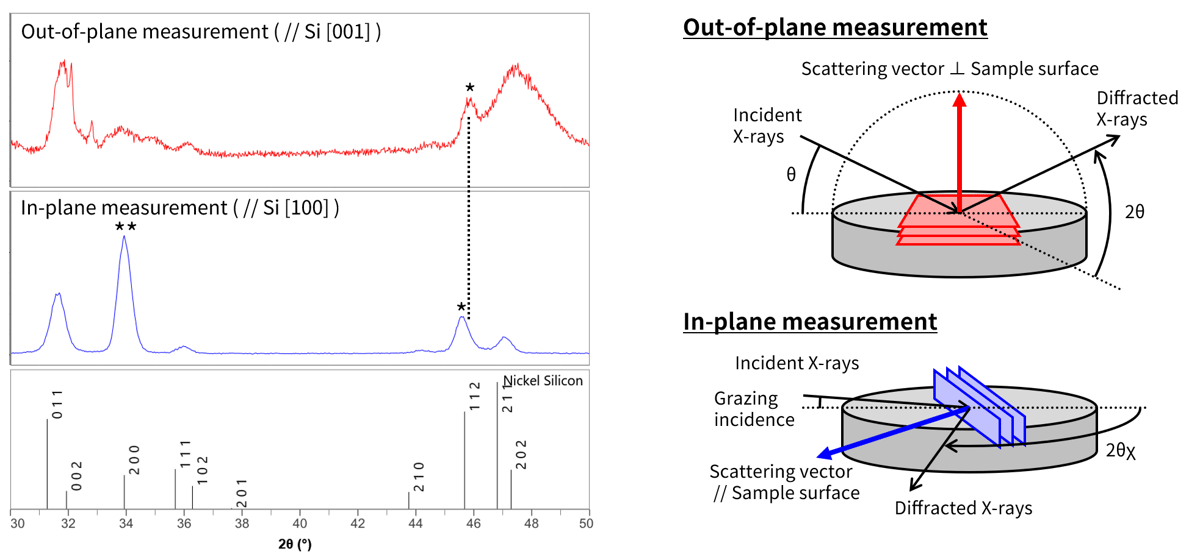 Fig. 2: Out-of-plane and in-plane XRD measurement results and schematics.
X-ray diffraction measurements were performed at elevated temperatures to evaluate the thermal expansion behavior in both the in-plane and out-of-plane directions. Fig. 3 shows (a) enlarged views of the diffraction profiles measured at 50 °C, 100 °C to 800 °C during heating, and (b) the calculated d-value of the NiSi 112 reflection during heating and cooling.
(i) During heating from room temperature to 500 °C, the d-value in the out-of-plane direction increased significantly, whereas the increase in the in-plane direction was much smaller. This behavior is attributed to the in-plane constraint imposed by the substrate. (ii) At 500 °C and 600 °C, the d-value in the out-of-plane and in-plane directions became nearly identical. (iii) Upon further heating from 600 °C to 800 °C, the increase in the out-of-plane d-value became less pronounced. (iv) During cooling from 800 °C to 100 °C, the d-value decreased approximately linearly. Since the behavior observed during cooling differed from that observed during the heating process in stages (i)–(iii), the d-value deformation induced by heating and cooling up to 800 °C is suggested to be irreversible.
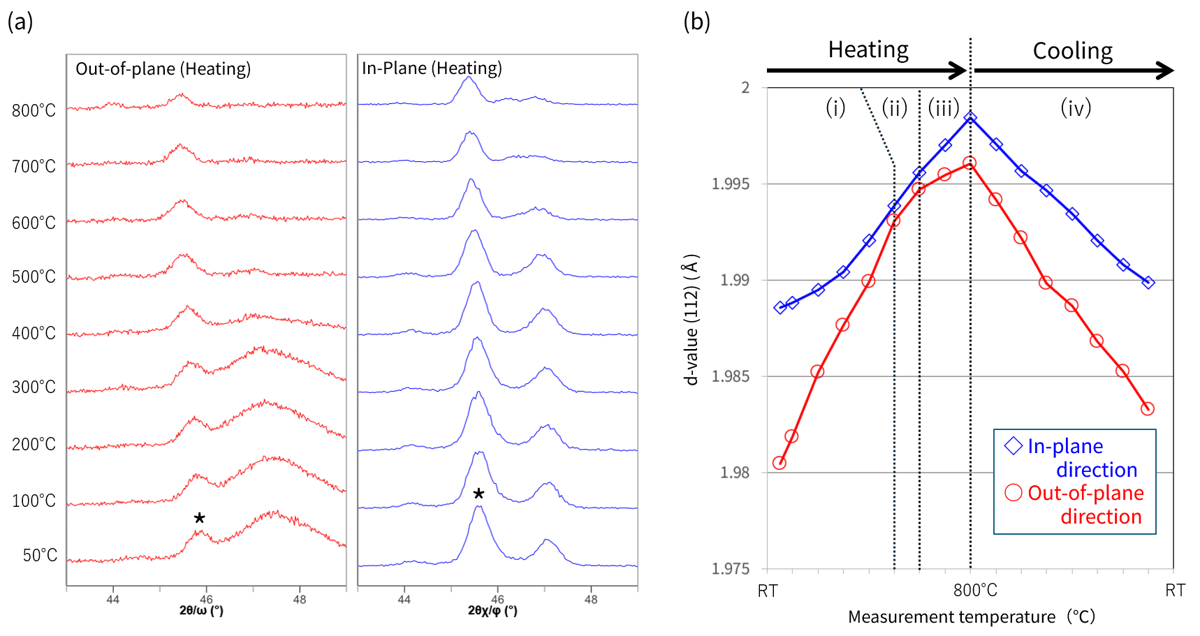 Fig. 3: Measurement and analysis results for NiSi 112 reflection
(a) XRD profiles obtained during heating (b) changes in the d-value during heating and cooling.
To investigate the effect of the heating temperature range on the reversibility of thermal expansion, heating measurements were performed between room temperature and 500 °C, and the results were compared with those obtained for heating up to 800 °C. The analysis focused on the NiSi 200 reflection (indicated by ** in Fig. 2), which exhibits a relatively large thermal expansion coefficient and therefore provides a more sensitive measurement of d-value changes. Fig. 4 (b) shows the in-plane d-value calculated from the in-plane diffraction angle.
When the maximum temperature was limited to 500 °C, the d-value measured during heating and cooling were nearly identical. Furthermore, the rate of change in d-value agreed well with the thermal expansion coefficient of silicon. These results indicate that the in-plane constraint imposed by the substrate remains strong up to 500 °C, and that the NiSi film undergoes thermal expansion and contraction together with the Si substrate.
In contrast, when the sample was heated up to 800 °C, different behaviors were observed during heating and cooling. From room temperature to 500 °C, the lattice plane spacing increased at the same rate as that of silicon. However, between 600 °C and 800 °C, the measured lattice plane spacing showed good agreement with that obtained from high-temperature measurements of NiSi powder. During the subsequent cooling process, a continuous decrease in lattice plane spacing was observed, and the rate of change was estimated to lie between that of the NiSi powder (200) lattice plane spacing and the thermal expansion coefficient of silicon.
These results suggest that the thermal expansion behavior of the NiSi film remains reversible only when the heating temperature is limited to 500 °C or below.
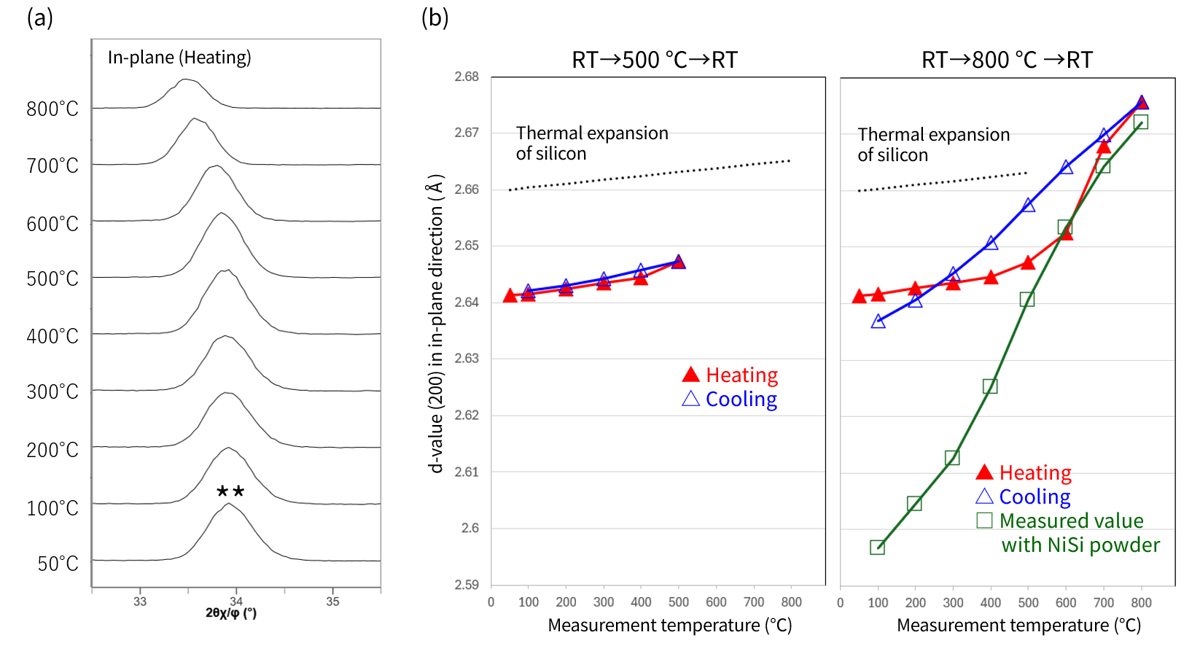 Fig. 4: Measurement and analysis results for the NiSi 200 reflection
(a) in-plane XRD profiles obtained during heating (b) changes in the in-plane d-value during heating and cooling.
As demonstrated above, detailed insights into the thermal expansion behavior of thin films under high-temperature conditions are expected to contribute to applications such as the optimization of temperature conditions in thin-film fabrication processes.
Recommended equipment
- SmartLab automated multipurpose X-ray diffractometer (equipped with an in-plane arm and φ axis) + RxRy attachment + Anton Paar DHS 1100 domed hot stage