
XRD for Nanomaterials

X-ray diffraction (XRD) and small-angle X-ray scattering (SAXS) help researchers and manufacturers understand how nanoscale structure controls material performance. In nanomaterials, properties often depend not only on chemical composition, but also on crystal phase, crystallite size, strain, particle size distribution, pore structure, aggregation, orientation, and nanoscale ordering. XRD provides atomic-scale crystallographic information, while SAXS extends characterization to nanoscale morphology, making the two techniques highly complementary for nanopowders, thin films, catalysts, quantum materials, porous materials, composites, and functional coatings.

Rigaku X-ray diffraction and scattering solutions support nanomaterials workflows from routine phase identification and crystallite size analysis to advanced SAXS, grazing incidence measurements, thin film characterization, and non-ambient studies.
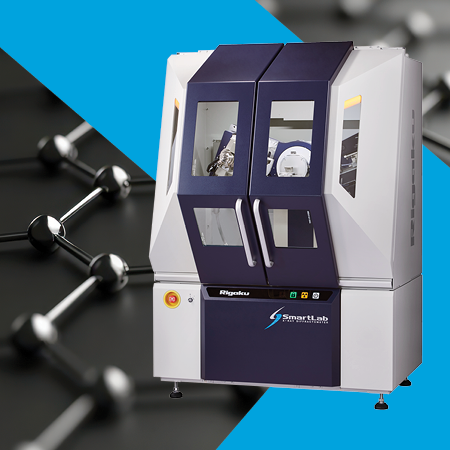

XRD for the study of nanomaterials

Connecting nanoscale structure to material performance

In nanomaterials, small structural changes can produce large changes in optical, electrical, catalytic, magnetic, mechanical, and thermal behavior. XRD and SAXS help reveal these structural details and track how they change during synthesis, surface treatment, processing, dispersion, coating, aging, or use.

  • Nanocrystal phase identification: Use XRD to identify crystalline phases in nanoparticles, quantum dots, metal oxides, ceramics, catalysts, semiconductors, nanocomposites, and functional powders. This helps confirm successful synthesis, detect unwanted byproducts, and compare batch-to-batch consistency.
  • Crystallite size and strain analysis: Use XRD peak broadening analysis to estimate crystallite size and microstrain in nanopowders and nanocrystalline materials. This is especially useful when particle size, defect density, and lattice distortion influence performance.
  • Nanoparticle size and dispersion: Use SAXS to evaluate particle size distributions, aggregation, and dispersion behavior in nanoparticles, colloids, suspensions, polymer nanocomposites, inks, catalysts, and coatings. SAXS is particularly useful when nanoscale features are too small for conventional microscopy sampling or when bulk-average information is needed.
  • Porous and ordered nanostructures: Apply SAXS to characterize pore size, periodic spacing, domain structure, and nanoscale ordering in mesoporous materials, zeolites, metal-organic frameworks, templated oxides, membranes, aerogels, and self-assembled systems.
  • Thin films and coatings: Use XRD, grazing incidence XRD, X-ray reflectivity, and grazing incidence SAXS to analyze nanostructured films, multilayers, surface coatings, semiconductor layers, oxide films, and hybrid organic-inorganic materials. These methods support phase identification, thickness-sensitive surface analysis, density, roughness, interface quality, texture, and nanoscale morphology studies.
  • Catalysts and energy materials: Characterize catalyst nanoparticles, supports, active phases, battery materials, fuel cell materials, photocatalysts, electrocatalysts, and thermoelectric materials. XRD helps identify crystalline phases and crystallite size, while SAXS can reveal nanoparticle dispersion, pore networks, and structural changes during processing or exposure.
  • Nanocomposites and functional polymers: Study filler dispersion, domain spacing, lamellar structure, and morphology in polymer nanocomposites, block copolymers, elastomers, membranes, coatings, and additive-containing formulations. SAXS helps connect nanoscale organization with barrier properties, conductivity, toughness, flexibility, and durability.
  • Texture and preferred orientation: Use XRD and SAXS to evaluate orientation in nanowires, fibers, films, coatings, layered materials, and anisotropic composites. Orientation data can help explain directional performance in electronic, optical, mechanical, and magnetic applications.
  • Non-ambient and in situ studies: Track crystallization, phase transitions, sintering, oxidation, reduction, dehydration, thermal expansion, aggregation, and morphology changes under controlled temperature, atmosphere, humidity, or reaction conditions.
  • Quality control and scale-up: Use XRD and SAXS to compare development samples with production batches, monitor phase purity, confirm crystallite size targets, evaluate particle-size consistency, and troubleshoot changes caused by raw materials, synthesis conditions, milling, drying, dispersion, or coating processes.

For routine nanomaterials analysis, MiniFlex provides benchtop XRD capabilities for phase identification, phase quantification, crystallite size and strain, lattice parameter refinement, percent crystallinity, and Rietveld analysis. For production-focused quality control, MiniFlex XpC supports fast, repeatable powder diffraction workflows where consistent phase verification is needed. For advanced nanomaterials research, SmartLab and SmartLab SE provide expanded X-ray diffraction and scattering capabilities, including powder diffraction, SAXS, grazing incidence methods, X-ray reflectivity, non-ambient measurements, texture/orientation analysis, and flexible sample-stage options.

Application notes

Recommended products

Subscribe to the Bridge newsletter

Stay up to date with materials analysis news and upcoming conferences, webinars and podcasts, as well as learning new analytical techniques and applications.
Contact Us

Whether you're interested in getting a quote, want a demo, need technical support, or simply have a question, we're here to help.