
Industries that use XRD
X-ray diffraction (XRD) and small-angle X-ray scattering (SAXS) are powerful, widely adopted analytical techniques used to understand the structure and properties of solid and soft materials across multiple length scales. By measuring the way X-rays are diffracted by atomic lattices, XRD reveals crystalline phases, relative phase amounts, crystallite size, strain, and preferred orientation. SAXS extends this insight to nanoscale features such as particle size, pore structure, lamellar spacing, domain organization, aggregation, and phase separation. Together, XRD and SAXS provide structural information that cannot be obtained from elemental analysis alone, making them indispensable in advanced materials, metals and alloys, cement and construction materials, mining and minerals, semiconductors, batteries, pharmaceuticals, polymers, ceramics, coatings, geology, forensics, and environmental studies. Offering rapid, non-destructive analysis with minimal sample preparation, these techniques support research and development, process control, and quality assurance by verifying phase and morphology specifications, detecting unwanted or amorphous phases, monitoring polymorphic and structural transformations, and ensuring that materials perform as designed throughout the value chain.
Electronic Devices
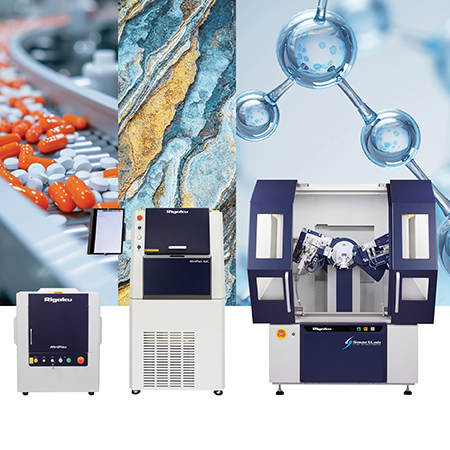
XRD, high-resolution X-ray diffraction (HRXRD), X-ray reflectivity (XRR), and SAXS help electronic device developers and manufacturers connect crystal structure, film quality, nanoscale architecture, and process control to device performance. In semiconductors, displays, sensors, memory devices, power electronics, photovoltaic materials, and advanced packaging, performance depends on more than chemistry alone. Strain, crystallographic orientation, epitaxy, phase purity, thickness, density, roughness, interface quality, residual stress, and nanoscale ordering can all affect yield, reliability, speed, efficiency, and lifetime.
Batteries
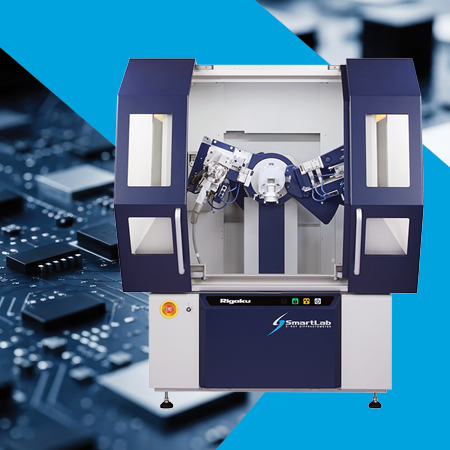
Crystalline structure analysis is essential for understanding battery materials—from electrode powder development to finished-cell performance and failure analysis. XRD provides non-destructive phase identification, phase quantification, lattice parameter analysis, crystallite size and strain evaluation, and operando measurements that reveal how cathode, anode, electrolyte, and solid-state battery materials change during charge and discharge.
Chemistry and Polymers
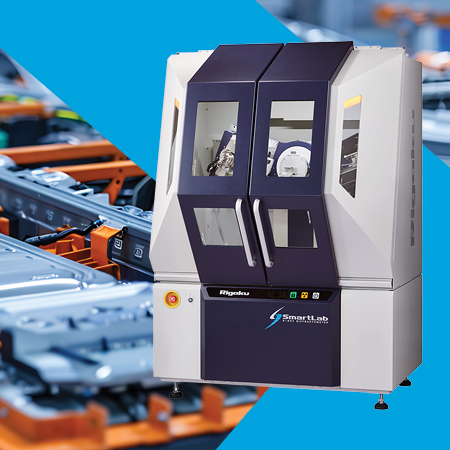
XRD and SAXS provide complementary insight into chemical and polymer materials, linking atomic-scale structure and nanoscale morphology to real-world performance. XRD identifies crystalline phases, measures crystallinity, evaluates crystallite size and strain, and reveals texture or preferred orientation. SAXS extends the analysis to larger structural features such as particle size, pore structure, lamellar spacing, phase separation, fillers, domains, and nanoscale organization. Together, XRD and SAXS help researchers and manufacturers understand how synthesis, formulation, processing, and aging affect material behavior.
Pharmaceuticals
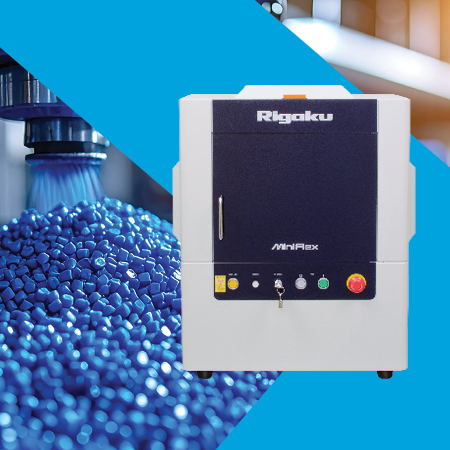
XRD plays a central role in pharmaceutical development and quality control by linking solid-form structure to drug performance, stability, manufacturability, and regulatory confidence. From early API screening to finished dosage form analysis, XRD helps identify polymorphs, salts, cocrystals, hydrates, solvates, crystalline impurities, and amorphous content. Rigaku XRD solutions support pharmaceutical workflows ranging from routine powder analysis to advanced crystal structure determination and regulated QC environments.
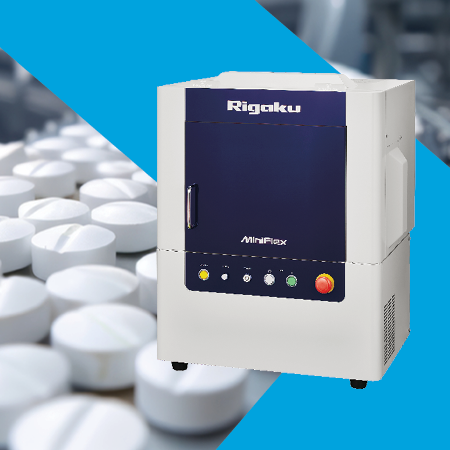
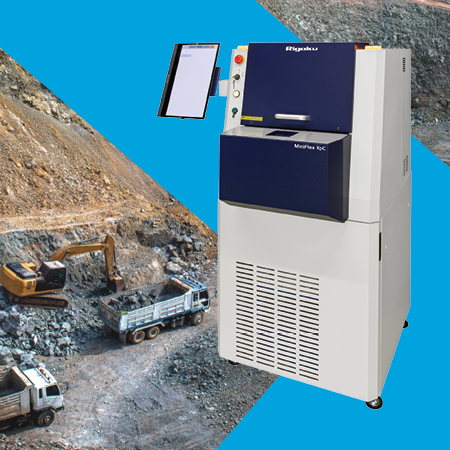
Mining and Refining
X-ray diffraction helps mining, mineral processing, and refining operations understand the mineralogical composition of ores, concentrates, tailings, slags, process streams, and refined materials. While elemental analysis shows what elements are present, XRD shows which crystalline phases contain those elements. This distinction is essential for ore characterization, process optimization, impurity control, recovery improvement, and final product quality.
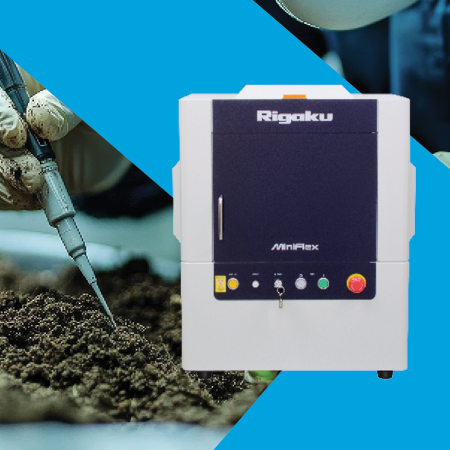
Environment
XRD helps environmental laboratories, researchers, and remediation teams identify the crystalline phases present in soils, sediments, dusts, aerosols, industrial residues, ash, sludge, scale, corrosion products, and contaminated materials. While elemental analysis shows which elements are present, XRD shows which mineral or crystalline compounds contain those elements. This distinction is important because environmental behavior depends heavily on phase form, not just chemistry. Mobility, toxicity, solubility, persistence, reactivity, and treatability can all change depending on the mineral phase present.
Cement
XRD is a critical tool for controlling cement quality from raw materials through clinker production and finished cement. By identifying and quantifying crystalline phases, XRD helps cement producers monitor clinker mineralogy, optimize kiln performance, evaluate supplementary cementitious materials, and confirm product consistency. Rigaku XRD solutions support both routine plant quality control and advanced cement materials research, supporting fast, accurate, and reproducible analysis across the production process
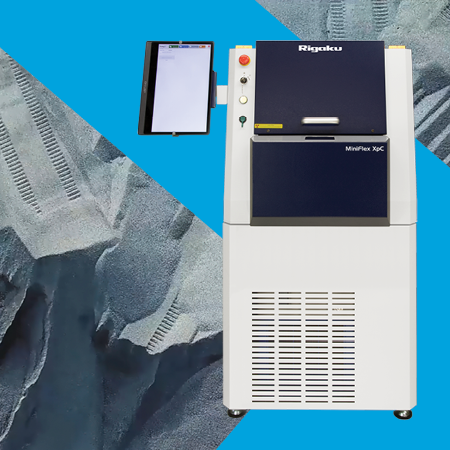
Metals and alloys
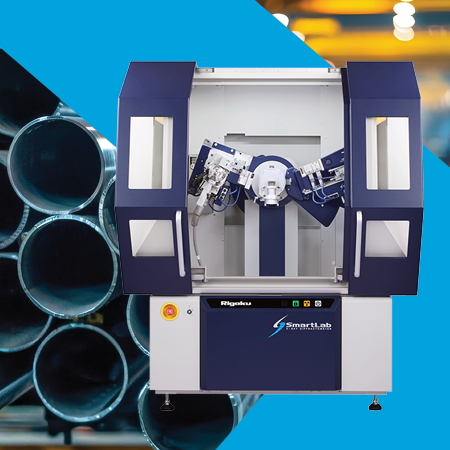
X-ray diffraction helps metals producers, alloy developers, and manufacturers understand how crystalline structure affects strength, hardness, fatigue resistance, corrosion behavior, formability, thermal stability, and product reliability. While chemical analysis shows which elements are present, XRD shows which crystalline phases are present, how those phases are arranged, and how processing changes the material. This makes XRD valuable for alloy development, heat treatment optimization, failure analysis, residual stress measurement, texture analysis, and production quality control.
Nanomaterials
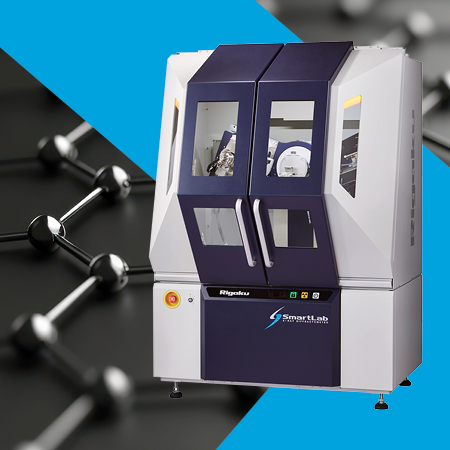
XRD and SAXS help researchers and manufacturers understand how nanoscale structure controls material performance. In nanomaterials, properties often depend not only on chemical composition, but also on crystal phase, crystallite size, strain, particle size distribution, pore structure, aggregation, orientation, and nanoscale ordering. XRD provides atomic-scale crystallographic information, while SAXS extends characterization to nanoscale morphology, making the two techniques highly complementary for nanopowders, thin films, catalysts, quantum materials, porous materials, composites, and functional coatings.

Subscribe to the Bridge newsletter
Stay up to date with materials analysis news and upcoming conferences, webinars and podcasts, as well as learning new analytical techniques and applications.
Contact Us
Whether you're interested in getting a quote, want a demo, need technical support, or simply have a question, we're here to help.