
CrysAlisPro Tip

How to Set the Beamstop Shadow Mask


Learn how to appropriately set up the beam stop shadow mask in CrysAlisPro to ensure the software correctly identifies shadows and avoids attempting to measure reflection data in those areas. This video provides a step-by-step walkthrough for configuring masks for both single and dual beam stop setups.

In this video, you will learn how to:

  • Capture a test image at a close distance (e.g., 32 mm) with geometry at zero to clearly visualize the beam stop shadow.
  • Access the adjustment tool via the little caret menu in the bottom right corner of the CrysAlisPro interface.
  • Toggle the beam stop overlay to visualize the current mask against your raw data.
  • Edit mask parameters, including the diameter of the cups, the angle of the holder arm, and XY offsets for precise alignment.
  • Handle dual beam stop configurations by using the "General" settings to adjust thickness and distances between multiple cups.
  • Save your configuration to the master parameters (PAR file) so that your adjustments persist in future sessions.
  • Verify the mask by changing the detector distance and 2θ position to ensure the mask accurately tracks the shadow movement.

Properly masking your beam stop is essential for clean data reduction and accurate crystal structure analysis.

Presenter

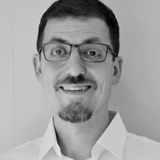
Photo of Mark Del Campo, PhD
Mark Del Campo, PhD | Senior Applications Scientist

Rigaku Americas | Texas, USA

Mark Del Campo is a Senior Applications Scientist at Rigaku Americas Corporation with over 20-years-experience in the life sciences. He has traveled the world supporting Rigaku’s macromolecular crystallography and small angle X-ray scattering customers for 9 years. Mark did his postdoctoral research on fungal DEAD-box proteins and Group I and Group II introns with Dr. Alan Lambowitz at the University of Texas at Austin, where he solved 8 structures deposited in the PDB. Mark received his Ph.D. under the supervision of Dr. James Ofengand at the University of Miami, where he worked on E.coli pseudouridine synthases and solved 3 structures deposited in the PDB. Mark was the recipient of both predoctoral and postdoctoral Ruth L. Kirschstein National Research Service Awards.
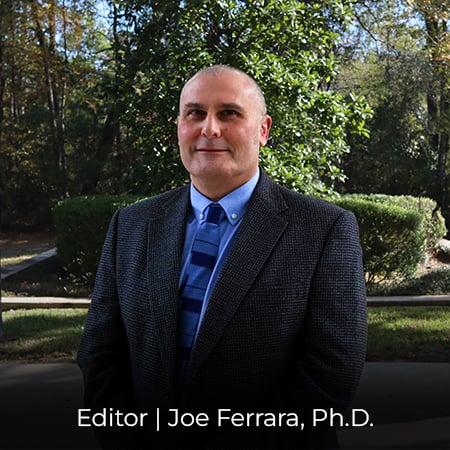
Crystallography times editor

Subscribe to the Crystallography Times newsletter

Stay up to date with single crystal analysis news and upcoming events, learn about researchers in the field, new techniques and products, and explore helpful tips.
Contact Us

Whether you're interested in getting a quote, want a demo, need technical support, or simply have a question, we're here to help.