Application Note SMX042
Introduction
It is often advantageous to perform structure determination experiments in situ, in order to protect delicate samples which may suffer from solvent loss, or to study crystallization kinetics and dynamics, such as the appearance of transient polymorphs during crystal nucleation which are otherwise inaccessible. Additionally, exposing crystalline samples to different solvents, e.g. in the case of porous materials, can provide insights into solvent exchange mechanisms and/or selectivity of the pores.
The inside of an electron diffractometer requires a vacuum to allow the passage of electrons which under normal circumstances would prevent the ability to perform experiments of this type.
Hardware setup
To overcome this limitation, the liquid nano-channel chips (Figure 1a) and matching sample holder (Figure 1b) provided by Insight Chips confine a thin liquid layer (~200 nm up to 1 μm) between 25 nm silicon-nitride membranes within thin nano-channels, creating a stable environment for in situ experiments with tolerable electron beam absorption. Four inlet/outlet ports allow to inject solutions for crystal nucleation, or suspensions of already-formed nanocrystals, as well as enforce liquid flow for solvent exchange or mixing by means of dedicated liquid trapping features inside the flow channels (Figure 1c). The ports can be accessed either by drop-casting before placing the chips inside the diffractometer, or even during the measurement session using tubing and seals inside the sample holder.
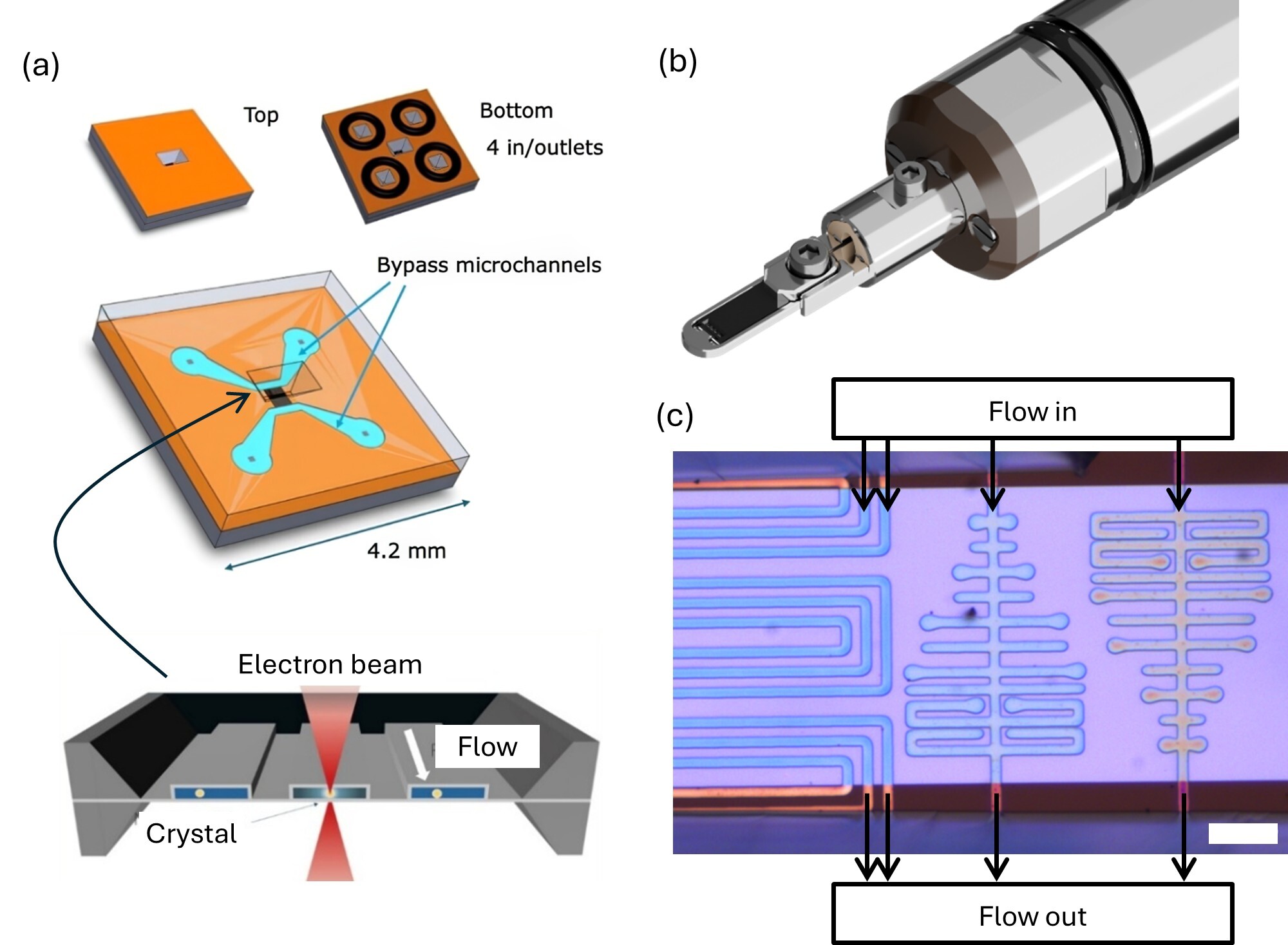
Figure 1: A graphical representation of the liquid nano-channel system. (a) Schematic drawing of nano-channel chip with overall structure, comprising in- and outlets, bypass microchannels and the core section containing nano-channels enclosed by electron-transparent silicon nitride. (b) High-tilt sample holder tip with nano-channel chip mounted near the front. (c) Light microscope image of nano-channel chip core section, showing the channel structures, including meander and trap features, which allow for in-situ mixing experiments. Scale bar is 20 μm.
Unlike conventional liquid-cell systems for transmission electron microscopy, no assembly of the cell from separate window chips is required, which commonly leads to window ruptures due to agglomerating or inhomogeneously sized crystals already formed in the solution. Furthermore, thanks to the large number of nano-channels on the chip (Figure 1c), a much larger field of view can be accessed to increase the expected number of accessible crystals. Finally, the geometry of the chips and holders allow for an exceptionally large angular range for data collection of ±60º.
Experimental
The goal of the work described in this application note was to crystallize ZIF-8 in situ on a liquid nanochannel chip and subsequently perform a diffraction experiment with any resulting nano crystals. Figure 2a shows the chip being loaded onto the holder and Figure 3b shows the holder inserted into the XtaLAB Synergy-ED diffractometer. The method of injecting solution is also shown in Figure 3b.
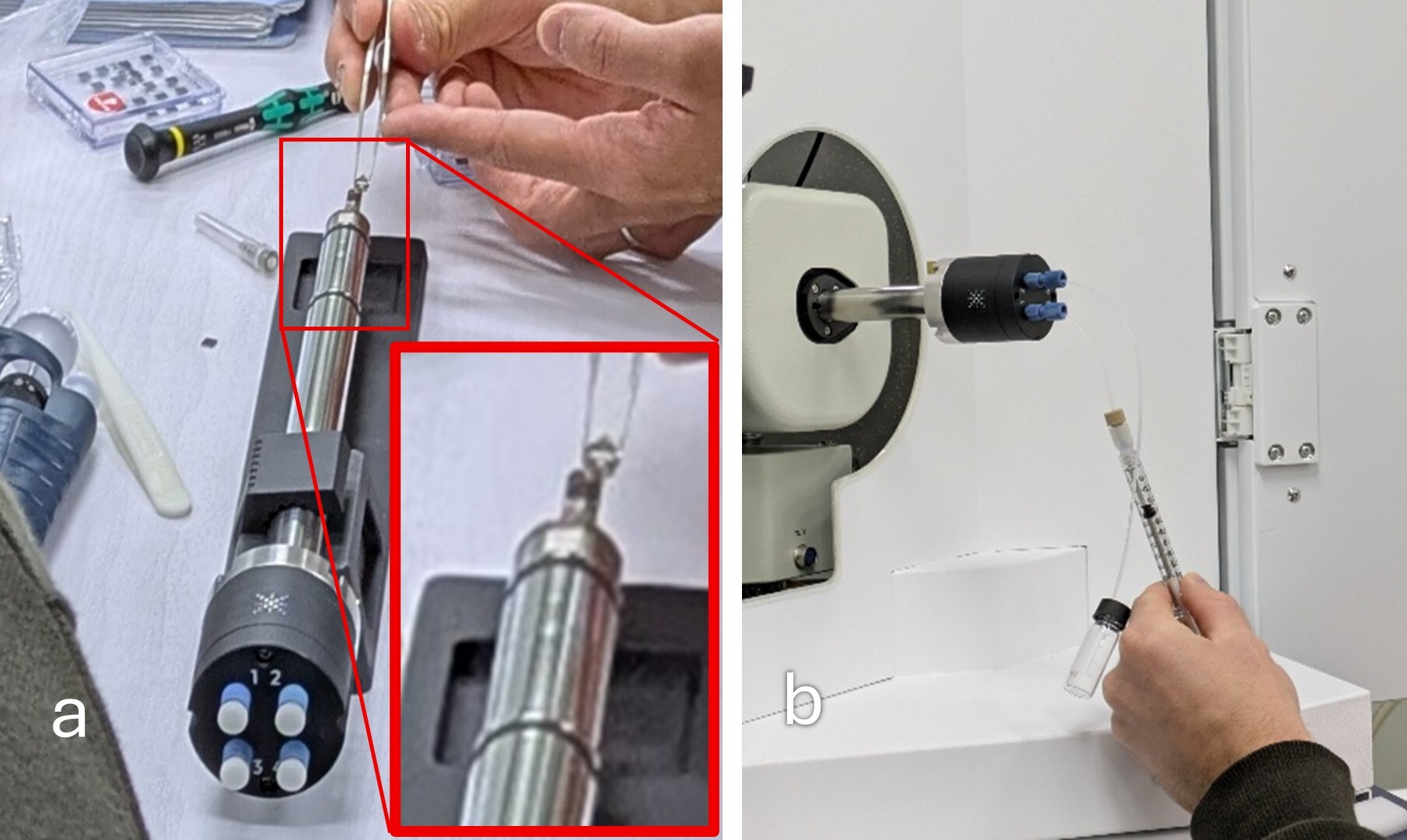
Figure 2: Images of the nano-channel sample holder. (a) The liquid nano-channel chip is loaded onto the holder. (b) The holder is partially inserted into the XtaLAB Synergy-ED airlock, with solution being injected into the chip.
ZIF-8 was crystallized by mixing aqueous solutions of Zn(OAc)₂ 0.2 M and imidazole 1.6 M in situ on the nano-channel chip. Several nanocrystals were successfully grown in the channels of the chip, one of which can be seen in Figure 3. The sample was quite thin and difficult to see but an approximate outline is indicated in the inset, higher magnification image.
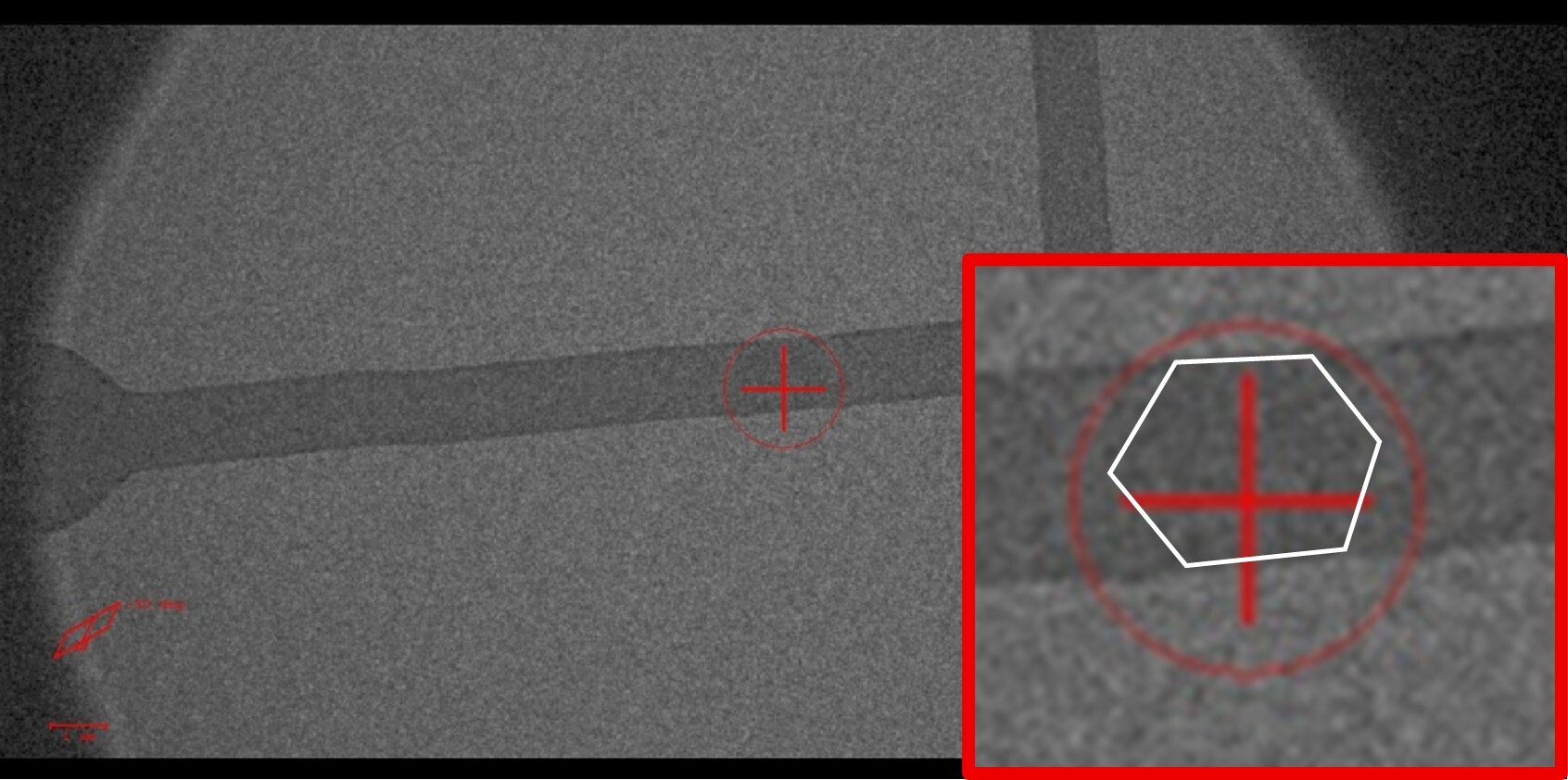
Figure 3: An image of the crystal in situ captured using the visual mode in CrysAlisPro. A higher magnification image is inset with an approximate outline of the sample in white.
A diffraction experiment conducted on the crystal yielded sufficient data quality and completeness for a successful structure determination. Selected settings for the data collection are shown in Table 1.
Table 1: Selected settings and parameters for the data collection conducted on the sample.
| Parameter | Value |
| Tilt range | -30 to +30° |
| Number of frames | 120 |
| Flux density | 3.5 x 10⁻³ e/Å2s |
| Exposure time per frame | 0.5 s |
| Total experiment time | 1 m 9 s |
For this sample, exposure times of only 0.5 seconds and 60° of data, was sufficient. The structure obtained is shown in with parameters from the refinement shown in Table 2.
Table 2: Selected parameters from structure refinement
| Parameter | Value |
| Empirical formula | C₉H₁₀N₄O₃Zn₂ |
| Formula weight | 352.98 |
| Temperature/K | 298.15 |
| Crystal system | orthorhombic |
| Space group | Pba2 |
| a/Å | 10.574(4) |
| b/Å | 12.209(7) |
| c/Å | 4.680(12) |
| α/° | 90 |
| β/° | 90 |
| γ/° | 90 |
| Volume/ų | 604.2(15) |
| Ꮓ | 2 |
| ρcalc g/cm³ | 1.940 |
| F(000) | 108.0 |
| 2ϴ range for data collection/° | 0.18 to 1.798 |
| GooF | 1.404 |
| R1/% | 15.98 |
| wR2/% | 35.29 |
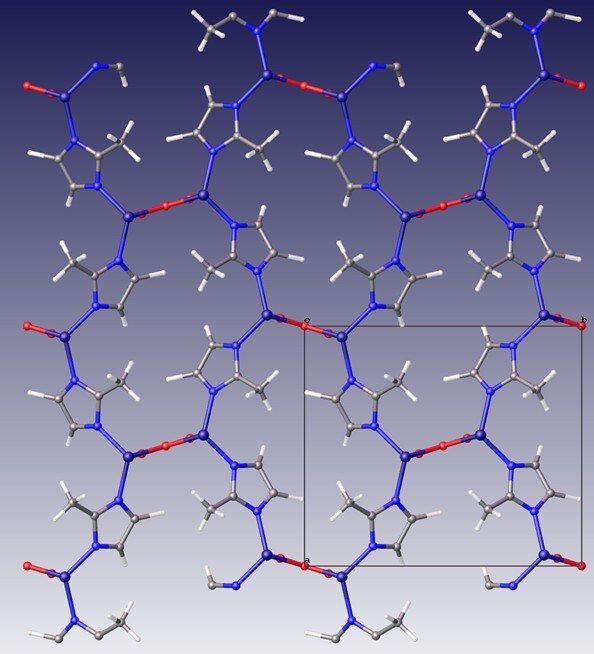
Figure 4: The structure obtained during refinement
Conclusions
The structure of a crystal of ZIF-8 grown in situ in the liquid nano channel chip from Insight chips. This proof-of-concept experiment shows that solutions can be easily mixed in the chip allowing for controlled crystallization attempts inside the diffractometer. Furthermore, the construction of the chip with thin-walled silicon nitride channels ensures that the electron beam can pass through to the sample with minimal background diffraction. In combination with a 200 kV electron beam and HyPix electron counting detector, as present in the XtaLAB Synergy-ED, clean, high-quality diffraction images can be readily obtained, from which successful structure solution is possible.
Acknowledgements
With thanks to Mariusz Kubus, Marta Przybyl, Kasper Steen Pedersen, and Kristian Mølhave of Denmark Technical University who carried out this work in conjunction with Emil Christian Stillhoff Jensen of Insight chips .