Application Note POLYMER011
Introduction
Residual stress is known to significantly affect the fatigue strength and the dimensional stability of products, and its evaluation and management are extremely important, especially for structural components. In recent years, polymeric materials have also been used for structural components, further increasing the need for residual stress evaluation. The X-ray stress measurement method known as the sin²ψ method, which is widely used for metallic materials, can also be applied to polymeric materials. By combining X-ray stress measurement and tensile testing, it is possible to calculate the stress constant and evaluate the residual stress of polymeric materials with different degrees of crystallinity and preferred orientation with sufficient accuracy.
Residual stress
| Analysis: | Parts and end products |
| Use: | Process control, failure analysis, quality assurance |
| Analyzed materials: | Polyacetal (POM) |
| Attachment: | Tensile attachment head |
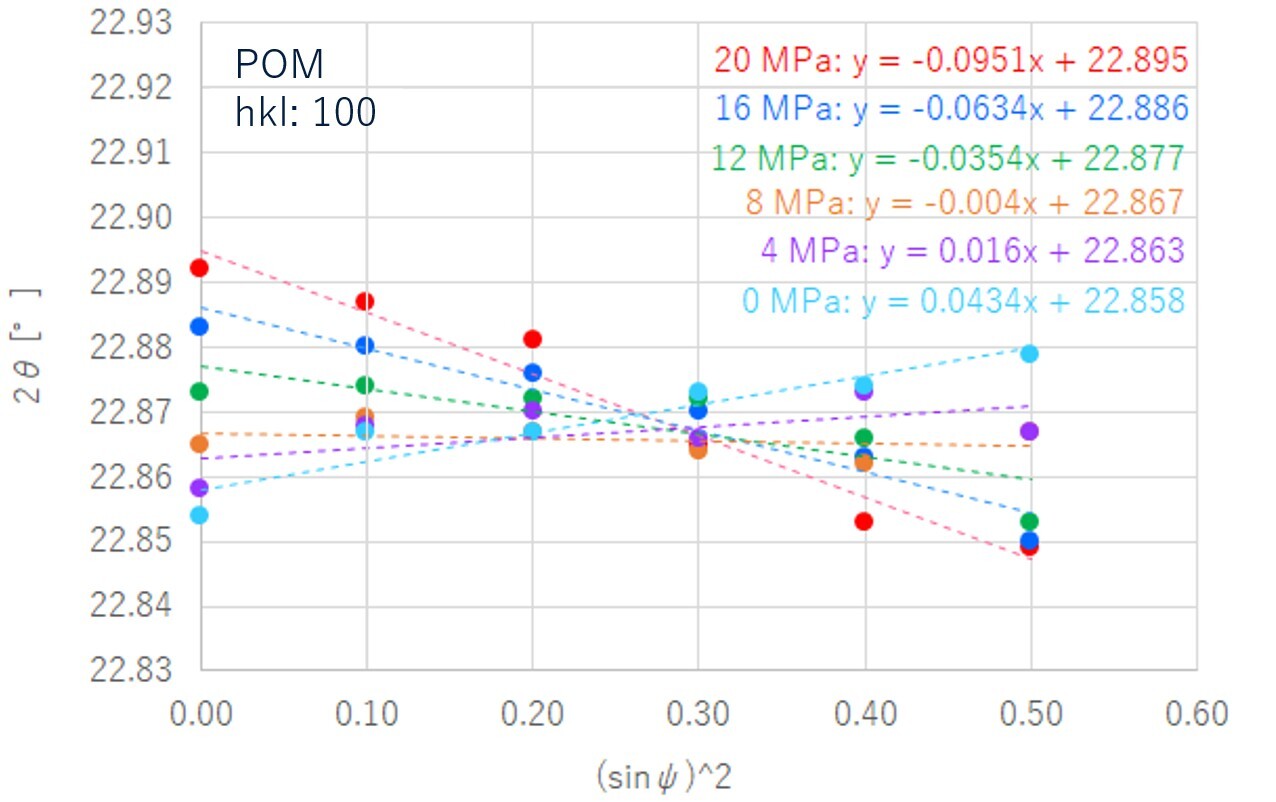
Figure 1: 2θ - sin²ψ plots for different applied stresses
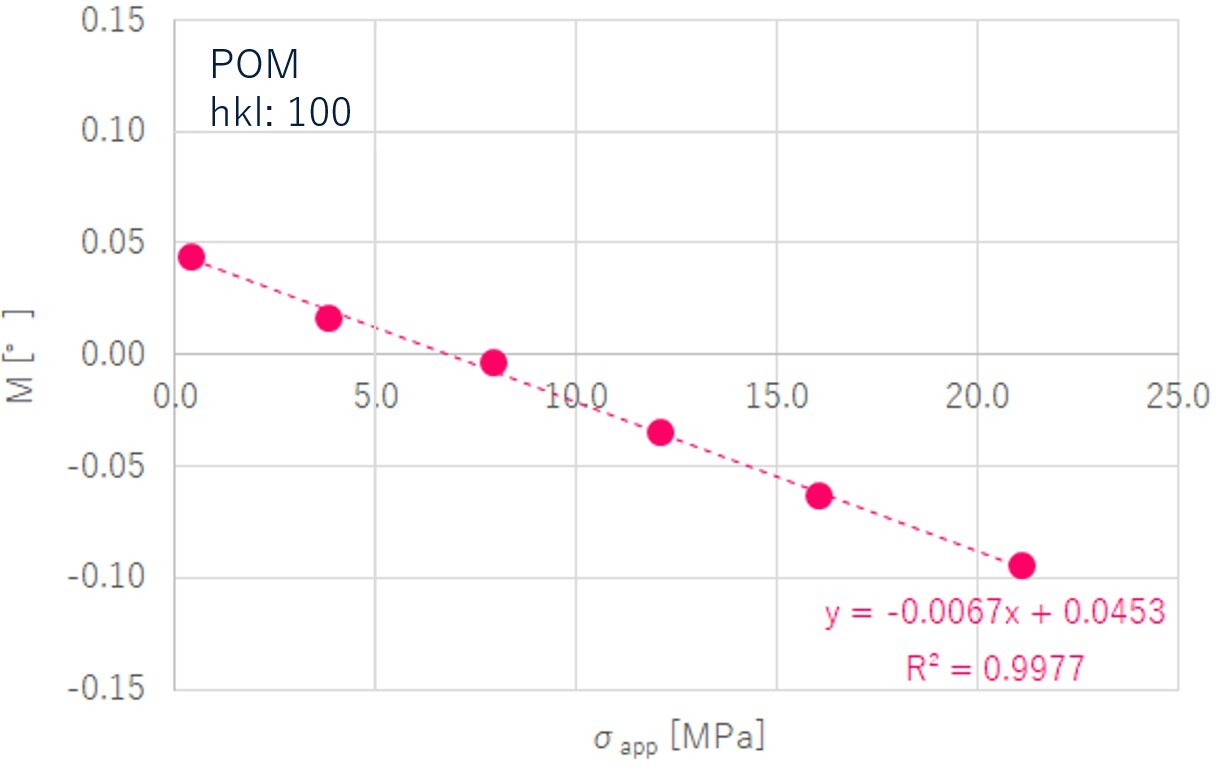
Figure 2: Correlation between applied stress (σapp) and slope (M) of 2θ - sin²ψ plot
Conclusion
The 2θ-sin²ψ plot for each applied stress showed high linearity (Figure 1), and the correlation between the applied stress and the slope of the 2θ - sin²ψ plot also showed high linearity (Figure 2).These results indicate that the X-ray stress measurement can be performed on polyacetal with sufficient accuracy. In addition, by calculating the stress constant as the reciprocal of the slope of the regression line shown in Figure 2, a more reliable evaluation of the residual stress can be achieved for polymeric materials.