
TMA
Thermomechanical Analysis (TMA) is a technique used to precisely measure the dimensional changes of a material as it is heated or cooled under a controlled load. By monitoring how a sample expands, shrinks, or softens in response to temperature variations, TMA reveals mechanical properties of materials.
TMA offers several measurement modes to suit different sample types and testing purposes:
- Compression loading mode: Applies a force to bulk samples to assess thermal expansion or shrinkage.
- Tensile loading mode: Stretches film or fiber samples to evaluate their thermal response under tension.
- Penetration mode: Uses a needle-shaped probe to detect softening behavior by monitoring depth of penetration.
These modes allow for the evaluation of important material characteristics, including:
- Coefficient of Thermal Expansion (CTE): Indicates how much a material expands or contracts with temperature changes—critical for designing joints with dissimilar materials and analyzing thermal stress.
- Glass Transition Temperature (Tg): Marks the temperature at which polymers shift from a rigid, glassy state to a flexible, rubbery one. Tg is essential for determining service temperature limits.
- Softening Point: Identifies the temperature at which a material begins to soften, useful for evaluating processability and heat resistance.
- Sintering and Curing Behavior: Monitors the temperature and timing of sintering in ceramics or curing in thermosetting resins.
TMA is widely used across industries such as plastics, rubber, resins, ceramics, glass, metals, and composites. It supports applications in material development, quality control, and product design—providing accurate mechanical properties to ensure performance and reliability under thermal stress.
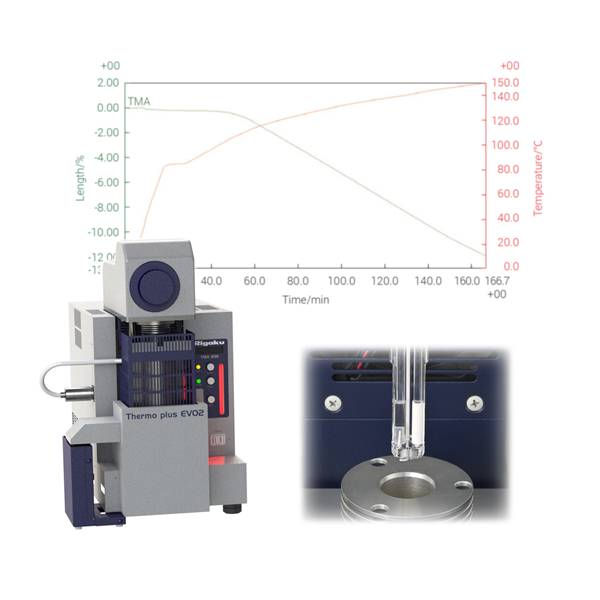
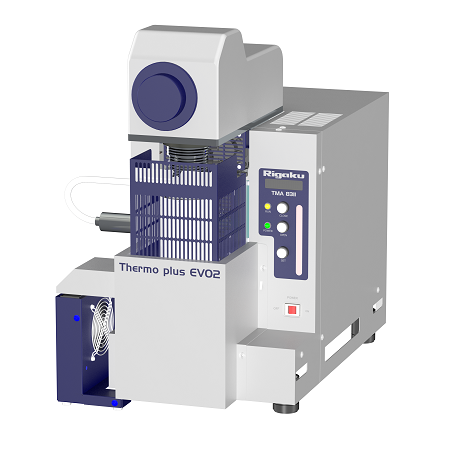
TMA8311
TMA is the measurement of a change in dimension or mechanical property of the sample while it is subjected to a controlled temperature program.
Learn more
TMA8311/HUM
TMA/HUM measures change in dimension or mechanical property of a sample while subjected to a temperature regime under water vapor atmosphere with a constant relative humidity.
Learn more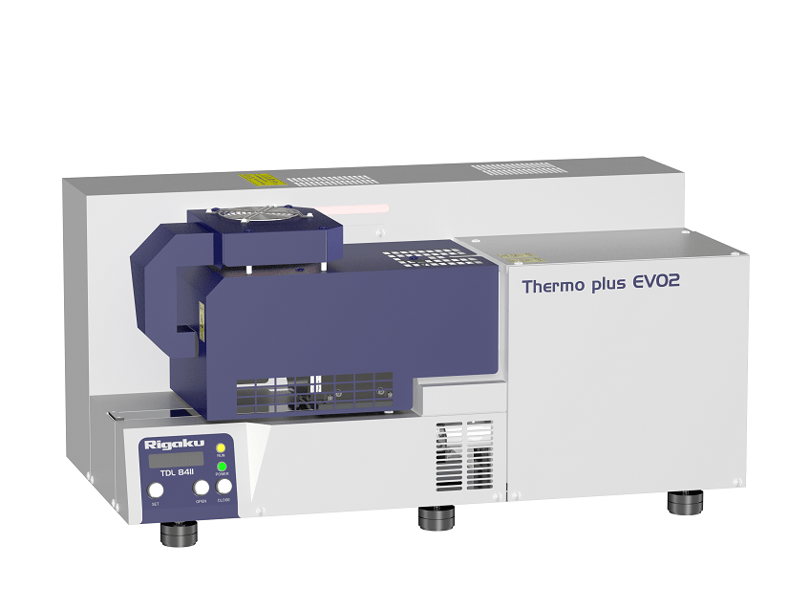
TDL8411
TDL detects changes in the amount of thermal expansion and contraction in a sample with high reproducibility, and automated measurements are also possible with the ASC.
Learn more
Contact Us
Whether you're interested in getting a quote, want a demo, need technical support, or simply have a question, we're here to help.