Application Note B-TA1094
Introduction
It is known that when polymer products are used outdoors for extended periods, their mechanical and physical properties change due to factors associated with outdoor exposure, such as ultraviolet radiation and fluctuations in temperature and humidity.
The results of evaluating the deformation behavior in response to load changes using TMA for natural rubber sheets that had been exposed outdoors for a specific period are presented.
Measurement and results
Natural rubber sheets with a thickness of 1 mm were exposed outdoors for 9 days and 17 days, respectively, were cut into 4 mm-diameter specimens. These were then measured by the TMA compression loading method in an air atmosphere at 23 °C with the applied load varied from 20 mN to 980 mN at a rate of 10 mN/min. Figure 1 shows a comparison of the TMA results for samples subjected to different exposure conditions.
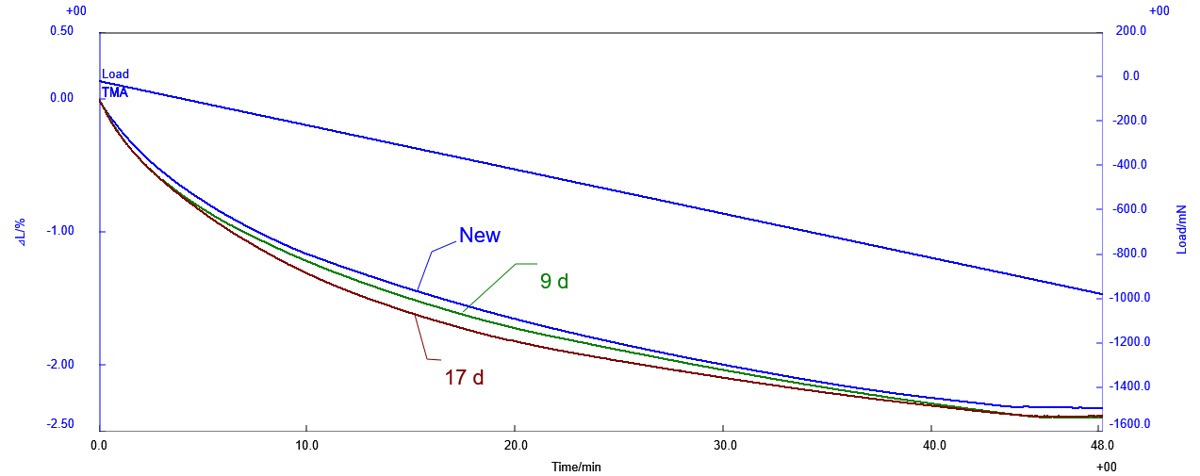 Figure 1 Comparison of the TMA results for samples subjected to different exposure conditions
Figure 2 shows the load dependence of the displacement % for samples subjected to different exposure conditions.
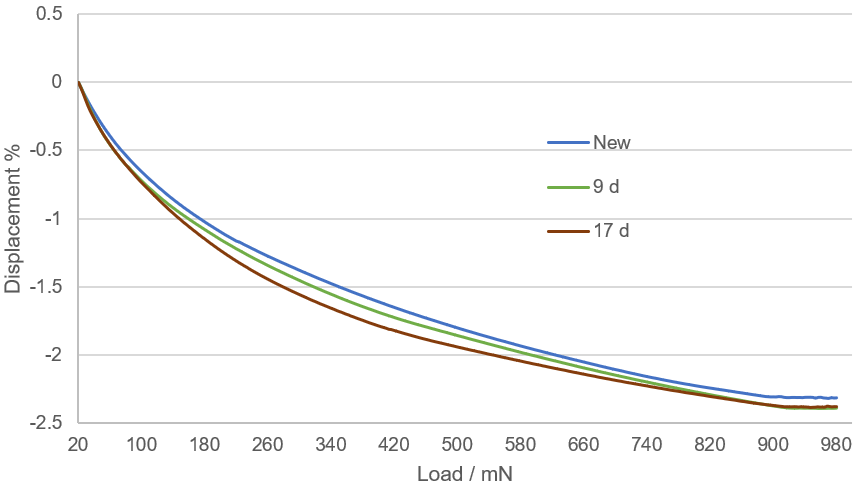 Figure 2 Load dependence of the displacement %
For the unexposed (New) sample, as well as for samples from both of the two different exposure conditions, the amount of deformation in the shrinkage direction increased with increasing of compression load.
As the duration of exposure increases, it is considered that the molecular structure of the sample undergoes changes, driven by factors such as ozone-induced oxidation, ultraviolet radiation, temperature fluctuations, and humidity (moisture), leading to progressive degradation.
Based on the results of this measurement, it was observed that as degradation progresses, the samples tend to become more prone to deformation (softer). Since actual products contain various additives, such as antioxidants, comparing the load dependence of changes in TMA, a key mechanical property, serves as an effective indicator for evaluating the effectiveness of these additives and the durability of the products.