Application Note B-TA1092
Introduction
For commercially available two-component epoxy adhesives, differences in adhesive strength resulting from variations in post-bonding holding time were evaluated by measuring and comparing lateral displacement of the bonded joint using the TMA tensile load method.
Measurement and results
Aluminum-based films (70 μm thick) were cut into strips measuring 5 mm in width by 15 mm in length, and 5 mm in width by 10 mm in length; the 5 mm-long sections were then overlapped and bonded with adhesive (bonded area: 5 mm × 5 mm). For samples held at room temperature (23°C) for 3, 4, 5, and 20 hours, the ends of the film were clamped, the load was varied from 20 mN to 300 mN at a rate of 10 mN/min, and the expansion (%) caused by lateral displacement of the bonded joint was measured.
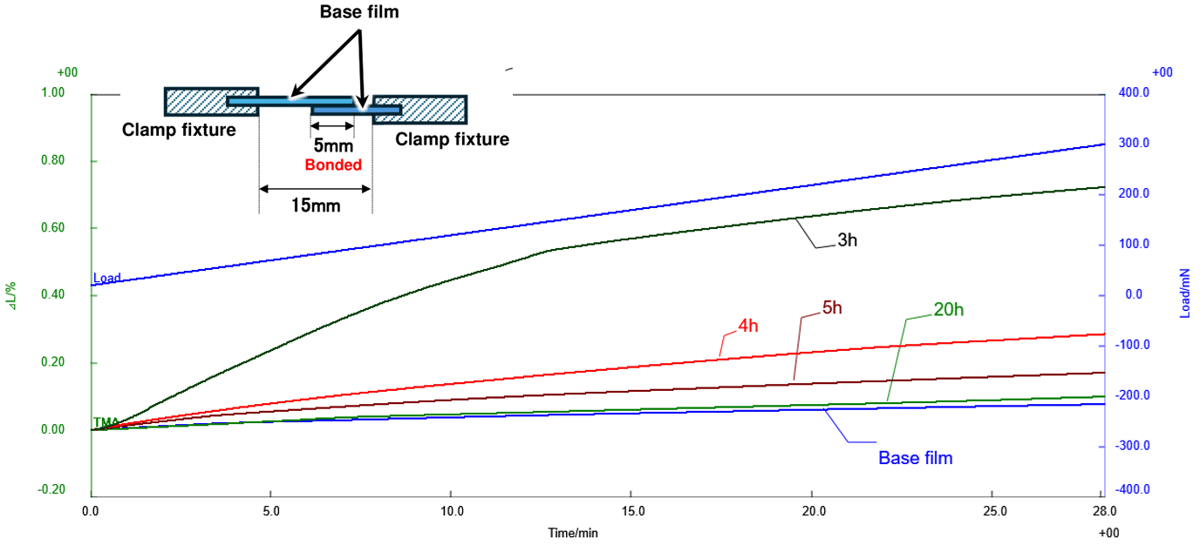 Figure 1 TMA tensile loading measurement results for strip-shaped films
Figure 2 shows the relationship between applied load and expansion (%).
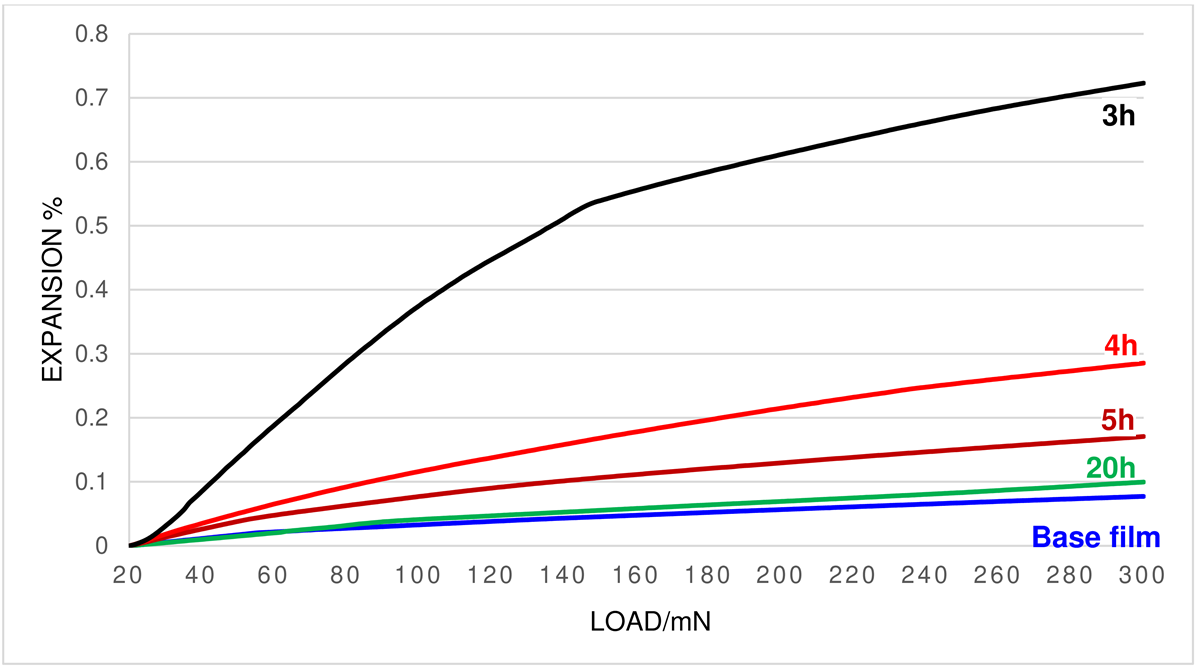 Figure 2 Plots of Load vs. Expansion (%) at different holding times (23°C)
Comparing the samples after different holding times, the expansion (%) (lateral displacement) decreases in the order of 20 h, 5 h, 4 h, and 3 h. It is presumed that as the holding time decreases, uncured portions of the adhesive remain; the deformation of these soft, uncured areas leads to an increase in the amount of displacement.
With the adhesive used in this experiment, curing progressed to a certain extent after a holding time (curing time) of 5 hours, and after a further 20 hours, the properties approached the expansion (%) of the base film. Based on this, it is estimated that curing was substantially complete after 20 hours.
The proposed measurement method can be used as a simple technique to evaluate the relationship between curing time and bond strength when bonding film materials, as well as the bond strength between materials with different surface conditions.