Application Note B-TA1081
Introduction
Thermogravimetric analysis (TG) and differential thermal analysis (DTA) are widely used to evaluate decomposition, oxidation, and reaction behavior of polymer materials. On the other hand, it is difficult to directly determine the physical changes occurring within the sample—such as expansion, cracking, and morphological changes—based solely on thermal analysis curves.
This application evaluates how the sample observation feature adds value to conventional TG-DTA analysis, using epoxy resin pellet as an example.
Measurement and analysis example
Measurements were performed using STA equipped with a sample observation unit. A sample of 53.09 mg of epoxy resin pellet was used and heated from room temperature to 1000 °C at a heating rate of 10 °C/min under a nitrogen atmosphere (300 mL/min).
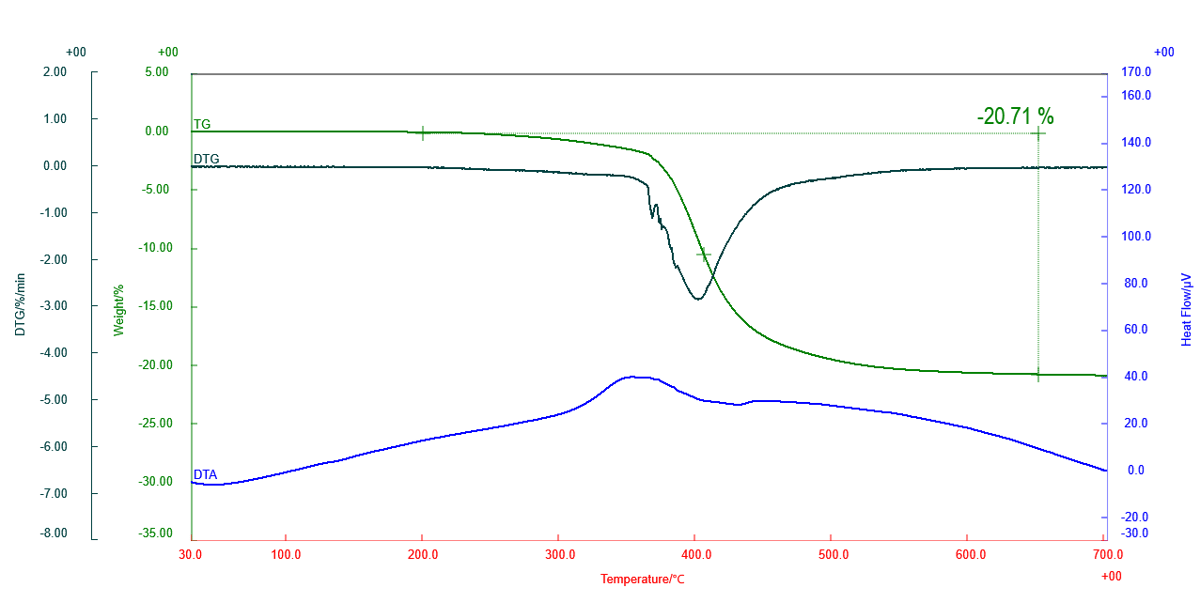
Figure 1: TG‑DTA measurement results
Figure 1 shows the TG (DTG)‑DTA measurement results of the epoxy resin. The epoxy resin exhibited a gradual mass loss during heating, and a pronounced DTA peak was observed in the temperature range of approximately 350 °C to 500 °C. These peaks correspond to the reaction heat associated with thermal decomposition of the epoxy resin, but it is difficult to directly determine the specific physical changes occurring inside the sample in this temperature range based solely on the behavior of these curves.
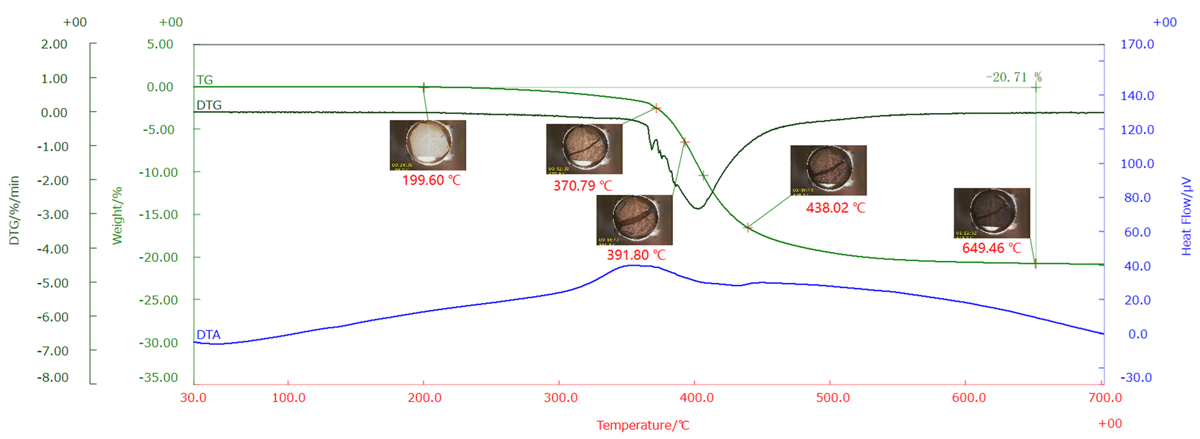
Figure 2: Sample observation images synchronized with TG-DTA measurement results
Figure 2 shows sample observation images acquired synchronously with the TG‑DTA measurement. By analyzing these images in combination with the TG‑DTA curves, the following phenomena were clearly observed from around 370 °C:
- Rapid gas generation from inside the sample, resulting in crack formation on the sample surface due to increased internal pressure
- Growth of the cracks with increasing temperature, with a maximum crack width of approximately 0.65 mm
These physical changes are not clearly reflected as distinct features on the TG or DTA curves and are only discernible through sample observation. In particular, gas evolution associated with decomposition reactions and the resulting sample fracture behavior provide critical information for material evaluation and consideration of actual usage environments.
Based on the above, STA equipped with a sample observation function is an effective, high‑value material evaluation method that adds visual information to conventional thermal analysis.