


Application Note B-TA1050
Introduction
It is known that when starch is added to water and heated, the hydrogen bonds between amylose and amylopectin are broken, the starch loses its crystallinity, and the starch granules break down and gel. This phenomenon is called gelatinization, and it appears as an endothermic peak in DSC measurements. Gelatinization is influenced by the type of grain and differences in thermal processing, and it is also related to texture and digestibility, so it is used as one of the indicators for quality control.
Measurement and analysis example
Approximately 5 mg each of pulverized rice grains and commercial wheat flour powders were placed in aluminum sealed pans, and approximately 20 mg of water was added to each. The pans were then sealed and subjected to DSC measurements.
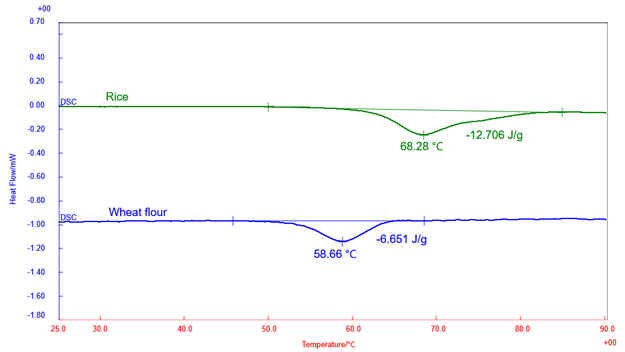
Figure 1: DSC measurement results
The pulverized rice grains exhibited an endothermic peak associated with gelatinization between 60 °C and 80 °C, while the wheat flour powders showed an endothermic peak between 50 °C and 70 °C as well. These results indicate that rice grains require heating to higher temperatures than those of wheat flour powders in order for gelatinization to be completed.
In this way, by measuring the endothermic peaks associated with the gelatinization of various grain starches will be useful for evaluating their physical properties and determining suitable thermal processing conditions.
Recommended equipment and software
- Thermo plus EVO3 DSCvesta2
- Vullios Measurement and analysis software