
Open Python orchestration interface for seamless integration and safe testing
Run experiments from your code via Rigaku Automation Interface (RAI). Critical settings are exposed through SmartLab Studio II Flow Templates or Python API. All data collection and detailed analysis workflows can be managed in a single platform. Sandbox and digital-twin testing to de-risk deployment and scale faster.
See how it works >/SmartLab%20Studio%20II%20splash%20screen%201200x627.png?width=800&name=SmartLab%20Studio%20II%20splash%20screen%201200x627.png)
Easily scripted, repeatable measurement and analysis
SmartLab Studio II flow templates standardize complex measurement and analysis methods so every run is consistent, comparable, and automation-ready.
See how it works >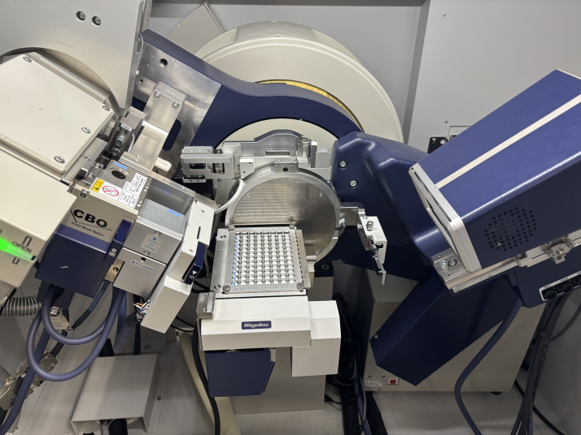
Automation-ready hardware for autonomous sample handling and robot compatibility
Modular sample handling, sample changer, 96-well plate, and robot-compatible doors and/or enclosures are available for smooth integration.
Explore options >What is AI-driven materials discovery?
In the past, materials discovery often involved manual trial-and-error: Synthesize promising materials, analyze their properties, decide the next step for another trial or optimization, and repeat. Today, automation and AI enable continuous and autonomous execution of that cycle, optimizing and accelerating the trial-and-error process while reducing the overall cost.
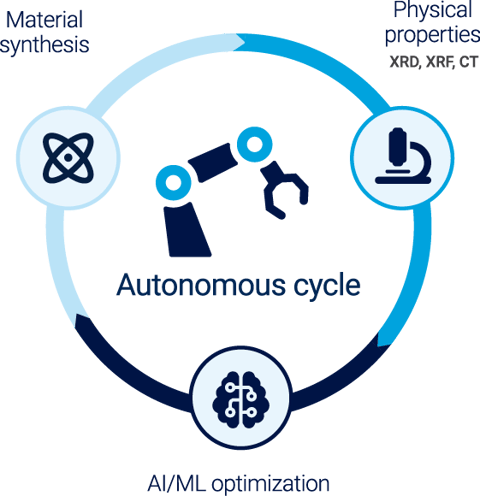
AI-driven materials discovery enables a faster learning loop for R&D. Materials characterization techniques provide the structural ground truth—phase, crystallinity, and elemental composition—that keeps the autonomous loop on track and enables fast, accurate decisions.
You synthesize a material, measure it using techniques such as XRD and XRF, and send the results to your AI/ML model. The model learns what worked, then recommends the next experiment—so each run improves the next.
Synthesize → Measure → Learn → Decide
- Analytical instruments provide ground truth (structure, phases, defects, properties)
- AI/ML prioritizes the next run to shorten time-to-material
The idea is simple. The hard part is putting everything together and making the loop run smoothly. It requires connecting your Python orchestration (via API) to analytical instruments, standardizing measurement and analysis methods, returning clean and comprehensive results and metadata, and integrating practical automation needs, such as sample handling and robot-compatible radiation enclosures. LabLinc Studio brings these together through RAI (Rigaku Automation Interface) and modular hardware options so you can close the loop with confidence.
Case study: Digital laboratories with modular instruments
See how a real autonomous “digital laboratory” was built by integrating Rigaku SmartLab XRD with a sputter deposition system and multiple characterization tools—including SEM, Raman, UV-Vis, and an electrical conductivity measurement module—to run closed-loop experiments with minimal human intervention. This Rigaku Journal technical article explains the key building blocks (modular instrument design, standardized data/metadata formats, and middleware that translates commands and unifies outputs), and includes a case study using Bayesian optimization to maximize an XRD peak intensity ratio in LiCoO₂ thin films, demonstrating faster iteration than manual workflows through continuous operation. You can also see the original paper in Digital Discovery: https://doi.org/10.1039/D4DD00387J
LabLinc Studio supports smooth physical integration into autonomous workflows with modular hardware. You can pick and choose components—sample holders, sample changer, sample handling robot, and robot-compatible door—based on your current lab setup, how much you want to build in-house, and how quickly you want to scale.
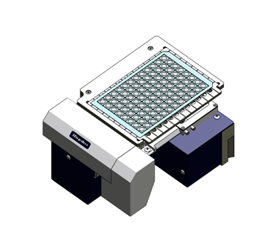
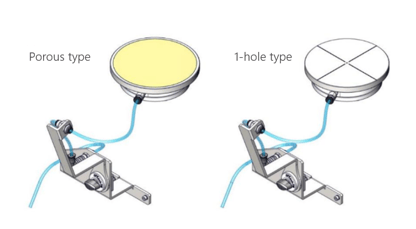
Simple sample handling: Off-the-shelf sample changers, 96-well plate, or wafer vacuum chuck
Simple robot sample handling: A robot handling the same/uniform sample form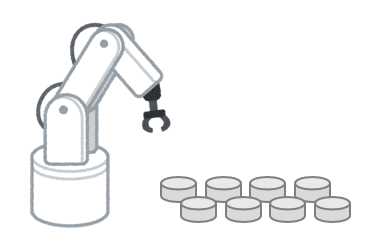
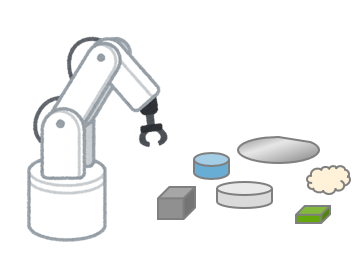
Complex robot sample handling: A robot handling a variety of sample forms
Robot-compatible radiation enclosure doors: Automatic door shortens the tact time
.jpg?width=480&height=326&name=LabLinc%20automatic%20door%20(DENSO).jpg)
You can choose how much you want to do in-house versus with Rigaku, ranging from Rigaku handling everything (instrument + robots + workflow setup) to customer-managed automation, where Rigaku supplies the instrument, and you supply the robots, teach the robots, and handle the workflow setup.

Contact Us
Whether you're interested in getting a quote, want a demo, need technical support, or simply have a question, we're here to help.