Application Note PHARM011
Introduction
Differential scanning calorimetry (DSC) is widely used to identify amorphous and crystalline phases, and polymorphs of pharmaceuticals. However, in some cases, when unknown samples or polymorphs are mixed, it is difficult to accurately determine reaction products from exothermic and endothermic peaks alone. In this study, DSC and X-ray diffraction (XRD) were combined to measure the analgesic acetaminophen in order to investigate phase transitions and structural changes that are difficult to determine by DSC alone. In addition, changes in crystal polymorphism were evaluated from multiple aspects under different heating conditions.
Thermal analysis, crystalline phase analysis
| Analysis: | Active pharmaceutical ingredients |
| Use: | Pre-formulation (API) |
| Analyzed materials: | Acetaminophen |
| Analysis software: | Vullios |
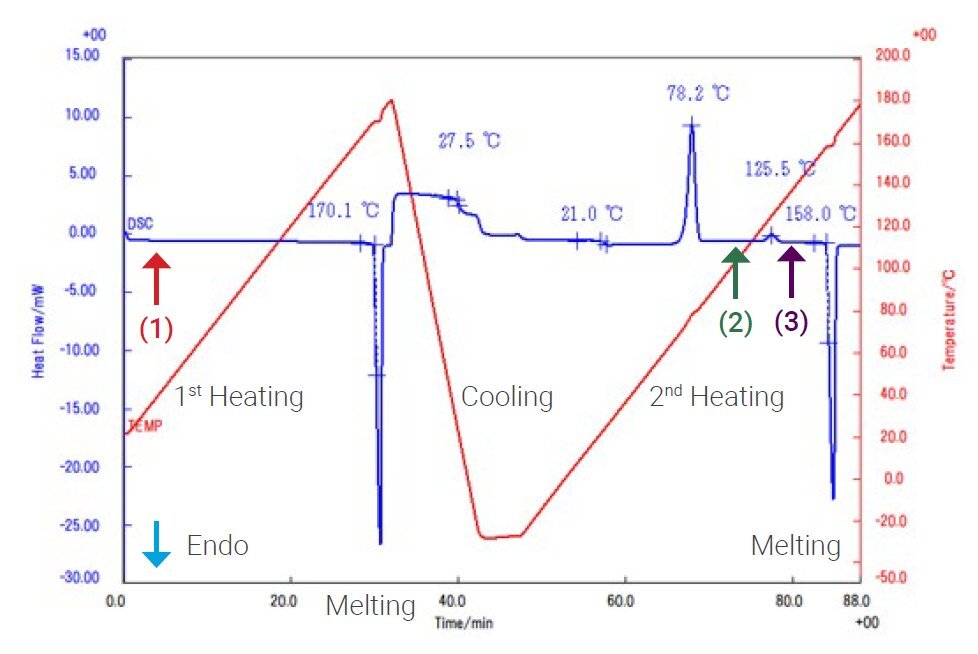
Figure 1: DSC results of acetaminophen
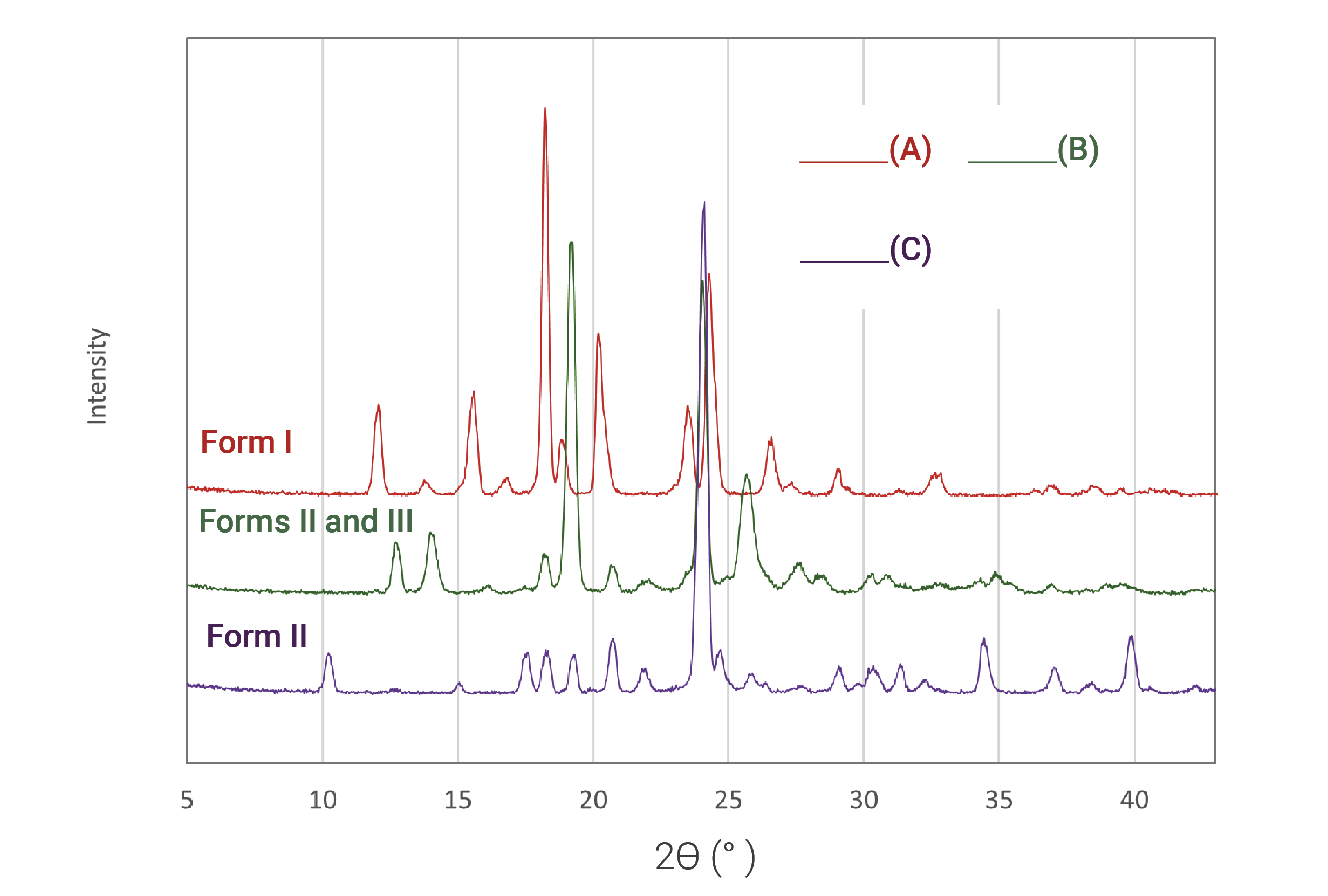
Figure 2: XRD results after heating treatment by DSC
(Samples A, B, and C were taken for XRD measurements at each of the points (1), (2), and (3) in Figure 1.)
Conclusion
XRD patterns of samples A and C consisted of Forms I and II, respectively (Figure 2). That is consistent with the results of different melting temperatures of 170°C for the 1st heating and 158°C for the 2nd heating on a DSC curve (Figure 1). In contrast, sample B collected at point (2) comprised Forms II and III. This suggests that metastable Form III in sample B converted into stable form II with the increase of temperature during the 2nd heating process (Figures 1 and 2). Results indicate that XRD is a powerful approach to facilitate the elucidation of DSC results.