
Determining the Rare Earth Elements in Geological Minerals Accurately Using X-ray Fluorescence

This is a written summary of a live webinar presented on March 19, 2025. The recording and resources are available on the recording page.
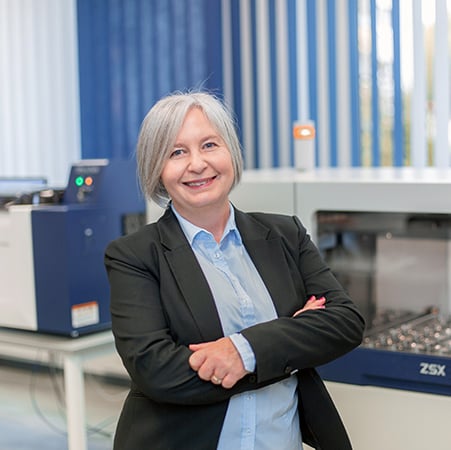
Presented by:

Webinar summary
The presentation focuses on using wavelength dispersive X-ray fluorescence (WDXRF) to accurately determine rare earth elements (REEs) in geological materials. Although this analytical approach is more common in mining and materials science, the methods and principles discussed have relevance to the oil and petroleum industry, particularly in areas like catalyst formulation, heavy crude characterization, and reservoir geochemistry, where trace metal analysis and mineralogical assessments play a role.
In the oil and petroleum context, rare earth elements are often encountered in refining catalysts and in certain unconventional reservoirs. Traditional methods such as ICP-OES or ICP-MS are commonly used for analyzing these elements due to their sensitivity, but they require labor-intensive digestion and calibration steps. WDXRF is a practical and efficient alternative for direct solid sample analysis, offering rapid throughput and robust performance without the need for sample dissolution. Though WDXRF does not reach the same low detection limits as ICP-MS, its ease of use and the ability to work with minimal sample preparation make it particularly appealing for high-throughput industrial settings.
Rigaku’s ZSX Primus IV WDXRF spectrometer is optimized for sensitivity and peak resolution, especially in the challenging spectral range occupied by REEs. This instrument uses a top-loading geometry that enhances measurement precision and includes advanced crystal optics (LiF220 and LiF420) designed to resolve the many overlapping emission lines typical of rare earths.
Sample preparation is central to effective XRF analysis. The preferred method is pressed powder, which is quicker than fused bead techniques and avoids the chemical hazards of acid digestion. However, it does require careful control of particle size and density to minimize matrix and mineralogical effects. Rigaku’s correction techniques, such as scattering ratio methods, help compensate for such interferences, thereby improving the accuracy of trace element results.
For petroleum-related applications, understanding how catalysts or mineral contaminants evolve during refining or processing is critical. The presentation includes examples of analyzing rare earth-doped catalysts and powders, which are relevant for monitoring spent catalysts or evaluating raw materials used in cracking units. The ability to work with very small sample quantities, even in semi-quantitative form, allows for flexibility when only limited material is available.
Rigaku also offers GEO TRACE PAK, a ready-to-use calibration library built from 101 certified reference materials, which can be a starting point for labs analyzing complex matrices. While developed for geological materials, the calibration framework can be adapted for other solid-phase industrial samples, including those encountered in upstream and downstream petroleum operations.
Additionally, the presentation touches on alternative techniques such as loose powder analysis, semi-quantitative screening, and even preconcentrated liquid sample analysis via a proprietary method. These methods are especially useful in exploratory or troubleshooting settings where turnaround time and operational simplicity are more critical than full quantification.
Key questions answered in the webinar:
-
REEs are a group of 17 chemical elements found in the Earth's crust, including scandium, yttrium, and the 15 lanthanides. They are crucial for a wide range of modern technologies due to their unique catalytic, metallurgical, electrical, and magnetic properties. Examples of their applications include:
- Magnets: Neodymium is vital for powerful magnets used in loudspeakers, computer hard drives, wind turbines, and hybrid cars, enabling smaller and more efficient devices.
- Catalysts: Cerium is used in catalytic converters in cars and, along with lanthanum, in refining crude oils.
- Optics: Lanthanum is found in camera and telescope lenses, while lanthanides are extensively used in carbon arc lighting for studio and cinema projection.
- Alloys: Praseodymium strengthens metals in aircraft engines and is used in protective glass for welders.
- Other Applications: REEs are also used in ceramics, scintillators, colorants, phosphors, UV-resistant glass, X-ray imaging, nuclear defense, water treatments, and fertilizers.
Their growing importance in advanced technologies has led to significant research and development, as evidenced by recent discoveries of large REE deposits, such as one in Norway.
-
X-ray fluorescence (XRF) is a rapid and advantageous analytical technique used for determining the concentration of REEs in solid materials. Unlike methods like ICP-OES or ICP-MS, XRF allows for direct analysis of solid samples, eliminating the need for complex extraction or acid digestions, which often involve daily calibrations.
XRF can be performed using two main types of instruments:
- Wavelength dispersive XRF (WDXRF): This offers the highest resolution and sensitivity, providing the best separation and resolution of elements due to its use of crystals. It is typically a larger, more expensive, and sequential measurement instrument. WDXRF is commonly used for accurate analysis of rare earth oxides and offers superior limits of detection compared to EDXRF.
- Energy dispersive XRF (EDXRF): This is a simpler, more portable (including handheld options), and generally cheaper method, primarily used for screening purposes. It measures the number of photons in the form of energy, but has higher limits of detection compared to WDXRF.
While XRF may not achieve the same ultralow limits of detection as ICP-MS in all cases, it is often sufficient for geological and industrial applications. Its speed and direct solid sample analysis make it a valuable tool for high sample throughput.
-
WDXRF offers several significant advantages for analyzing Rare Earth Elements:
- Highest Resolution and Sensitivity: WDXRF instruments are designed to provide superior separation and resolution of elemental lines, which is crucial for REEs due to their complex spectra and numerous line overlaps. Specialized crystals like LIF420 and LIF220 are used to achieve optimal sensitivity and line separation.
- Lower Limits of Detection (LODs): Compared to EDXRF, WDXRF achieves much better limits of detection, allowing for more precise quantification of REEs, even at trace levels.
- Precision and Accuracy: The "above sample" geometry in some WDXRF instruments enhances sensitivity and precision, contributing to lower limits of detection. Features like automatic pressure control also aid in accurate analysis.
- Advanced Correction Methods: WDXRF software includes sophisticated tools like the scattering ratio correction method, which significantly improves accuracy and precision for trace element analysis by ratioing the analyte line with the Compton line, reducing scatter in calibration curves.
- Versatile Calibration Options: WDXRF supports both fundamental and empirical calibration methods. While empirical methods require standards closely matching the unknown's matrix and mineralogy, fundamental parameter methods in software can mitigate some of these challenges, especially when exact standard matches are hard to find.
These capabilities make WDXRF a preferred method for accurate and thorough REE analysis in various materials.
-
For XRF analysis of Rare Earth Elements, the most common sample preparation methods are:
Pressed Powder Method:
- Preparation: Requires significant sample reduction from large rocks to a fine powder (particle size less than 45 microns) to ensure homogeneity. The powder is then pressed into a pellet with a defined density. An "infinite thickness" of at least 4mm is typically desired for maximum X-ray penetration.
- Advantages: Direct analysis of solid material, less dilution compared to fusion, and can sometimes be done without a binder (if the material's nature allows for good pressing), leading to a very concentrated signal.
- Disadvantages: Susceptible to matrix, mineralogy, and particle size errors. Accuracy heavily relies on comparing unknowns with standards that have highly similar mineralogy, particle size, and homogeneity.
- Applications: Primarily used for trace element analysis due to minimal dilution.
Fusion Method (Fused Beads):
- Preparation: Involves mixing the sample with a flux (e.g., lithium tetraborate) and heating it to form a homogeneous glass bead.
- Advantages: Eliminates errors related to particle size, matrix, and mineralogy because the sample is converted into a uniform glass. Allows for the preparation of synthetic standards by spiking.
- Disadvantages: Involves dilution, which can affect the detection limits for very low concentrations. More time-consuming than pressed powder.
- Applications: Preferred for major and minor element analysis, and for situations where eliminating matrix effects is paramount.
Loose Powder Method:
- Preparation: Used when only a small amount of material is available. The dried and ground powder is placed in a special cell (e.g., plastic cell with nylon filter) and covered with a film.
- Advantages: Suitable for very limited sample quantities. Provides a quick semi-quantitative analysis or screening to identify elements present.
- Disadvantages: Highly semi-quantitative and not accurate for precise quantification because achieving infinite thickness is often impossible, and homogeneity might be compromised.
- Applications: Useful for initial identification of elements or when only small amounts of sample are available and high accuracy is not required.
It is crucial to match the preparation method of unknowns with standards as closely as possible to achieve high accuracy, especially for empirical calibrations.
-
- Extensive Line Overlaps: REEs have numerous K-lines (three) and L-lines (around seven different ones), and many of these lines overlap with each other, as well as with lines from other common elements (e.g., germanium, nickel). This high degree of spectral overlap makes it difficult to isolate and accurately quantify individual REEs.
- Selection of Analytical Lines: The most critical and difficult step in developing an XRF method for REEs is selecting the correct analytical line (peak angle) and appropriate background positions for each element. A line that works well for one element in a specific matrix might be unsuitable for another or in a different matrix due to overlaps.
- Sensitivity vs. Resolution Trade-off: While high-resolution crystals (e.g., LIF420) can provide better separation of overlapping lines, they often come with a loss of sensitivity (lower intensity). Conversely, crystals offering higher sensitivity (e.g., LIF220 for certain lines) might not provide sufficient separation for complex overlaps, potentially leading to inaccurate quantification. Analysts must balance these factors based on the specific elements and concentrations of interest.
- Penetration Depth and Particle Size Effects: For pressed powder samples, achieving sufficient X-ray penetration depth (infinite thickness) is vital, especially for K-lines of heavier REEs. Inadequate particle size reduction and sample homogeneity can lead to significant matrix and mineralogy errors, impacting the accuracy of the analysis.
- Difficulty in Obtaining Reference Standards: High-quality, certified reference materials (CRMs) for REEs, especially those that cover the full natural distribution range and match various matrix compositions, are difficult and expensive to find. This necessitates the use of secondary standards or certification in commercial laboratories, adding complexity to calibration.
Careful method development, including the use of specialized crystals, advanced software features for peak deconvolution and background correction, and a thorough understanding of spectral interferences, is essential to overcome these challenges.
-
The Rigaku XRF software offers several key features that significantly aid in the accurate and efficient analysis of REEs:
- Scattering Ratio Correction Method: This unique software feature helps to improve the accuracy and precision for trace element analysis. It works by measuring the Compton line for each standard and ratioing the analyte line with the Compton line. This effectively corrects for matrix effects and variations in sample density, leading to a much improved regression and accuracy in calibration curves, especially for low-concentration elements where scatter is often high.
- Fundamental Parameters (FP) Calibration: The software allows for the use of FP methods, which are crucial for geological samples where finding perfectly matched empirical standards (in terms of matrix and mineralogy) can be very difficult. FP methods model the physical interactions of X-rays with the sample, reducing the reliance on closely matched standards for accurate quantification.
- Split Calibration Ranges: The software enables splitting calibrations into different parts (e.g., low concentration and high concentration ranges), allowing for optimized analytical conditions and improved accuracy across a broader range of element concentrations.
- Semi-Quantitative Analysis (Standardless Program): This feature provides a quick initial identification of elements present in a material without the need for extensive calibration standards. It's a valuable starting point for understanding sample composition before setting up detailed quantitative methods. It also provides useful information like detection limits and analyzing depth.
- Spectral Visualization and Peak Deconvolution: The software allows for detailed examination of spectra, including zooming into specific regions of interest and deconvolution of overlapping peaks. This capability is vital for identifying and correcting for the numerous line overlaps that are characteristic of REEs, enabling analysts to choose the correct peak angle and background positions.
- Geological Mapping and Homogeneity Analysis: The software supports mapping applications, where images of samples (like rare earth magnets or drill cores) can be loaded, and specific points or grids can be selected for analysis. This allows for visual representation of elemental intensities across a surface, providing insights into the homogeneity of the material and identifying regions of higher concentration ("richest part"). This is highly useful for quality control in manufacturing or for geological prospecting.
- Method Development Tools: The software provides tools to help select appropriate analytical lines, background positions, and consider the impact of different analyzing crystals on sensitivity and resolution, streamlining the complex process of method development for REEs.
-
XRF is highly versatile and can analyze a wide range of sample types for REEs, including:
- Geological Minerals: This is a primary application, focusing on major, minor, and trace elements in materials of natural origin. Examples include analysis of ores like bastnaesites and monazites, as well as drill cores and other geological survey samples.
- Industrial Products: XRF is also used for industrial products containing REEs, covering major, minor, and trace element analysis.
- Rare Earth Magnets: XRF can be used for the analysis and mapping of rare earth magnets (e.g., neodymium, gadolinium, niobium content). This application helps to understand the homogeneity of the magnet surface and the elemental composition, which is critical for quality control in production.
- Powders: Concentrated powders, such as those containing cerium or zirconium, can be analyzed. Even "loose powder" methods are available for very small sample amounts for semi-quantitative analysis.
- Liquid Samples: While less common for direct REE analysis, XRF can be adapted for liquid samples through pre-concentration methods like the "ultra carry" method. This involves placing a liquid amount on a filter, drying it, and then analyzing the concentrated residue. This allows for establishing calibration methods for REEs in liquid matrices.
- Catalyst Samples: XRF can be used to analyze powdered catalyst materials, including developing calibration methods for their elemental composition.
-
- Matching Standards to Unknowns: The "golden rule" for XRF accuracy is to compare unknowns with standards that have as similar mineralogy, particle size, homogeneity, and matrix characteristics as possible. The standards should also cover at least 95% of the natural distribution range of the sample concentration. This is particularly challenging for REEs due to the difficulty in finding suitable certified reference materials (CRMs).
- Particle Size Reduction: For pressed powder methods, effective and massive sample reduction to a uniform particle size (e.g., less than 45 microns) is critical to minimize particle size effects and ensure homogeneity.
- Infinite Thickness: Samples should ideally have "infinite thickness" (typically at least 4mm for pressed powders) to ensure that the X-rays penetrate sufficiently and the measured signal is representative of the bulk composition.
- Binder Use: While some geological materials can be pressed without a binder for a more concentrated signal, fragile materials (e.g., high silica/zirconium content) might require a binder to prevent cracking and ensure sample integrity, preventing contamination of the spectrometer.
- Separate Calibrations: It is recommended to create separate calibration curves for major/minor elements and trace elements. Major/minor elements are often best analyzed by the fused bead method due to its matrix-eliminating properties, while trace elements might benefit from the pressed powder method to minimize dilution.
- Using Correction Methods: Employing software features like the scattering ratio correction method or fundamental parameter (FP) calibrations can significantly improve accuracy by compensating for matrix effects and reducing scatter in calibration curves.
- Verification and Validation: Regular verification of calibration methods using independent reference materials (e.g., NIST, USGS, BGS, SARM MINTEC standards) is crucial to ensure ongoing accuracy. Validation samples supplied with application packages (like the GEO TRACE PAK) are also valuable for monitoring method integrity and identifying when drift correction is needed.
- Instrument Stability and Consistent Measurements: Utilizing instruments known for their stability and consistency helps ensure reliable results over time. Regularly performing repeatability measurements (e.g., static repeatability by preparing and measuring the sample multiple times) at a specified confidence level (e.g., 95%) helps to monitor the precision of the method.

Subscribe to the Bridge newsletter
Stay up to date with materials analysis news and upcoming conferences, webinars and podcasts, as well as learning new analytical techniques and applications.
Contact Us
Whether you're interested in getting a quote, want a demo, need technical support, or simply have a question, we're here to help.