Application Note EDXRF3226
Scope
This application note demonstrates the elemental analysis of nutrients in silage, along with heavy metal screening using the NEX CG II energy dispersive X-ray fluorescence (EDXRF) analyzer. Measurements were performed using the Rigaku RPF-SQX Fundamental Parameters (FP) method and Matching Library calibration. This approach enables both standardless semi-quantitative elemental analysis and tuned quantitative performance when reference assays are available.Background
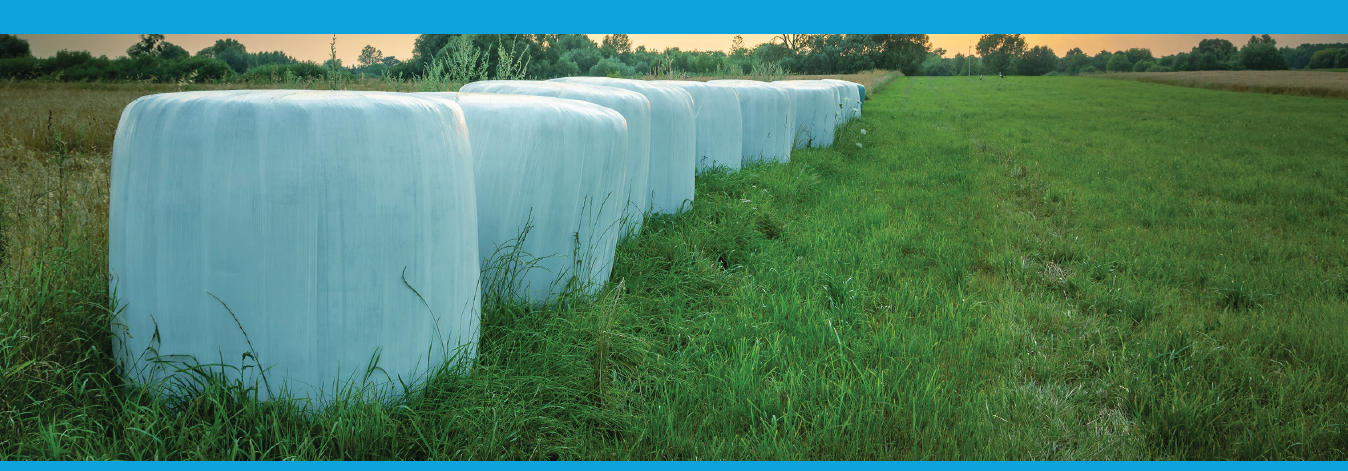
Silage is typically derived from chopped grasses and legumes such as clover and alfalfa, and it provides nutrient-rich feed for dairy and livestock operations. Unlike dried hay, silage is fermented to maintain its moisture content and is usually wrapped in poly bales or siloed. This process helps retain nutrient density, which results in better dairy quality and improved palatability for dairy cattle and other livestock.
Routine monitoring of silage composition is essential to ensure proper nutrient intake and to verify that toxic metals are below regulatory limits. While near-infrared spectroscopy (NIRS) is a widely accepted technique for measuring protein, amino acids, fat, oil, moisture, and fiber, NIRS cannot directly quantify elemental constituents. EDXRF is a complementary, non-destructive analytical technique used for determining elemental concentrations, including both nutrient elements and potential contaminants.
XRF for elemental analysis of silage
EDXRF spectroscopy, a type of X-ray fluorescence (XRF), provides rapid, multi-element quantification from sodium through uranium. This technique is ideal for qualitative screening or feed characterization, which is useful for quantifying the elements present in hay and silage. EDXRF can measure the elemental composition of your formulations and simultaneously screen for toxic metals such as lead, arsenic, and cadmium.
NEX CG II is well-suited for the analysis of silage due to its unique Cartesian Geometry optical kernel that uses secondary targets and polarized excitation to remove background and improve signal-to-noise ratios for elements. This instrument is especially effective when measuring major, minor, and trace elements in complex feed applications. When paired with RPF-SQX FP modeling and Matching Libraries, this system delivers consistent, high-quality results for facilities monitoring nutrient balance and screening for elemental contaminants.
Rigaku RPF-SQX Fundamental Parameters
Rigaku RPF-SQX Fundamental Parameters (FP) software estimates elemental concentrations based on XRF theory without the need for any known calibration standards. Rigaku Profile Fitting (RPF) automatically deconvolutes spectral peaks and models the sample matrix using cellulose as the balance component to best model hay, silage, and other forage materials. The standardless semi-quantitative results provide accurate concentration estimates suitable for screening, trend analysis, and comparative measurement evaluations.
Rigaku user-defined Matching Library
With Matching Libraries, you can easily tune the FP results using one or more samples of the actual material with known elemental assay values from a reference technique such as ICP. In this way, the XRF is tuned to your actual products and referee numbers. Incorporating these reference values allows the FP to reliably model variations in base materials and ensure optimum accuracy and high-quality data.
In this study, five samples assayed by ICP were used, demonstrating varying nutrient levels. Semi-quant standardless analysis was used to measure the other elements present for informational purposes, as well as heavy metal screening.
Results — Silage
Rigaku RPF-SQX FP with cellulose balance modeling was used to analyze the silage. The Matching Library approach provided strong alignment with ICP assay values.
|
Grass Silage
Nutrients Using Matching Library |
|||
|
Element
|
Units
|
ICP
|
Result
|
|
Na
|
%
|
0.35
|
0.31
|
|
Mg
|
0.16
|
0.16
|
|
|
P
|
0.33
|
0.31
|
|
|
S
|
0.24
|
0.23
|
|
|
Cl
|
0.81
|
0.82
|
|
|
K
|
2.51
|
2.50
|
|
|
Ca
|
0.65
|
0.65
|
|
|
Mn
|
ppm
|
72
|
69
|
|
Fe
|
508
|
501
|
|
|
Cu
|
12
|
12
|
|
|
Zn
|
28
|
27
|
|
|
Mo
|
7.1
|
7.8
|
|
|
Grass Silage
Informational Semi-quant |
||
|
Element
|
Units
|
Result
|
|
Al
|
ppm
|
538
|
|
Si
|
6725
|
|
|
Cr
|
11
|
|
|
Br
|
20
|
|
|
Rb
|
5.6
|
|
|
Sr
|
11
|
|
Heavy metal screening
The standardless semi-quant FP is well-suited for screening heavy metal content. In this study, no heavy metals were detected in the silage samples.
Conclusion
The Rigaku NEX CG II, using the RPF-SQX Fundamental Parameters method, provides excellent performance for the elemental analysis of silage without the need for calibration standards. For applications requiring enhanced precision, Matching Libraries can be easily implemented based on one or more assayed samples of the particular material type. Together, these capabilities make the NEX CG II a powerful tool for nutrient characterization and heavy-metal screening across the animal-feed industry, supporting both quality control and regulatory compliance.