Application Note B-TA1089
Introduction
The combustion behavior of coal was investigated by TG-DTA under atmospheres with different oxygen concentrations. The effect of oxygen concentration on mass loss and exothermic behavior associated with combustion was evaluated.
Measurement and results
Approximately 5 mg of coal powder was placed in a platinum sample pan and measured at a heating rate of 10 °C/min. TG-DTA measurements were performed under atmospheres containing 4%, 10%, and 20% oxygen concentration prepared by mixing air and nitrogen gas, with a total gas flow rate of 200 mL/min.
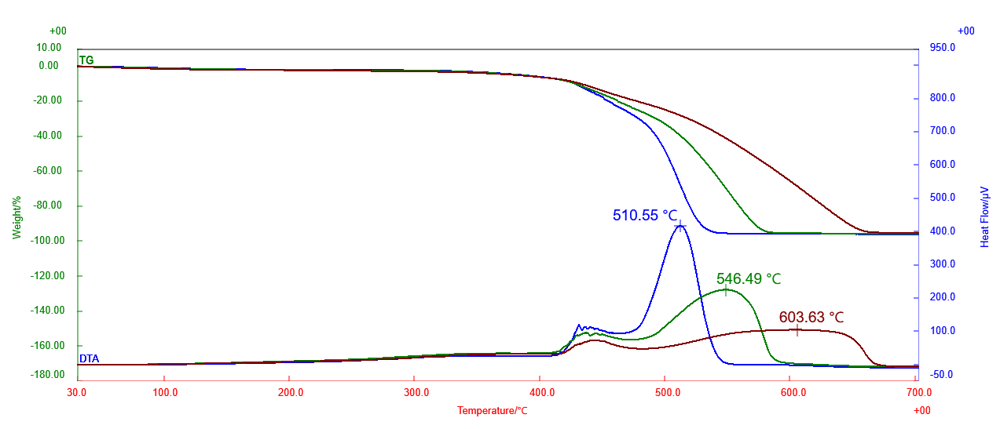 Figure1: TG-DTA measurement results
In all atmospheres, two-step exothermic mass losses associated with combustion were observed between approximately 300 °C and 650 °C. With decreasing the oxygen concentration, both the mass loss and the exothermic peak shifted toward higher temperatures. In addition, the difference between the onset and the end-set temperatures of the combustion process became larger.
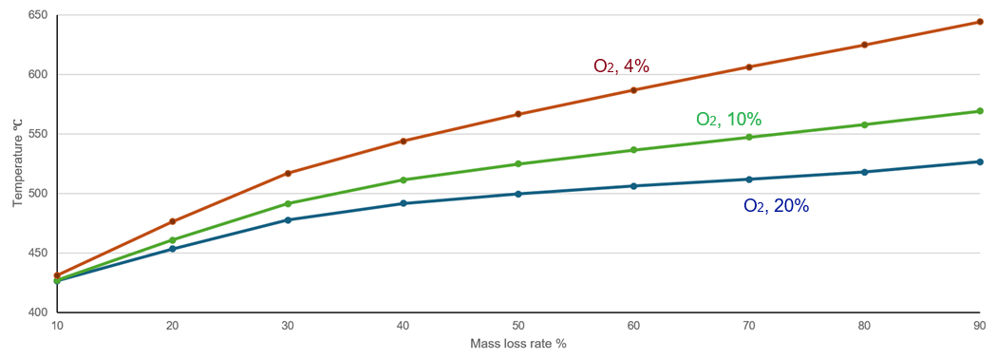 Figure2: Mass loss rate-temperature plot
Figure 2 shows the results of plotting the temperatures at which mass loss rate of 10% to 90% are reached. The temperatures corresponding to specific mass loss rates are reached shift toward higher temperatures with deacresing the oxygen concentration, with the amount of the shift being particularly large in the range where the mass loss rate exceeds 30%, confirming that the combustion in this region is strongly affected by oxygen concentration.
These results demonstrate that TG-DTA is a simple and effective method for evaluating oxygen concentration dependence in reactions involving oxygen, such as combustion.