Application Note B-TA1083
Introduction
Stainless steel (SUS) is an alloy produced by adding Ni and Cr to iron and is widely used in many fields due to its high corrosion resistance. When the surface of SUS is exposed to oxygen during heating, chromium in the alloy is oxidized to form a thin oxide film composed mainly of chromium oxide (Cr₂O₃). This oxide film protects the surface and suppresses further oxidation of the interior. It is well known that the surface color changes depending on the thickness of the formed oxide film.
In this application, STA with sample observation capabilities was used to evaluate the color change of the SUS surface as oxidation progressed by ChromTA analysis.
Measurement and analysis example
The sample was prepared by punching 0.6-mm-thick SUS plate into 3-mm-diameter disc (sample mass: approx. 3 mg) and placed in an alumina pan. The STA measurement was carried out under an air atmosphere at a heating rate of 10 °C/min.
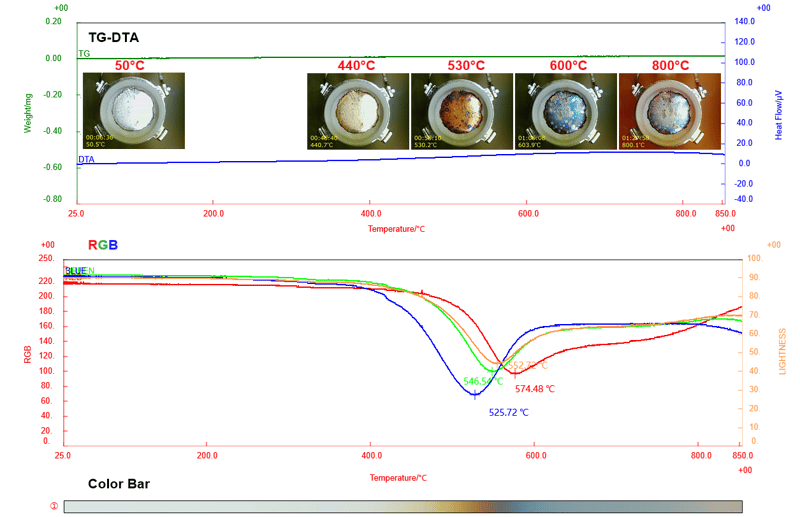
Figure 1: Measurement results of sample observation STA
Color changes on the sample surface using ChromTA were evaluated using RGB color output, along with the sample observation image. Color changes on the surface started at around 400 °C, accompanied by changes visible in the RGB output, with the color bar gradually shifting from gray to brownish-red. At around 500 °C, the surface appeared brownish-red, while near 600 °C it became almost blue. At approximately 800 °C, the area of the blue region decreased, and the surface color changed back to brownish-red.
Exothermic behavior was also observed in the DTA curve from around 400 °C, indicating a correspondence with the progress of surface oxidation.
Thus, sample observation STA using the ChromTA enables direct visualization of color and shape changes of the sample associated with temperature in addition to TG and DTA data. This approach is expected to provide more comprehensive information compared with conventional thermal analysis methods.