Application Note B-TA1093
Introduction
It is known that when polymer products are used outdoors for extended periods, their mechanical and physical properties change due to factors associated with outdoor exposure, such as ultraviolet radiation and fluctuations in temperature and humidity.
This application note presents DSC results regarding changes in the glass transition temperature, a key thermal property, of natural rubber sheets subjected to outdoor exposure.
Measurement and results
Natural rubber sheets (1 mm thick) that had been exposed outdoors for 9 and 17 days were punched into 4 mm diameter discs (approximately 20 mg) and placed in aluminum sample pans; the samples were then cooled to -80°C under a nitrogen atmosphere and heated at a rate of 10°C/min.
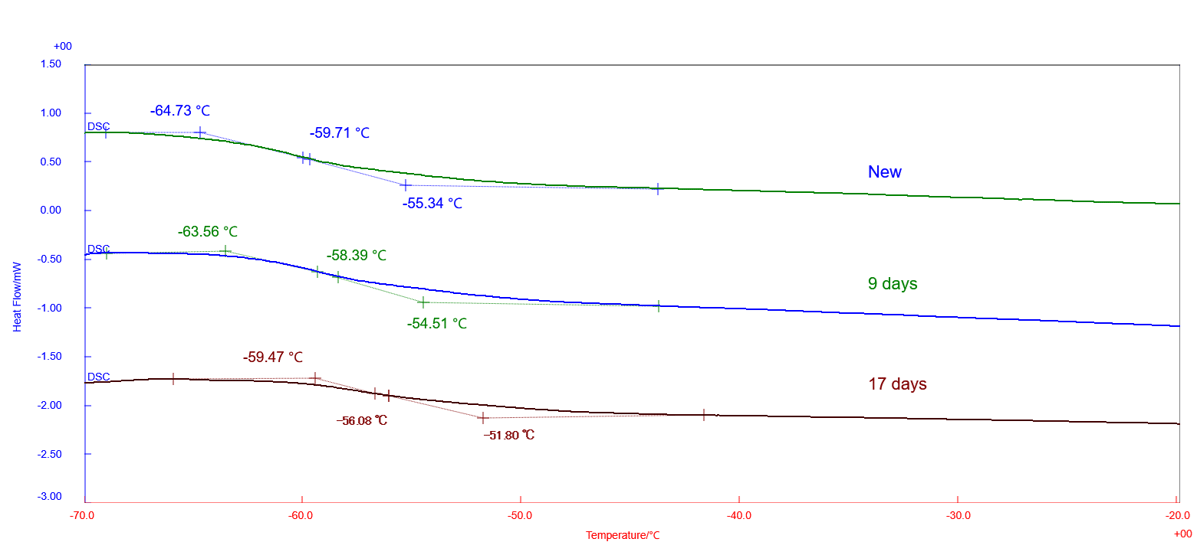 Figure 1 Comparison of DSC measurement results for natural rubber sheets
For the virgin new sample (unexposed to outdoor conditions), a baseline shift associated with the glass transition appears between -65°C and -55°C. In the sample exposed for 9 days, the glass transition temperature shows a tendency to shift slightly toward higher temperatures, while in the sample exposed for 17 days, it has shifted approximately 5°C higher compared to the virgin sample.
As the exposure period increases, degradation progresses due to oxidation caused by ultraviolet radiation and ozone, as well as temperature and humidity variations that affect the molecular structure of the material.
Although commercial products generally contain antioxidants and other additives, comparing the glass transition temperature, a key thermal property serves as an effective indicator for evaluating the progression of degradation and the effectiveness of the additives.