Application Note B-TA1086
Introduction
Carbamazepine is a well-known antiepileptic drug and a representative model compound exhibiting multiple crystalline polymorphs (Forms I–IV). Polymorphism significantly affects solubility, stability, and bioavailability, making it a critical factor in pharmaceutical development and quality evaluation. Upon heating, carbamazepine undergoes not a simple solid-state transition but recrystallization via partial melting. As a result, DSC measurements show complex thermal behavior, where endothermic and exothermic events appear consecutively.
In this application, sample‑observation DSC combined with ChromTA™ (Chromatic Thermal Analysis) was used to evaluate the polymorphic transition behavior of carbamazepine based on thermal analysis curves, image data, and changes in the surface color of the sample.
Measurement and analysis example
Measurements were performed using DSC equipped with a sample observation unit.
Carbamazepine powder (0.133 mg) was heated from room temperature to 200 °C at a heating rate of 10 °C/min under a nitrogen atmosphere (50 mL/min). During the measurement, DSC data were recorded while the sample surface was continuously monitored, and the captured images were analyzed using ChromTA.
Four types of color-space data (RGB, CMYK, HSV, and L*a*b*) from image data were calculated and synchronized with temperature and time to evaluate the correlation between thermal events and changes in appearance (structure).
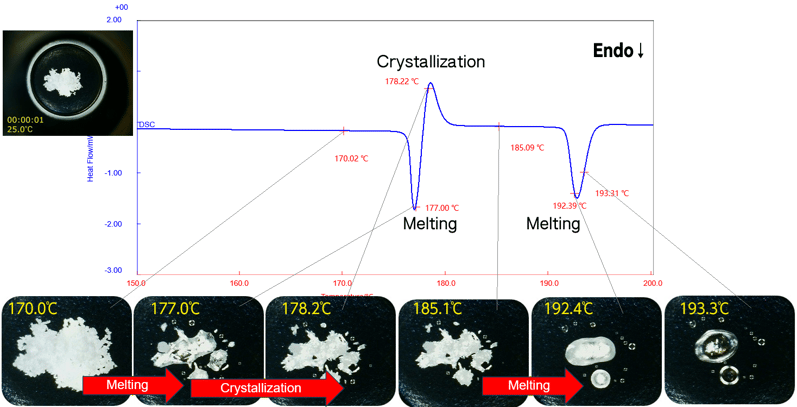
Figure 1: Correlation analysis between image data obtained using the sample observation function and DSC curves
Figure 1 shows the analysis of image data obtained by sample observation DSC.
For the initial Form I crystal, consecutive endothermic and exothermic peaks were observed between 175 °C and 180 °C. These thermal events correspond to melting of Form I followed by immediate recrystallization into the stable Form III. In addition, a sharp endothermic peak observed above 190 °C corresponds to the melting of Form III.
Figure 2 shows a synchronized graph of DSC results and color parameters that change with ChromTA, compared to the analysis graph of the image obtained by DSC observation of the sample.
Using ChromTA analysis made it possible to clearly identify and analyze the onset and end-set temperatures of melting and crystallization, which occur simultaneously and sequentially. As a result, it was revealed that the melting of Form I crystals occurs at 176.3°C, while the recrystallization into Form III begins at 177.2°C and is completed at 180°C. The remarkable changes in CMYK color parameters at around 192°C corresponds to the melting of Form III.
In polymorphic transition systems such as carbamazepine, melting and recrystallization proceed rapidly and consecutively, making peak assignment difficult with DSC alone. ChromTA quantifies visual changes in the sample —such as transparency and cloudiness— as color information, allowing clear correlation of each visual event with its physical origin of the respective thermal phenomena.
By combining sample‑observation DSC with ChromTA, the entire sequence of polymorphic transitions in carbamazepine —melting, recrystallization, and re-melting— can be evaluated using both thermal analysis data and visual information.
This approach is a useful tool for evaluating crystalline polymorphisms in pharmaceuticals and for quality control.
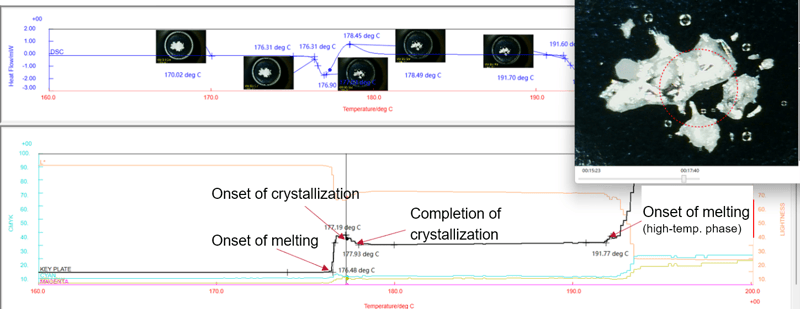
Figure 2: Synchronized graph of DSC results and color parameter changes analyzed by ChromTA