Application Note SMX044
Summary
The grain-by-grain analysis of powders with three-dimensional electron diffraction (3D ED) and energy-dispersive X-ray spectroscopy (EDS) allows for a comprehensive analysis of material: both particles that diffract well, and those that are amorphous or provide poor indexation results. Here, we show the automated analysis of 50 grains from a mixture of 5 known samples, and how integrated EDS measurements can be used to complement analysis by automated 3D ED.
Introduction
Bulk measurements, like the ones that can be obtained from powder X-ray diffraction, can be limited in the ability to easily identify materials, particularly novel materials or solid state forms, from complex mixtures.¹ Electron diffraction has emerged as a technique uniquely suited to analyze impure or mixed samples, given its ability to provide diffraction information from individual nanocrystals within a mixed powder.² Energy dispersive X-ray spectroscopy, which provides elemental composition based on characteristic X-ray fluorescence, can similarly be utilized on the same individual grains that can be analyzed by 3D ED.³ This can aid in crystal structure refinement, or be utilized to gain chemical composition from grains that may otherwise not be characterized. Here, 3D ED in combination with EDS is explored as a straightforward approach to analyze mixtures of materials with automated routines.
Analysis procedure
- ~1 mg of powders from 5 samples were mixed in a roughly equivalent mixture.
- An automated 3D ED and EDS measurement queue was generated to evaluate diffraction and chemical composition from 50 grains.
- Each sample was identified based on unit cell parameters. In cases where a material provided poor quality diffraction that could not be indexed, the EDS spectra was utilized to assume identity.
Sample preparation
Approximately 1 mg of each standard sample (L-tyrosine, L-cysteine, potassium bitartrate, silicon dioxide, lanthanum hexaboride) was placed between two glass slides and ground to mix the materials and reduce particle size. A 3 mm Cu TEM grid was tapped onto the powder to gather grains for analysis in the XtaLAB Synergy-ED electron diffractometer at room temperature.
Automated 3D ED and EDS measurements
Grains were visually located within the XtaLAB Synergy-ED and added to a measurement queue to collect a short wedge (30°) of continuous rotation diffraction data and obtain unit cell information. Each grain was automatically re-centered, the Z-height adjusted using the “Auto Z” feature within CrysAlisPro-ED, and an automated diffraction measurement collected. The diffraction data was simultaneously processed during acquisition using automated routines.
After completing the diffraction data collection, an automated 120 second EDS spectra was collected on a JEOL JED-2300T EDS detector using an increased dose rate saved as a pre-configured preset. The beam is focused to ~2 microns in size, the centered grain is tilted to 15 degrees, and an EDS measurement is recorded in one seamless measurement within CrysAlisPro-ED. This process of automated centering, diffraction data collection and processing, and EDS measurement is repeated for each grain that is added to the measurement queue without user intervention.
Data analysis
%20and%20results%20of%20identification%20based%20on%20diffraction%20(right).jpg?width=2417&height=678&name=SMX044%20Figure%201%20Summary%20of%20experiment%20measurements%20viewed%20in%20ED%20Results%20Viewer%20(left)%20and%20results%20of%20identification%20based%20on%20diffraction%20(right).jpg)
Figure 1: Summary of experiment measurements viewed in ED Results Viewer (left) and results of identification based on diffraction (right).
The experimental results were viewed using the ED Results Viewer to quickly sort the diffraction data and match based on unit cell parameters from previously determined structures or the CSD database. 42 out of 50 measurements could be readily identified by this strategy, while eight measurements came from grains with diffraction quality too poor for positive identification.
For the experiments lacking unambiguous diffraction indexing, the recorded EDS measurement could be utilized to assume identification based on the elemental composition. Seven additional experiments could be positively identified with the known materials by this approach. The remaining unknown measurement contained Ca, S, and O, and is presumed to be a calcium sulfate contaminant. A background measurement was recorded after the automated measurements, and a background subtraction was performed for each displayed spectrum within JED-2300T AnalysisStation.
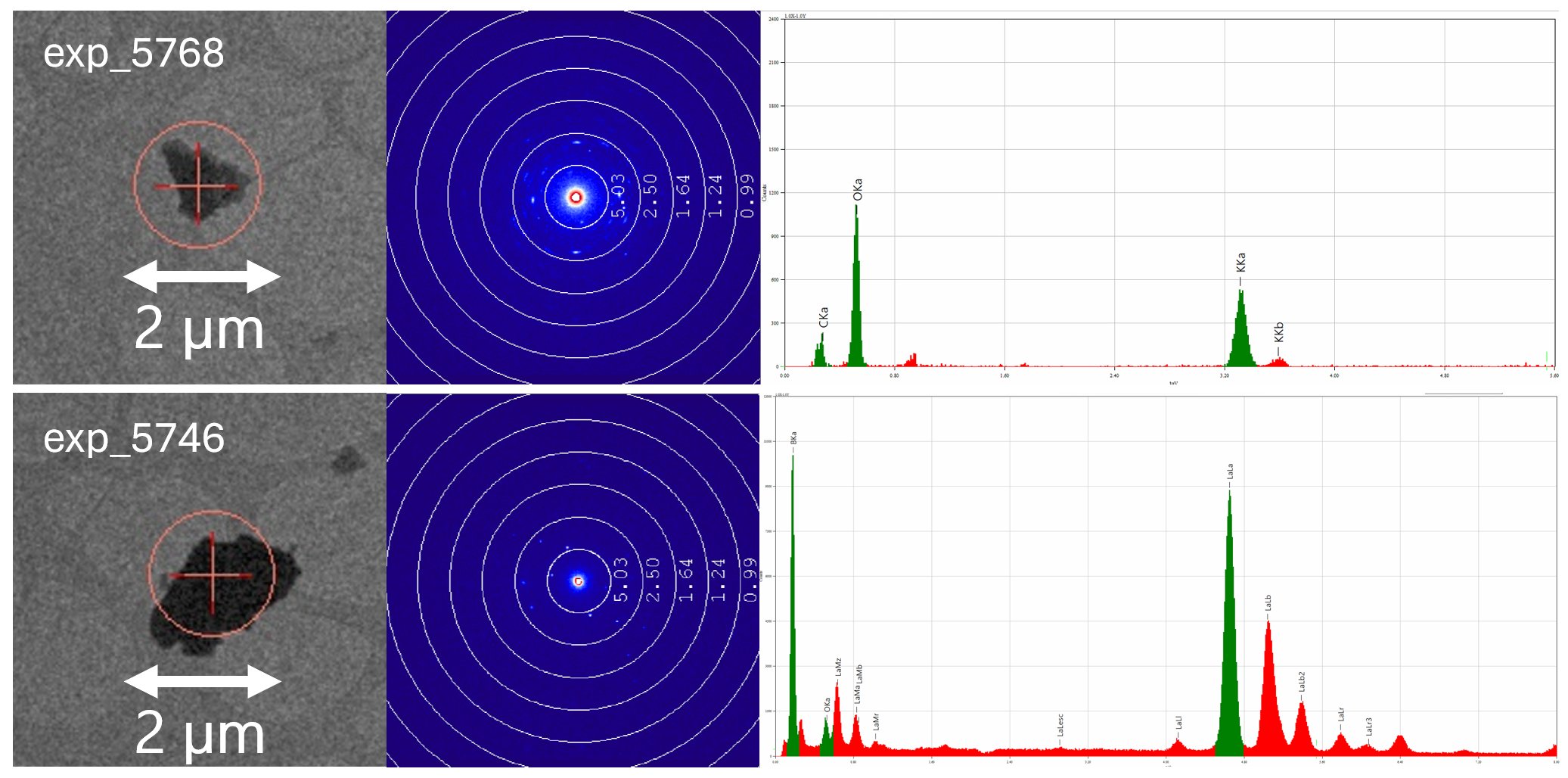
Figure 2: Example of potassium bitartrate crystal with poor diffraction (top) and lanthanum hexaboride crystal with poor diffraction indexation (bottom), which could be identified using EDS measurements.
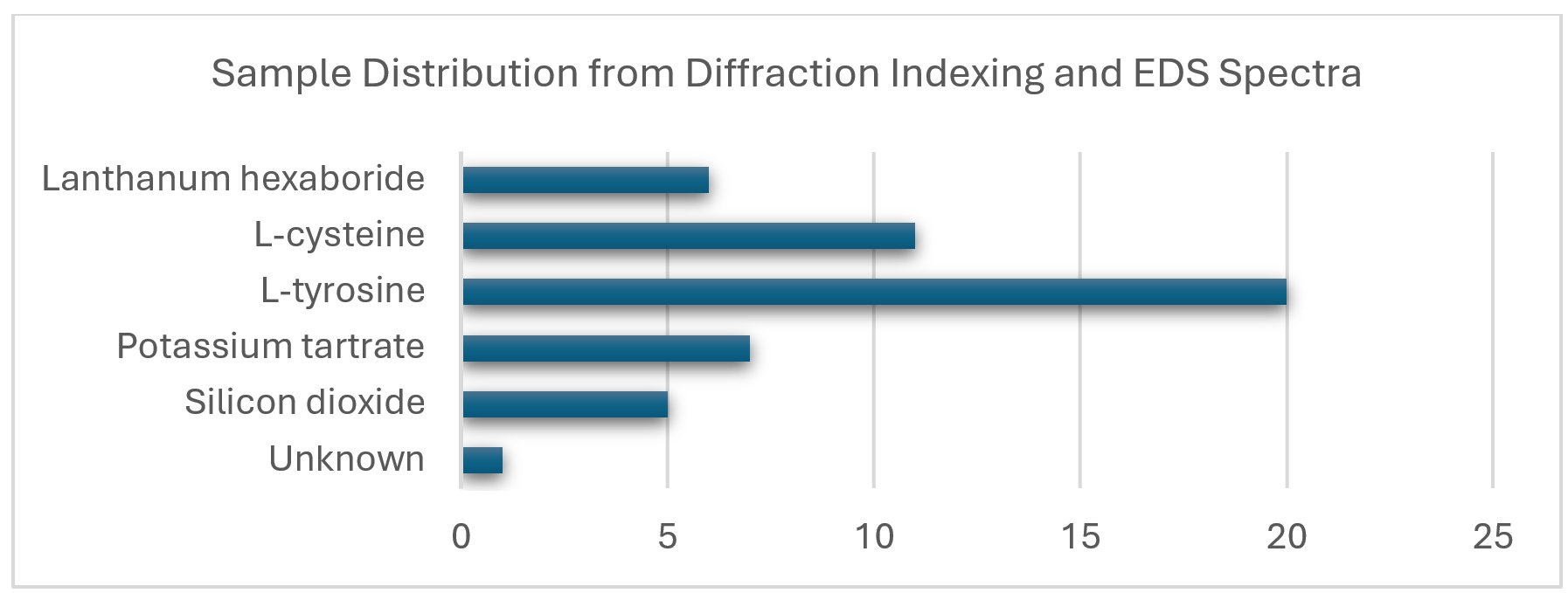
Figure 3: Results of assignment after unit cell matching and EDS spectral analysis.
Conclusion
Automated diffraction and EDS analysis on a grain-by-grain approach allows for rapid identification of materials, even in cases where materials diffract poorly. In this example, analysis by diffraction alone would have failed to provide information from 16% of particles, and not revealed the identity of a calcium-containing contaminant. The combination of 3D ED with EDS can be a useful approach when troubleshooting a chemical synthesis or analyzing any mixture that may contain both crystalline and amorphous components.
References
-
3D Electron Diffraction: The Nanocrystallography Revolution (2019) Gemmi M., Mugnaioli E., Gorelik T. E., Kolb U., Palatinus L., Boullay P., Hovmöller S., Abrahams J. P., ACS Cent. Sci. 5(8), 1315–1329.
-
Three-dimensional electron diffraction for porous crystalline materials: structural determination and beyond (2021) Huang Z., Willhammar T., Zou X., Chem. Sci. 12, 1206–1219.
-
Serial electron diffraction for phase analysis and structure determination of multiphase polycrystalline materials (2024) Gollé-Leidreiter P., Bhat S., Wiehl L., Wen Q., Kroll P., Ishikawa R., Etter M., Farla R., Ikuhara Y., Riedel R., Kolb U., Acta Crystallogr. Sect. B 80(3), 182–192.