Application Note POLYMER018
Introduction
Thermal conductivity of polymers is an important physical property that determines the cooling performance of electronic components and the functionality of insulation materials. However, some materials with softness and irregular shapes make it challenging to measure their thermal conductivity accurately. Trident can easily evaluate the thermal conductivity of actual sample shapes without cutting or processing, thus contributing to reliable thermal design at the design stage, even for materials that have been difficult to evaluate in the past, such as foam and sheet materials.
Thermal analysis
| Analysis: | Parts and end products |
| Use: | Process control, failure analysis, quality assurance |
| Analyzed materials: | Melamine foam |
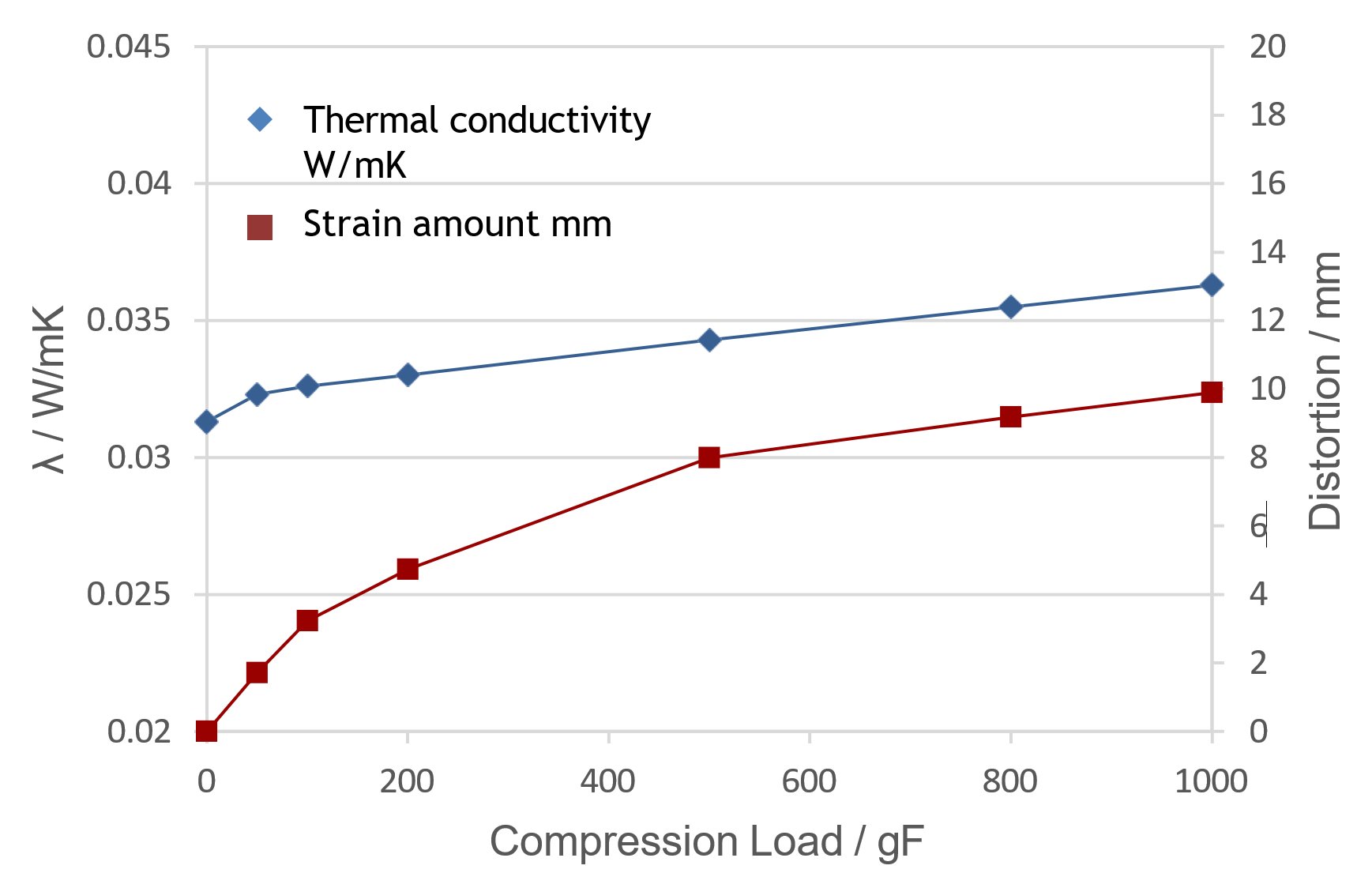
Figure 1: Relationship between external force, thermal conductivity and strain of melamine foam
Conclusion
For soft materials such as melamine foam, it was observed that external forces cause significant distortion and that the thermal conductivity also changes according to the compression state. In particular, the apparent thermal conductivity tends to increase with increasing strain, and steady-state measurements that ignore deformation in service risk underestimating the actual thermal behavior. Trident can be applied to such foam-like materials and quantitatively measures thermal conductivity in their deformed state, making it a highly reliable evaluation method directly related to product design and accurate estimates of thermal insulation and cooling performance.