Application Note POLYMER005
Introduction
Dynamic DSC performs temperature control by adding a sinusoidal wave as a temperature modulation component to the conventional constant heating rate. This allows evaluation by separating reversible components such as glass transition and heat capacity from irreversible components such as crystallization and enthalpy relaxation. This enables analysis of thermal behavior that is difficult to see with ordinary DSC and is useful for understanding the structure of materials and setting optimal processing conditions.
Thermal analysis
| Analysis: | Raw and intermediate materials |
| Use: | Material development |
| Analyzed materials: | Polyethylene terephthalate (PET) |
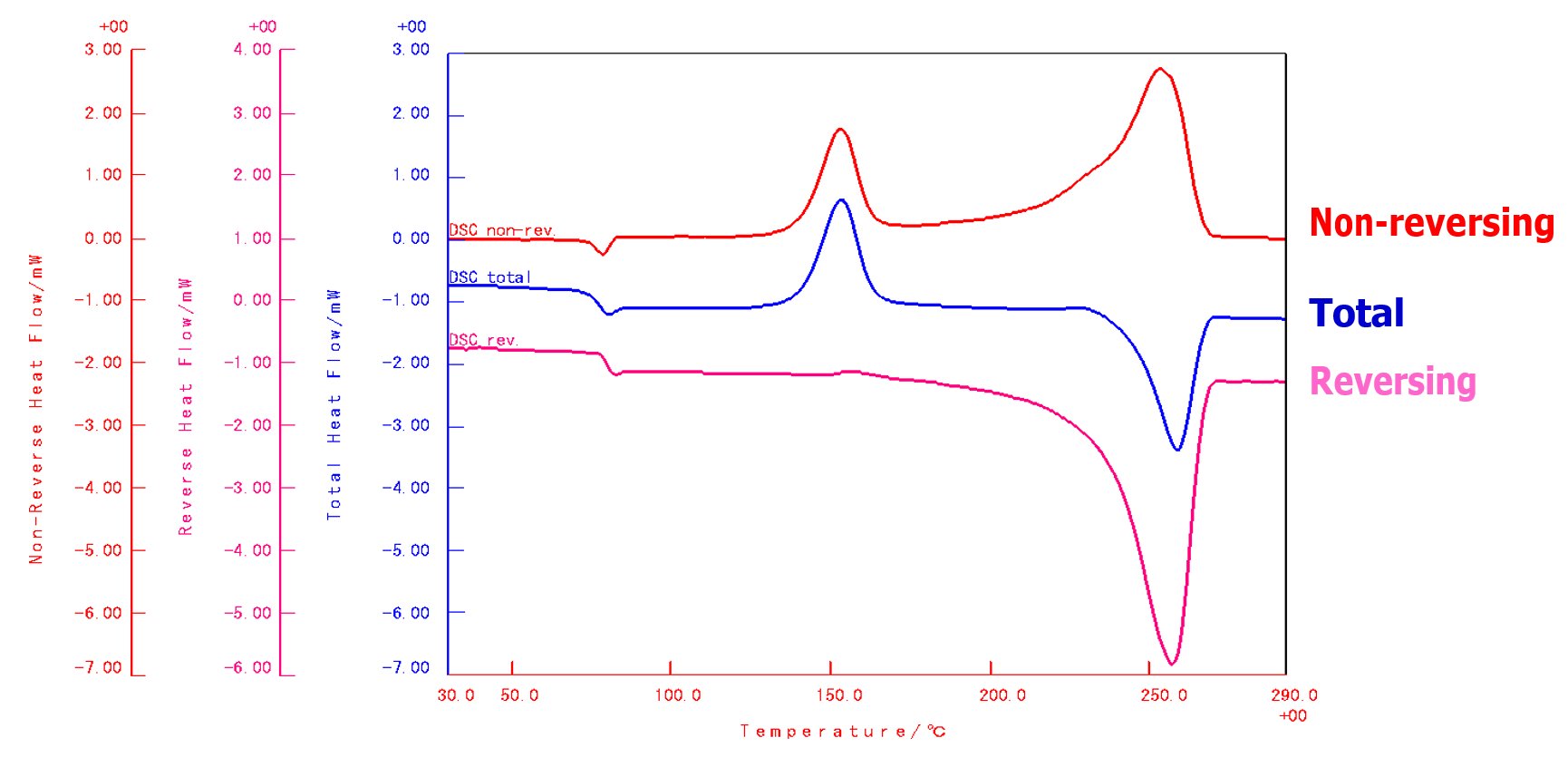 Figure 1: Dynamic DSC analysis results of amorphous PET
Conclusion
Dynamic DSC allows us to clearly separate the enthalpy relaxation and glass transition of amorphous PET. This avoids the conventional analytical risk of misidentifying the relaxation peak as a transition. Furthermore, recrystallization behavior during melting, which tends to be overlooked by constant temperature rise, can also be captured, enabling more accurate evaluation of the thermal behavior of polymer materials.