Application Note POLYMER004
Introduction
The processing suitability of polymers and polymeric materials is greatly influenced by thermal behaviors such as melting, crystallization, and glass transition. DSC is a method to visualize "invisible risks" at the processing site and support reliable decisions by capturing thermal behaviors such as melting, crystallization, and glass transition in a highly sensitive and quantitative manner.
Thermal analysis
| Analysis: | Raw and intermediate materials |
| Use: | Material development |
| Analyzed materials: | Nylon (polyamide) |
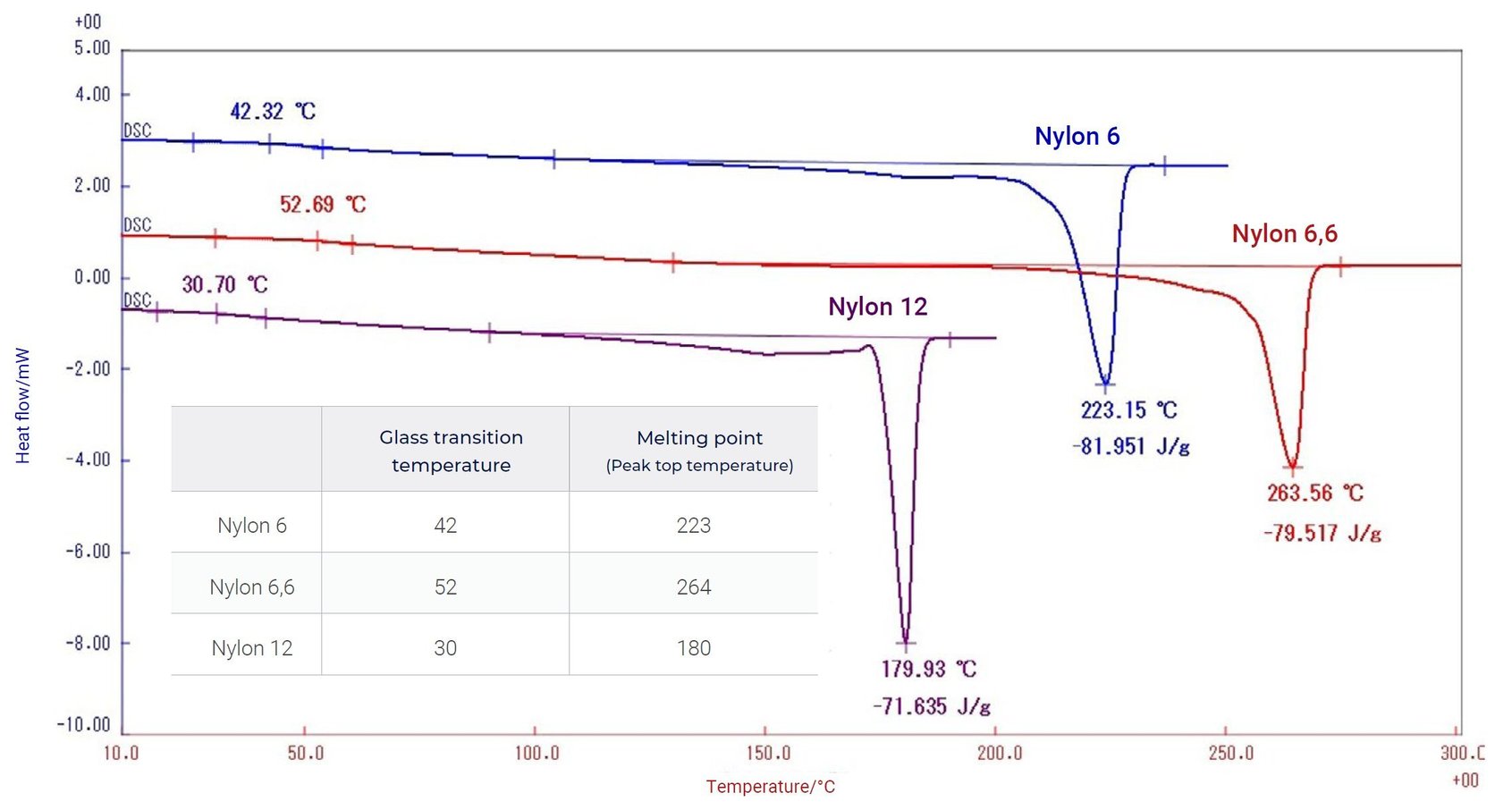
Figure 1: DSC results of three nylons
Conclusion
DSC measurements on various nylons clearly showed differences in their glass transition temperatures and melting points. Nylon 6,6 showed higher heat resistance than other materials.
Based on the quantitative analysis by DSC, it is possible to establish the optimum processing temperature and operating ambient temperature on the basis of evidence, rather than relying on intuition or catalog values.