Application Note POLYMER020
Introduction
In the chemical recycling of polymers, many processes are designed with insufficient knowledge of the progress of degradation reactions and product gases, which can affect the efficiency of recycling. Conventional thermogravimetry (TG) only shows weight changes and does not provide information on product gases, whereas TG-MS can detect gas components generated during heating in real time, thereby increasing process certainty, managing by-products, and reviewing reaction conditions.
Thermal analysis
| Analysis: | Recycled materials |
| Use: | Process control, quality assurance |
| Analyzed materials: | PET (Polyethylene terephthalate) |
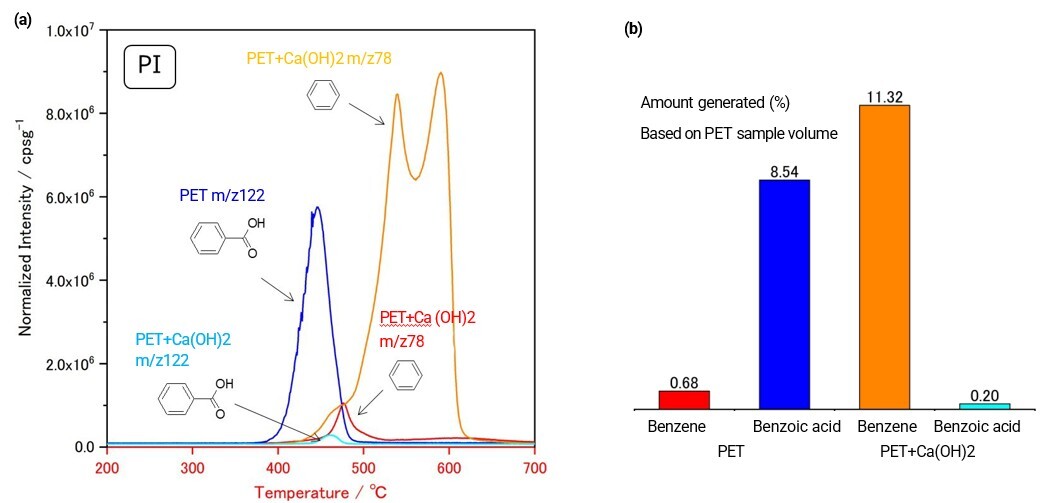
Figure 1: (a) Temperature profile of MS signal during PET decomposition compared to (b) quantified value of evolved gas
Conclusion
In the decomposition of PET alone, benzoic acid was the main product, and benzene production was negligible. However, the addition of calcium hydroxide reversed this trend and significantly increased the amount of benzene produced. This result indicates that the decomposition conditions have a significant impact on the type and amount of gases produced, suggesting that the control of byproducts is directly related to recycling quality and environmental safety.