Application Note PHARM023
Introduction
Organic synthesis reactions utilizing palladium catalysts are often used in the drug manufacturing process. In order to use the synthesized substance as a drug, the catalyst used must be removed. X-ray fluorescence analysis does not require any acid treatment and allows measurement in the drug’s original state. This makes it possible to evaluate the efficiency of catalyst metal removal and recovery by directly measuring the sample without acid treatment, using X-ray fluorescence analysis.
Elemental analysis
| Analysis: | Active pharmaceutical ingredients |
| Use: | Manufacturing (Production) |
| Analyzed materials: | Active pharmaceutical ingredients |
| Analysis method: | Standardless FP method |
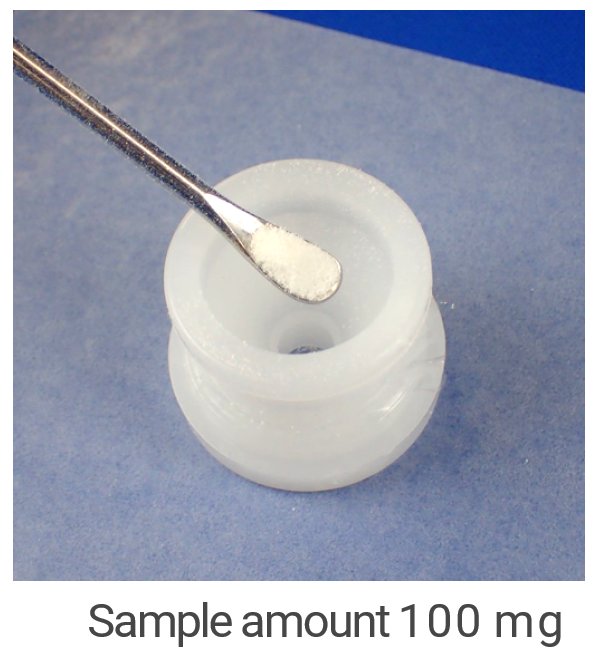
Figure 1: Sample preparation
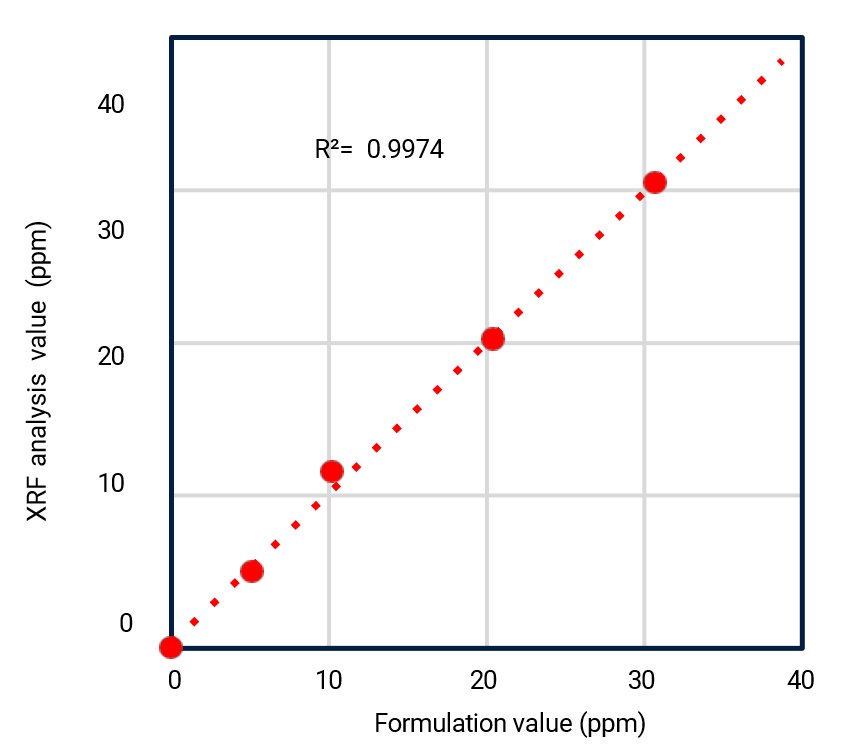 Figure 2: Correlation between Pd content and XRF analysis value
Table 1: Results of 10 replicate analyses of Pd-containing samples
| Measurement No. | Pd concentration (ppm) |
| 1 | 11.9 |
| 2 | 11.9 |
| 3 | 12.7 |
| 4 | 11.9 |
| 5 | 12.1 |
| 6 | 11.2 |
| 7 | 10.5 |
| 8 | 12.5 |
| 9 | 9.3 |
| 10 | 10.9 |
| Average | 11.5 |
| Standard deviation | 1.0 |
Conclusion
A powder sample (100 mg) was placed in the sample container. Samples with prepared specific Pd content were measured using the FP application without standard samples, showing good correlation with the Pd content. The results of 10 repeated measurements of the same sample (Pd content 10 ppm) showed a standard deviation of 1.0 ppm, indicating that good measurement reproducibility was obtained even with small amounts of sample.