


Application Note PHARM018
Introduction
For pharmaceutical manufacturers, the accurate identification of incoming raw materials is a critical process for product safety and quality. However, powdered raw materials with similar appearance, such as excipients, cannot be distinguished by appearance or lot number alone, and identification errors can lead to serious problems such as contamination or lot discarding. The results of conventional Raman spectroscopy are sometimes difficult to distinguish due to fluorescence interference, which has been a bottleneck in the quality control process. A portable Raman spectrometer using 1064 nm excitation light is an effective solution to these problems.
Chemical fingerprinting
| Analysis: | Excipients |
| Use: | Formulation /Manufacturing (Raw materials) |
| Analyzed materials: | Sodium carboxymethyl and hydroxypropyl cellulose |
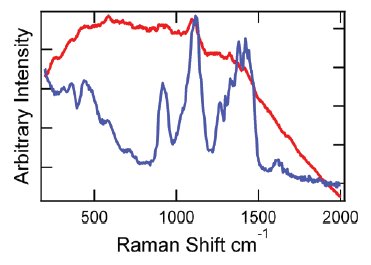
Figure 1: Sodium carboxymethyl - 785 nm and 1064 nm
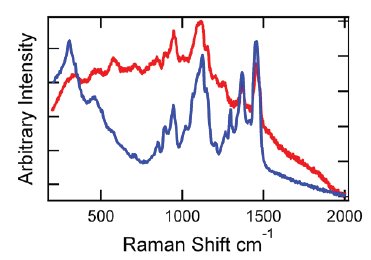 Figure 2: Hydroxypropyl cellulose - 785 nm and 1064 nm
Conclusion
As shown in Figures 1 and 2, the conventional 785 nm Raman has a strong background, making it difficult to distinguish peaks in fluorescent raw materials such as excipients. On the other hand, a portable Raman spectrometer using 1064 nm excitation light suppresses the background and enables the acquisition of clear spectra, allowing more raw materials to be identified with high accuracy. The 1064 nm Raman is effective because the certainty of identification is directly related to the reduction of the risk of erroneous input and stabilization of quality assurance.