

Application Note PHARM014
Introduction
Cracks inside tablets can lead to chipping and disintegration variability; therefore, careful observation of cracks from the early development stages is crucial in formulation design. Observation of cut samples may result in inaccurate evaluations, as the cutting process can alter crack shapes and lead to the oversight of cracks present in uncut regions. Micro X-ray CT enables nondestructive, three-dimensional observation of the inner structure of tablets, as well as quantitative determination of crack distribution and porosity. In this study, tablets made under different manufacturing conditions were observed with CT and the internal structures were compared.
Non-destructive imaging
| Analysis: | Tablets |
| Use: | Formulation (Dosage Form) |
| Analyzed materials: | Acetaminophen tablets |
| Analysis software: | VGSTUDIO MAX |
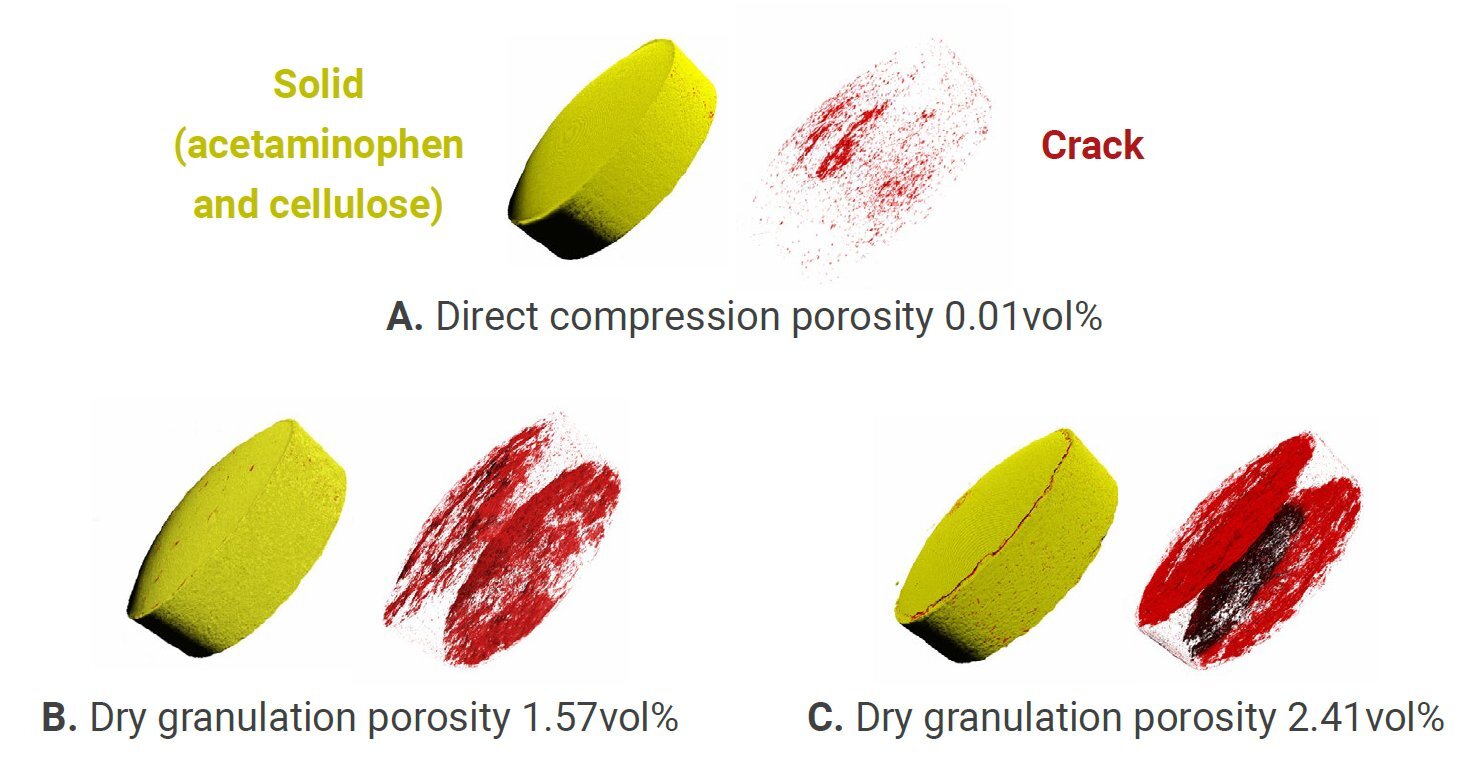 Figure 1: Three-dimensional CT images and porosity of tablets prepared by different methods
Conclusion
Tablets of acetaminophen and cellulose were prepared by A: direct compression, B: dry granulation, and C: wet granulation, and were imaged by micro X-ray CT. Although the appearance was similar, clear differences were observed in the void distribution and porosity (Figure 1). Such nondestructive observation of tablet interiors and quantitative evaluation of cracks is effective in optimization of formulation conditions and control of tablet chipping.