Application Note PHARM006
Introduction
Crystal polymorphism of active pharmaceutical ingredients (APIs) directly affects the quality and stability of drug products, as even the slight difference can affect solubility and absorption rates. Despite this, it is difficult to detect trace polymorphs in development and manufacturing, and the risk remains that they will be missed. To avoid such risks, it is essential to establish an evaluation method with excellent sensitivity and accurate quantification. The combination of powder XRD and calibration methods enables fast detection and quantification of polymorphic impurities in trace amounts.
Crystalline phase analysis
| Analysis: | Active pharmaceutical ingredients |
| Use: | Pre-formulation (API) |
| Analyzed materials: | Tolbutamide |
| Analysis software: | SmartLab Studio II |
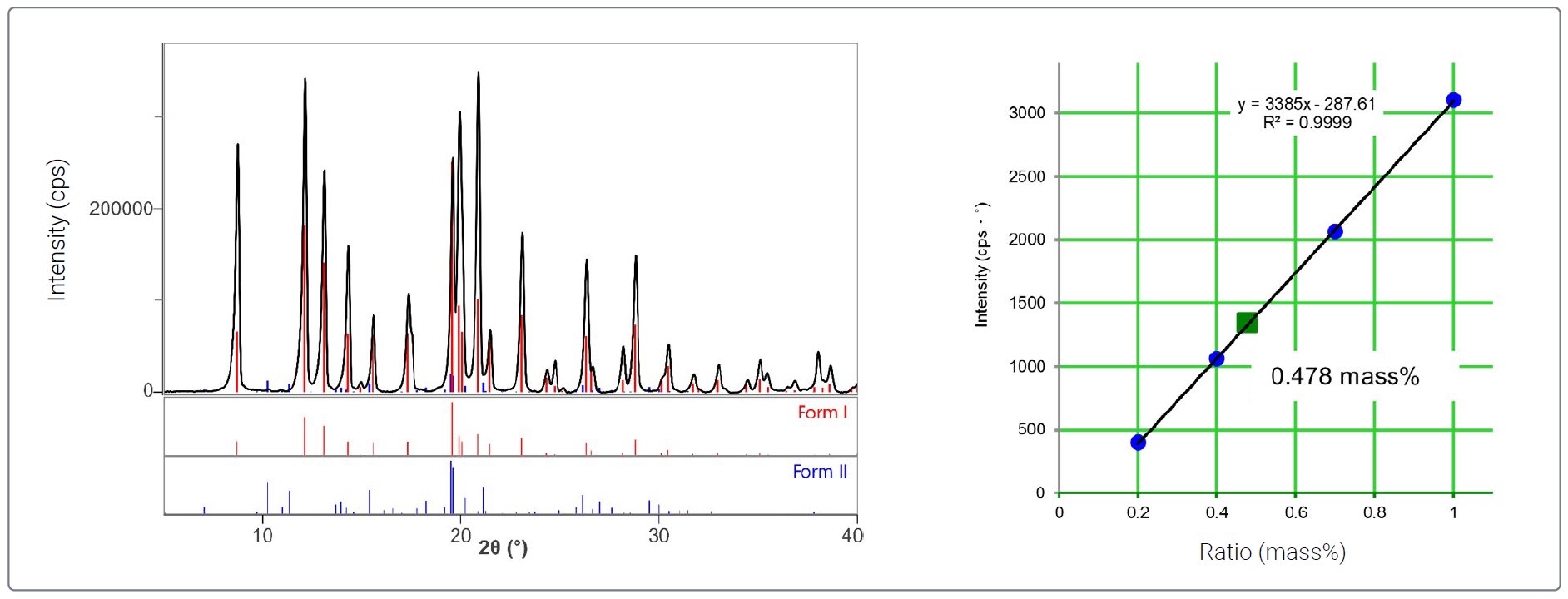
Figure 1: Qualitative analysis results of tolbutamide and quantitative analysis results using the calibration method
Conclusion
A calibration curve was prepared using a standard sample of pure tolbutamide Form I with 0.2, 0.4, 0.7, and 1.0 wt% of Form II added. As shown in Figure 1, 0.48 wt% of Form II in the lot was confirmed. With this method, even polymorphs with trace amounts of less than 1 wt% can be quantified with high sensitivity and in a short time by combining powder X-ray diffraction and the calibration method. Furthermore, it is an effective way to minimize the risk of forming undesired polymorphs during manufacturing. It also helps ensure reliable control of the desired crystalline form.