By the time many of you read this, I will be on my way to the IUCr Congress. If you're wondering why I am leaving so early, the answer is that the IUCr Finance Committee meets on August 7, and I will be participating in that meeting. I have also managed to carve out a couple of days between the Finance Committee meeting and the start of the Congress to visit Dinosaur Provincial Park, which has long been on my list of places to see.
You may notice that I have skipped the Product of the Month section in this issue. That is intentional. We will be introducing new products at IUCr, so be sure to stop by the Rigaku booth to see what is new.
The ACA Headquarters team has been working tirelessly to ensure that the Congress runs smoothly. When you see Kristin, Kristina, and Claire, please take a moment to thank them for their efforts. The American Union of Crystallography will be sharing a booth with the ACA and the Canadian National Committee for Crystallography, so please stop by and say hello to the team.
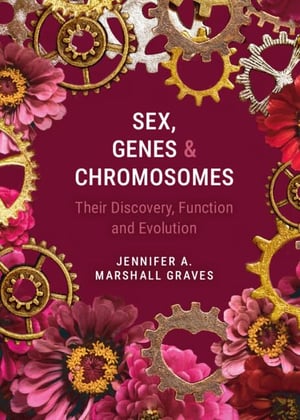
Fraser created a blog on the Rigaku School for Practical Crystallography, which you can findhere. Pierre provides the Tip of the Month and demonstrates a useful repair procedure for data corrupted in transit. Be sure to visit Crystallography in the News for highlights from cutting-edge research. Jeanette reviews Sex, Genes, and Chromosomes: Their Discovery, Function, and Evolution by Jennifer A. Marshall Graves.
Speaking of books, I recently finished three particularly enlightening reads. The Greatest Sentence Ever Written by Walter Isaacson examines, in remarkable detail, the second sentence of the Declaration of Independence, providing the historical and political context behind every word. Last Branch Standing by Sarah Isgur offers a thoughtful analysis of the role and evolution of the U.S. Supreme Court. Finally, The U.S. Constitution by Melissa Murray presents both a history of the Constitution and an accessible analysis of its continuing significance.
Safe travels, and I look forward to seeing many of you at IUCr.
Our LinkedIn groupshares information and fosters discussion about X-ray crystallography and SAXS topics. Connect with other research groups and receive updates on how they use these techniques in their own laboratories. You can also catch up on the latest newsletter or Rigaku Journal issue. We also hope that you will share information about your own research and laboratory groups.
Atrigakuxrayforum.comyou can find discussions about software, general crystallography issues and more. It’s also the place to download the latest version of Rigaku Oxford Diffraction’sCrysAlisProsoftware for single crystal data processing.
How to Repair a Dataset with Corrupted Images in CrysAlisPro
Has your diffraction dataset become unreadable because a few image files were corrupted during copying or downloading? This Tip of the Month demonstrates how to quickly identify the problem and use the built-in Repair Dataset function in CrysAlisPro to restore damaged image headers so data reduction can continue without reacquiring the experiment.
In this tip of the month Pierre explains how to rebuild a data set with images corrupted in file transfer.
In this video, you'll learn:
How to recognize corrupted image errors
Where to find the Repair Dataset function
How CrysAlisPro repairs only the affected images
How to verify that the repaired dataset processes normally
This quick workflow can save valuable experimental time by recovering datasets that would otherwise fail during processing.
May 11, 2026 Researchers from Italy, Slovakia, and the US report the structure of a non-equilibriumCa-Cu-Si clathrateformed during the Trinity test.
July 1, 2026 Scientists from the UK report on the use ofmulti-crystal X-ray diffraction (MCXRD)to address the crystallographic characterization gap in chemistry and materials science.
July 23, 2026 Researchers from the US have developed anovel synthetic pathwayto produce molecules suitable for covalently inhibiting proteins involved in disease.
In the introduction to Sex, Genes & Chromosomes: Their Discovery, Function and Evolution,Jennifer A. Marshall Graves explains that the book is the culmination of over 30 years of writing and rewriting and editing and hypothesizing and researching. From that perspective, it’s impressive the book is only 360 pages, not counting the glossary or index.
Graves covers the fundamentals, explaining the distinction between biological sex (as opposed to gender, which is a social construct), genes, and chromosomes. She briefly details the historical discovery of each, as well as both how they have evolved in their function within the living organism and how our understanding of their function has evolved over decades of dedicated research, much conducted or led by Graves herself.
Though Sex, Genes & Chromosomes is effectively a textbook and clearly not intended for a casual audience, Graves injects specific details of her personal experiences with experimental research in the pursuit of a greater understanding of how sex, genes, and chromosomes function. This gives the book a conversational yet technical tone. Reading Sex, Genes & Chromosomes feels like having an intense technical conversation with a knowledgeable colleague who is excited about their research, not like reading a dry and boring textbook. Graves’ passion for her work through her many years of experience shines through.